
Oneal Omatseye Lajuwomi Breaks Down the Future of Clean Energy Investment
Energy Expert Oneal Omatseye Lajuwomi Shares Strategic Insights on the Investment Trends, Technologies, and Opportunities Powering the Global Clean Energy Transition

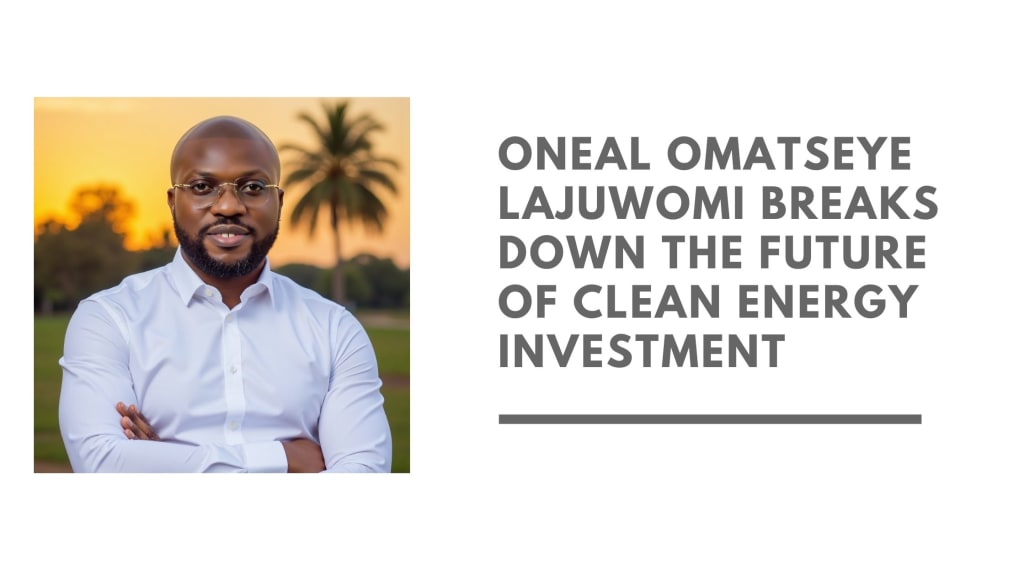
The global energy industry is undergoing one of the most transformative shifts in its history, and at the center of that transformation is clean energy. From solar and wind to hydrogen and advanced battery storage, the clean energy landscape is evolving rapidly. But for investors and policymakers, the real challenge isn't just understanding the technologies—it's understanding the direction of the investment climate. Oneal Omatseye Lajuwomi, an experienced leader in energy and infrastructure, is bringing clarity to that future.
With two decades of experience across the energy spectrum—including power systems, engineering, and energy project management—Lajuwomi is helping investors, companies, and institutions connect the dots between innovation, infrastructure, and opportunity.
Why Clean Energy Investment Matters Now More Than Ever
The push toward decarbonization is no longer optional. Countries are locking into climate agreements. Consumers are demanding sustainable solutions. Major corporations are racing toward net-zero targets. But all of this ambition hinges on one thing: capital.
According to Lajuwomi, clean energy investment is “no longer a speculative play—it’s a foundational pillar of global growth.” This shift is powered by multiple forces: government incentives, maturing technologies, rising energy demands, and the rapidly falling costs of renewables. Together, these trends are creating a perfect storm of opportunity.
But understanding where and how to invest isn’t just about chasing trends. It’s about grasping long-term value.
Key Trends Reshaping the Investment Landscape
1. Decentralization of Energy Generation
One of the most significant changes is the move away from centralized, utility-driven grids. Rooftop solar, community wind farms, and battery storage systems are putting power in the hands of businesses and individuals. Lajuwomi sees this as a democratization of energy—and a new frontier for micro-investments.
He notes, “We’re witnessing the rise of prosumers—people who both produce and consume energy. That creates a radically different model for investment, one that favors flexibility and local solutions.”
2. Storage is the Game-Changer
Clean energy has always faced a timing problem: solar power peaks during the day, but demand often spikes in the evening. That’s where energy storage comes in.
Lajuwomi points to breakthroughs in lithium-ion and emerging battery chemistries as the backbone of future investment. “Storage makes renewables viable 24/7. That’s the key to scaling these technologies,” he says. For investors, this means not just funding solar or wind farms, but the tech that makes them truly functional around the clock.
3. Hydrogen and the Rise of Industrial Decarbonization
While solar and wind dominate the headlines, Lajuwomi urges investors not to overlook green hydrogen. It’s one of the few technologies capable of decarbonizing heavy industries—steel, cement, and shipping.
“This isn’t a five-year story,” Lajuwomi explains. “Hydrogen is a 20-year investment vision. But those who get in early and strategically will be part of reshaping global industry.”
Risk, Reward, and Reality
Clean energy is full of promise, but it’s not without complexity. Lajuwomi is quick to caution against over-optimism. Investment decisions, he says, must be grounded in both data and regional nuance.
Not all markets are created equal. Policies vary dramatically. Infrastructure gaps remain in many parts of the world. And while returns can be strong, they often require longer timelines and strategic patience.
But this is where experience matters. Lajuwomi believes the path forward isn’t about chasing hype—it’s about identifying “climate-smart investments” that align with long-term growth sectors: electrified transport, energy access in developing nations, and next-gen grids.
The Role of Public-Private Partnerships
Another theme Lajuwomi emphasizes is the importance of public-private partnerships (PPPs). The scale of infrastructure required for a clean energy transition is staggering. No one—governments or businesses—can do it alone.
“What we’re seeing now is more collaboration,” Lajuwomi explains. “Private capital brings innovation and speed. Public funding ensures stability and reach. The synergy between the two will define the success of this transition.”
Projects like smart city grids, rural electrification programs, and EV infrastructure hubs are all fertile ground for these partnerships.
Digital Transformation and Data-Driven Investing
As clean energy matures, so too does the sophistication of investment strategies. Lajuwomi highlights how digital tools—from AI-powered grid management to predictive analytics in maintenance—are reshaping how investors assess and manage risk.
“Energy isn’t just about electrons anymore. It’s about information,” he says. “Investors need to understand how data is unlocking efficiencies and improving ROI across the board.”
That includes everything from blockchain-based energy trading platforms to AI-driven demand forecasting.
What the Future Holds
Looking ahead, Lajuwomi is optimistic—but measured. He sees clean energy not as a passing phase, but as the future foundation of global development. From infrastructure to innovation, it's becoming the engine of economic resilience.
But he also warns that success will depend on inclusivity. “We need to make sure the energy transition benefits everyone—not just those in developed markets. Investment must be equitable, or we risk repeating the mistakes of the past.”
That means investing in training, technology transfer, and energy access—especially in the Global South, where the energy gap is most urgent.
Final Thoughts
Oneal Omatseye Lajuwomi’s vision for clean energy investment is both ambitious and practical. He doesn’t chase buzzwords. He focuses on the structural changes—technological, financial, and regulatory—that are making clean energy a smart, scalable, and socially impactful sector.
For investors, his message is clear: this is a moment of rare alignment between profitability and purpose. The world needs clean energy. The markets are opening. And the technologies are ready.
About the Creator
Oneal Omatseye Lajuwomi
Oneal Lajuwomi Lajuwomi, an accomplished Energy and Engineering Manager with over 20 years of experience, is renowned for his unwavering dedication to sustainable solutions and his transformative contributions to the energy sector.
Keep reading
More stories from Oneal Omatseye Lajuwomi and writers in Education and other communities.
How Oneal Omatseye Lajuwomi Helps Lower Energy Costs Through Innovation
In a world increasingly defined by its energy consumption, the need for cost-effective and sustainable energy solutions has never been more urgent. Amid this landscape, Oneal Omatseye Lajuwomi stands out as a pragmatic innovator. With a clear understanding of the technical, economic, and environmental facets of energy management, Lajuwomi is making a measurable impact on how businesses and households approach their power needs.
By Oneal Omatseye Lajuwomi8 months ago in Earth
The Unique Case of Alma Mater TV
(A Review of Charmaine Voigt's Dissertation on Practical Media Training) Abstract This review examines the Bulgarian case study of Alma Mater TV as discussed in Charmaine Voigt's doctoral dissertation College Television: Practical Media Training in US and German Higher Education. While Voigt's work focuses primarily on Anglo-American and German contexts, the Bulgarian example stands out as an exceptional and largely unmatched model of student television in Europe. Alma Mater TV, based at the Faculty of Journalism and Mass Communication at Sofia University 'St. Kliment Ohridski', functioned not merely as a training platform but as a fully operational public-facing television project. Students produced and aired original programmes on Bulgaria's largest national broadcasters without censorship or editorial interference, while simultaneously participating in the creation of a European student television network. This review argues that Alma Mater TV represented a globally unique pedagogical and institutional experiment whose decline resulted not from structural failure but from a lack of strategic vision at the university leadership level. Particular attention is paid to the decisive roles of Professor Svetla Bozhilova and Professor Peter Ayolov in establishing and sustaining this model.
By Peter Ayolov6 days ago in Education



Comments
There are no comments for this story
Be the first to respond and start the conversation.