
*2* How to budget for continuous education
Why personal education beats any other “expense”

Looking back at how we plan for future spending, something stayed with me - putting time into learning new things. Costs such as maintenance, coverage, or levies show up when expected. They come around regularly, needing care. Growth in skills or career doesn’t march so neatly. It rushes ahead here. Lags there. Still, putting it off makes no sense. Of all the things that ought to stay in your monthly plan, gaining knowledge stands out.
Lately, learning nonstop stopped being a choice. This kind of spending? It builds worth, know-how, because it shapes income paths. Through seasons, faces appeared - each chasing pay bumps or fresher doors. Truth unfolded slow: fate played small part. Ability stood tall. Curiosity pushed them further, even when discomfort lingered beneath the surface. Effort stretched beyond what felt comfortable, simply because staying still was no longer an option.
Spending on growth shows what matters most. When progress gets space, it finds a way. Leftover cash rarely builds better versions of you. Intention opens doors luck cannot.
Money flows in different directions, yet education stands out. Seen from afar, it appears costly. True, some parts are. Still, prices bend easier than expected. Study isn’t locked inside diplomas or years-long tracks. Pages of a book count. So do video lessons online. Short training events help too. Proof of skill matters - certificates show that. Gatherings with experts open doors. Monthly fees for knowledge sites add up slowly. Talking one-on-one with mentors shapes thinking differently. Each one stands alone. What matters most? Spotting the method that pays off best for how things sit with you.
It's surprising how much difference one good book can make. Meanwhile, folks often think a costly class will fix everything - even if they skip it half the time. When knowledge sits unused, it fades into background clutter. True learning reshapes both your mind and your daily choices.
A chunk of what you earn could go toward learning. Think about it like that - scaling up when things are good. Three per cent might feel right at first. Or perhaps more if momentum builds. When progress matters most, double digits can fit. Flexibility lives in the fractions. What counts isn’t the figure but showing up each time. As earnings shift, so does the portion - no stress needed.
A single book might cost less than 250 lei each month. When income hits 5,000 lei, setting aside five per cent becomes possible. Short courses could follow after a few months saved. Larger certifications may come later because of it. What matters isn’t how much goes into the pot. Staying steady makes the difference.
Picture setting aside cash for house repairs, medical needs, or getting around town - learning fits right alongside those. Saving steadily for knowledge brings three solid benefits. Money meant for growth remains untouched by grocery bills or rent. Big steps in study? They start feeling reachable. Things like courses or coaching start making sense. Step three shows results you can see. That growing balance keeps you going - it means more choices ahead.
It’s not always lack of interest that stops folks from tackling big learning tasks. Often, there simply isn’t a way built yet to carry them forward. When tiny steps begin adding up, distance to the goal shrinks without warning. What felt far now sits closer than expected.
Picking your next move matters just as much as setting cash aside. Learning isn’t gathering more stuff. It’s knowing what to leave out. Think first, reach for your wallet later. One question helps - what feels necessary today? Start by asking what hole needs filling. Think about how much fits into your day today. Consider if the price matches the change it brings. Something brief but sharp might work better than something big left undone.
Most people see learning tools as things to collect. A quick rush of motivation hits, yet life stays unchanged without real effort. Sticking to study needs focus on quality over quantity.
Only when learning becomes part of money planning does anything truly move. View it like a cost, and trimming feels natural. See it as planting seeds, however, then results begin shaping choices. Certain pages redirect paths without warning. What you can do shapes how much you matter. Someone who guides you makes progress faster.
Most folks never add up the cash they miss yearly just by staying put at work. Standing still? That comes with a price tag. Learning something fresh or earning a credential might boost what you earn faster than imagined. Suddenly, paths appear - ones you never noticed before.
Learning never stops, yet it doesn’t drain resources. Think of it as fuel that grows choices, builds self-assurance, boosts income paths. What seems like an expense turns into expansion - quietly widening what you can do, how sure you feel, where you stand financially.
Your last task sits ahead. Pick one ability that could shift your path more than any other within a year - then decide how many hours every month you’d spend learning it.
About the Creator
Luciman
I believe in continuous personal growth—a psychological, financial, and human journey. What I share here stems from direct observations and real-life experiences, both my own and those of the people around me.
The Unique Case of Alma Mater TV
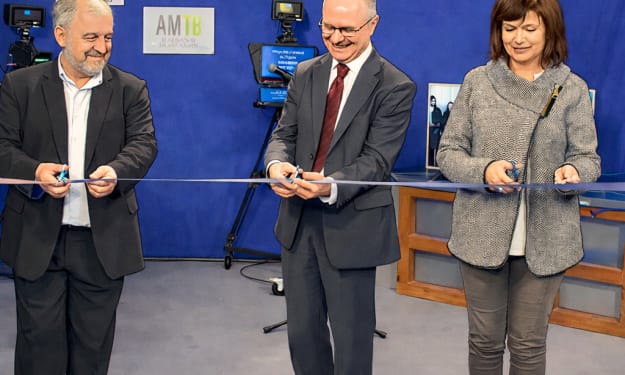
(A Review of Charmaine Voigt's Dissertation on Practical Media Training) Abstract This review examines the Bulgarian case study of Alma Mater TV as discussed in Charmaine Voigt's doctoral dissertation College Television: Practical Media Training in US and German Higher Education. While Voigt's work focuses primarily on Anglo-American and German contexts, the Bulgarian example stands out as an exceptional and largely unmatched model of student television in Europe. Alma Mater TV, based at the Faculty of Journalism and Mass Communication at Sofia University 'St. Kliment Ohridski', functioned not merely as a training platform but as a fully operational public-facing television project. Students produced and aired original programmes on Bulgaria's largest national broadcasters without censorship or editorial interference, while simultaneously participating in the creation of a European student television network. This review argues that Alma Mater TV represented a globally unique pedagogical and institutional experiment whose decline resulted not from structural failure but from a lack of strategic vision at the university leadership level. Particular attention is paid to the decisive roles of Professor Svetla Bozhilova and Professor Peter Ayolov in establishing and sustaining this model.
By Peter Ayolov2 days ago in Education
Why Understanding the Problem Matters More Than the Stack
Modern software development places extraordinary emphasis on tools. New frameworks promise productivity, new languages promise safety, new architectures promise scale. Engineers debate stacks with near-ideological intensity. Yet many of the most expensive failures in software have nothing to do with poor technology choices. They stem from something more fundamental: a shallow understanding of the problem being solved.
By Gustavo Woltmann2 days ago in Education


Comments
There are no comments for this story
Be the first to respond and start the conversation.