
Navigating the Challenges of Indian Parenting
Expectations and Pressures

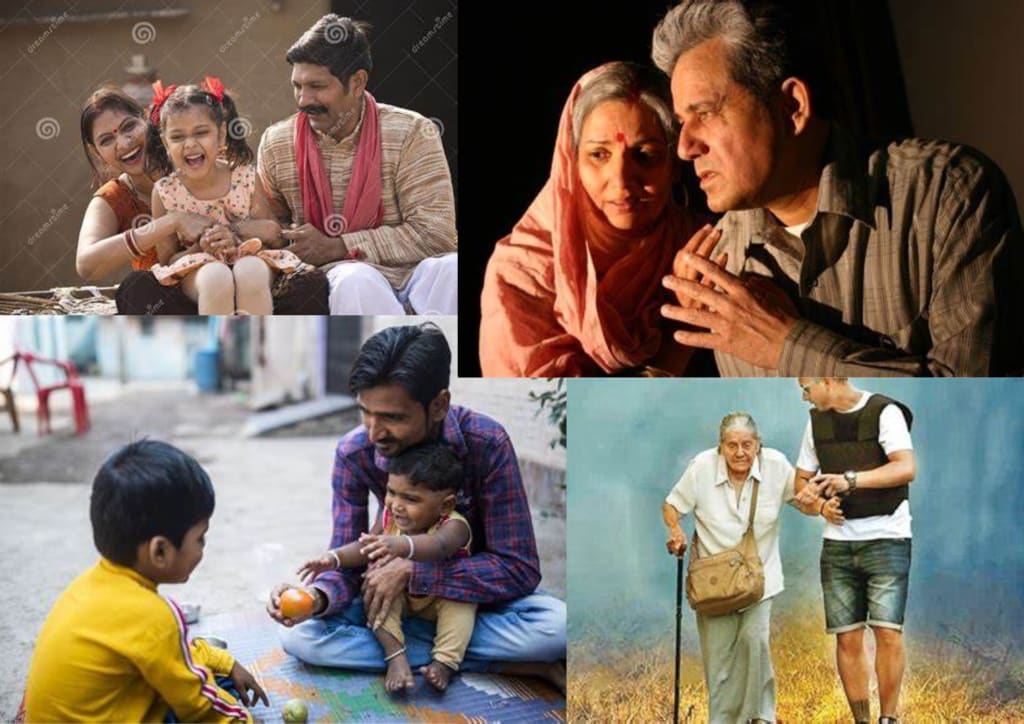
Parenting styles in India can vary greatly depending on factors such as regional culture, socioeconomic status, religion, and education. However, there are some generalizations that can be made about Indian parenting.
One common feature of Indian parenting is a strong emphasis on family values and respect for elders. Parents typically play a central role in their children's lives, and children are expected to obey and respect their parents and other authority figures.
Discipline is often strict, with parents setting high expectations for their children's behavior and academic performance. Punishment may include physical discipline such as spanking or slapping, although this is becoming less common in urban areas. Verbal reprimands and withdrawal of privileges are also common forms of discipline.
Education is highly valued in Indian culture, and parents often place a great deal of pressure on their children to excel academically. This can lead to a competitive environment in which children are pushed to achieve high grades and attend prestigious schools.
Gender roles are often strongly defined in Indian families, with boys and girls being raised differently and having different expectations placed upon them. Boys are often encouraged to be assertive and independent, while girls are taught to be nurturing and family-oriented.
Arranged marriages are still common in India, and parents often play a key role in selecting a suitable spouse for their child. This can be a controversial practice, with some arguing that it restricts individual freedom and perpetuates gender inequality.
Overall, Indian parenting emphasizes respect for family, discipline, education, and traditional values. While these values can be positive in many ways, they can also lead to a rigid and hierarchical family structure that can be difficult for some children to navigate.
Here's a real-time example of Indian parenting:
Amita and Raj are a middle-class Indian couple who live in a suburban area of Mumbai with their two children, a 10-year-old daughter, and a 7-year-old son. Amita and Raj both work full-time jobs, and their children attend a private school.
Amita and Raj place a strong emphasis on education, and they expect their children to excel academically. They regularly monitor their children's grades and meet with their teachers to ensure they are on track. They also enroll their children in extracurricular activities such as dance and music classes, but prioritize academic performance above all else.
Discipline is important to Amita and Raj, and they have established clear rules and expectations for their children's behavior. They use a combination of positive reinforcement, such as rewards for good behavior, and negative consequences, such as loss of privileges, to motivate their children.
Respect for elders is also a key value in Amita and Raj's parenting. They regularly visit their parents and other older relatives, and they teach their children to address elders with formal titles such as "aunty" and "uncle."
While Amita and Raj value traditional Indian values, they also try to balance these with a modern approach to parenting. They encourage their children to express themselves and pursue their own interests, and they try to create a supportive and loving home environment.
In conclusion, Indian parenting is characterized by a strong emphasis on traditional values such as family, discipline, education, and respect for elders. Parents often place a high priority on their children's academic performance and set clear rules and expectations for their behavior. While discipline can be strict, Indian parents also strive to balance tradition with modernity, encouraging their children to express themselves and pursue their own interests. Respect for elders is a key value, and arranged marriages remain a common practice. As India continues to evolve and modernize, it is likely that parenting practices will continue to change and adapt to new cultural norms and expectations
About the Creator
Revolution
Are you prepared to view the world through new eyes? and also delve deeply into the culture and history of each destination, revealing the tales and traditions that make each place so distinctive.
Keep reading
More stories from Revolution and writers in Education and other communities.
Spicing Up India
Indian spices have a rich and fascinating history that spans thousands of years. The use of spices in India dates back to ancient times, with evidence of spices being used for medicinal purposes found in the Indus Valley Civilization. Over time, spices became an important part of Indian cuisine and culture, and were traded with the rest of the world, leading to India becoming known as the "Land of Spices."
By Revolution3 years ago in Education
Image-to-text technology, also known as Optical Character
Image-to-text technology, also known as Optical Character Recognition (OCR), has transformed the way we interact with visual information. It allows machines to extract text from images, enabling various applications across multiple industries. From digitizing printed documents to reading text from scanned images, OCR plays a vital role in making printed content accessible, editable, and searchable. The need for such technology has grown exponentially with the increasing reliance on digital data and the rapid shift from physical to digital content in nearly all sectors of life. As the digital world continues to expand, image-to-text technology has paved the way for more seamless workflows, enabling businesses and individuals alike to save time, effort, and resources.
By Alexander Jackson4 days ago in Education
Most Sales Deals Fail Because Sellers Talk to the Wrong People
There is a quiet reason many sales conversations feel productive but go nowhere. Everyone leaves the call optimistic. Emails move back and forth. Documents get shared. Then momentum fades. Weeks pass. The deal stalls without a clear explanation.
By Armi Ponsica3 days ago in Education




Comments
There are no comments for this story
Be the first to respond and start the conversation.