
Spicing Up India
A Rich History and Greatness of Indian Spices

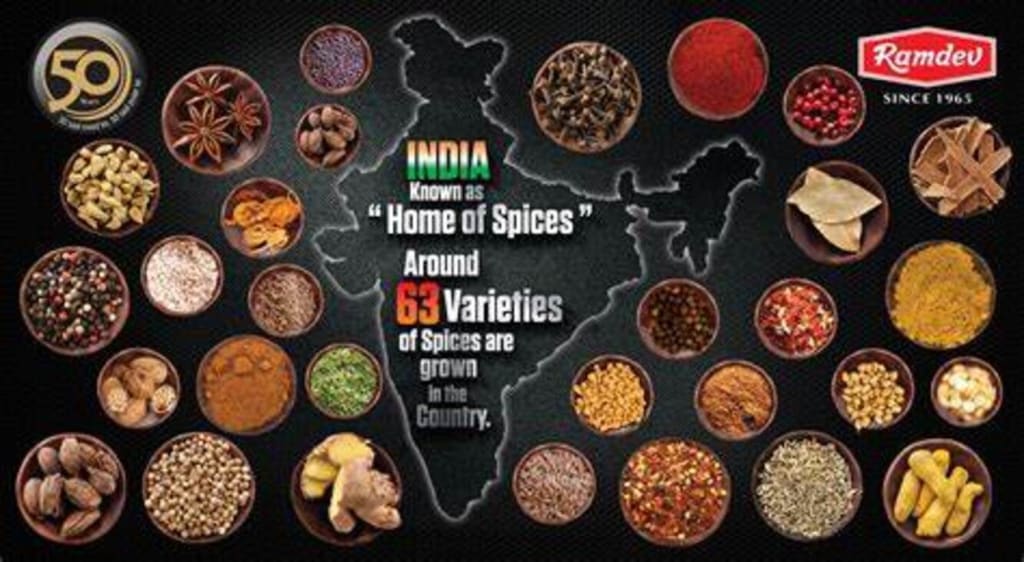
Indian spices have a rich and fascinating history that spans thousands of years. The use of spices in India dates back to ancient times, with evidence of spices being used for medicinal purposes found in the Indus Valley Civilization. Over time, spices became an important part of Indian cuisine and culture, and were traded with the rest of the world, leading to India becoming known as the "Land of Spices."
One of the earliest recorded mentions of spices in Indian history is in the ancient Hindu scripture, the Rig Veda, which was written around 1500 BCE. The Rig Veda contains references to various herbs and spices, including turmeric, coriander, and cumin. The use of these spices continued to be an integral part of Indian culture, with Ayurvedic texts detailing the medicinal properties of spices and their uses in treating various ailments.
In ancient times, Indian spices were highly prized and sought after by traders from around the world. Spices such as pepper, cinnamon, and cloves were especially valued and were traded with the Romans, Greeks, and Arabs. The spice trade became a major source of wealth for India, with ports such as Calicut and Cochin on the west coast of India becoming major hubs for spice trading.
During the Middle Ages, Indian spices continued to be highly valued, with European traders such as Marco Polo and Vasco da Gama traveling to India to trade for spices. The Portuguese established a trading post in Goa in the early 16th century, which became a major center for the spice trade.
The British East India Company, which was established in the late 16th century, also played a significant role in the spice trade. The company established trading posts in India and began exporting Indian spices to Europe and other parts of the world. The British also introduced new spices to India, such as tea and coffee, which became an important part of Indian cuisine.
Today, Indian spices continue to be an important part of Indian cuisine and culture. Spices such as turmeric, cumin, coriander, and chili powder are used in a variety of dishes, and the use of spices is an integral part of the Indian culinary tradition. India remains a major producer and exporter of spices, with the country accounting for more than half of the world's spice production. The history of Indian spices is a testament to the country's rich cultural heritage and its enduring contribution to the world.Indian spices are known for their richness, complexity, and depth of flavor, which have made them popular with food lovers around the world. These spices are not only used to add flavor and aroma to food but also have various health benefits.
Turmeric, for example, is a key ingredient in Indian cuisine and has powerful anti-inflammatory properties. It is used in traditional Indian medicine to treat a range of conditions, from digestive issues to skin problems. Similarly, cumin is known for its digestive benefits and is often used in Ayurvedic medicine to improve digestion and reduce inflammation.
Indian spices are also highly versatile and can be used in a variety of dishes, from savory curries to sweet desserts. Spices like cardamom and saffron are commonly used in Indian desserts like kulfi and ras malai, while spices like coriander and cumin are used in savory dishes like biryani and samosas.
Moreover, Indian spices are widely available and can be easily found in grocery stores around the world, making it easy to bring the flavors of Indian cuisine into your own kitchen. The popularity of Indian cuisine has led to the widespread use of Indian spices in fusion dishes, and chefs around the world have incorporated these spices into their own unique dishes, creating new and exciting flavor combinations.
In summary, Indian spices are beloved for their rich and complex flavors, versatility, and health benefits. They are an essential ingredient in Indian cuisine and have become a favorite of food lovers worldwide. Their greatness lies in their ability to elevate dishes, add depth of flavor, and provide a range of health benefits, making them an essential part of any kitchen.
About the Creator
Revolution
Are you prepared to view the world through new eyes? and also delve deeply into the culture and history of each destination, revealing the tales and traditions that make each place so distinctive.
Keep reading
More stories from Revolution and writers in Education and other communities.
How to practice self-care in a busy world
It's simple to ignore the significance of taking care of ourselves in today's fast-paced and demanding society. It can seem as though there is never enough time in the day to prioritise our mental, emotional, and physical well-being between work, family obligations, and other commitments. However, preserving our general health and happiness requires that we practice self-care. We'll look at useful advice and tactics in this blog post for fitting self-care into even the busiest of schedules. We will offer advice on how to give self-care the priority it deserves and integrate it sustainably into your daily routine, from easy daily routines to more significant lifestyle adjustments. This blog will offer helpful ideas and practical advice for anyone seeking to find time for self-care, whether they are a busy professional, parent, or anyone else.Practicing self-care is crucial for our mental, emotional, and physical health, but with the hectic pace of modern life, it can be challenging to find the time. The following tips and strategies can help you prioritize self-care in a busy world:
By Revolution3 years ago in Education
How Regulatory Rules Are Reshaping the Complexity of Modern Lending Facilities
Lending facilities are a core component of the financial system, enabling banks and financial institutions to provide liquidity, manage credit flow, and support economic stability. In today’s highly regulated financial environment, regulatory compliance, financial regulations, and lending rules have become central to how these facilities function. As oversight increases, lenders must navigate a growing web of requirements that directly affect the structure, speed, and accessibility of lending facilities.
By Eric Kleiner4 days ago in Education
Scaling Smart: Growing Your Small Business on a Tight Budget
Growing a small business doesn’t require massive capital or a large team—it requires intelligent decision-making and a resourceful mindset. Many successful companies started with limited budgets and used creativity and strategic planning to expand. If you're working with constrained resources, here’s how you can still scale effectively and sustainably.
By Alexander Schifter5 days ago in Education




Comments
There are no comments for this story
Be the first to respond and start the conversation.