
Mary Anning: The Unsung Hero of Palaeontology
Read More...

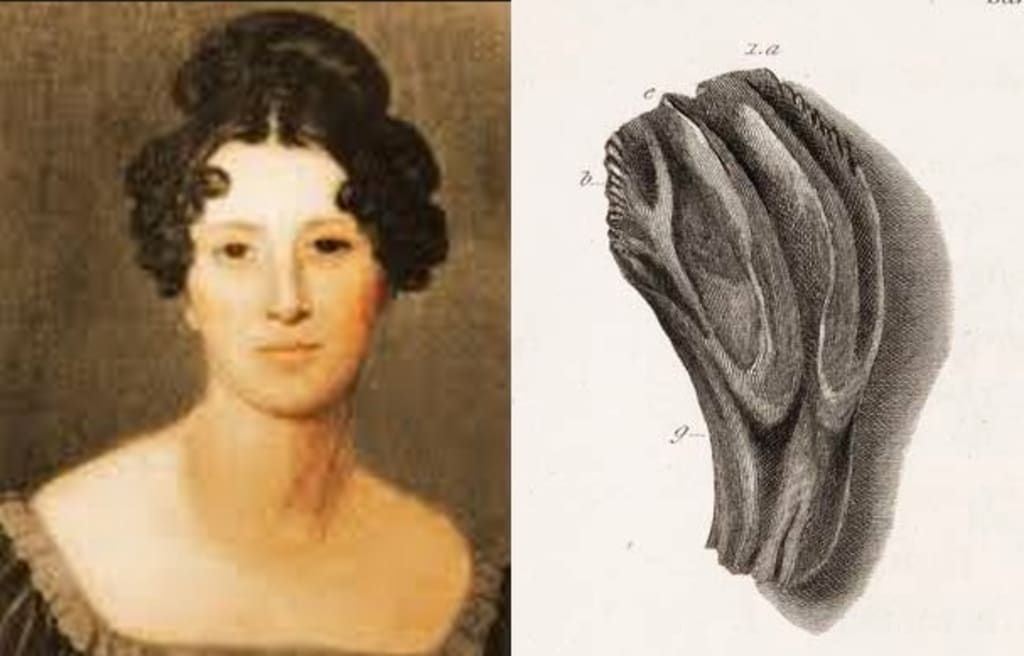
Mary Anning was a pioneering palaeontologist who made significant contributions to the field of geology and palaeontology in the early 19th century. Born on May 21, 1799, in the coastal town of Lyme Regis, England, Mary was the eldest of ten children. Her parents, Richard and Mary Anning, were poor but hardworking, and they instilled in Mary a love of learning and a strong work ethic.
From a young age, Mary was fascinated by the fossils that could be found in the cliffs and beaches near her home. She would spend hours searching for these ancient relics, and she quickly became skilled at identifying and collecting them. As she grew older, Mary began to sell the fossils she collected to tourists and collectors, and she also became a popular guide, leading people on fossil-hunting expeditions along the coast.
Despite her expertise, Mary faced many challenges as a woman in the scientific community. At the time, it was rare for women to be involved in scientific research, and Mary's work was often dismissed or credited to her male counterparts. She struggled to make a living from her fossil-hunting endeavours, and she was often forced to rely on the generosity of others to support her work.
Despite these obstacles, Mary persevered and continued to make important contributions to the field of palaeontology. In 1811, at the age of 12, she discovered the first known ichthyosaur skeleton. This was a ground-breaking find, as the ichthyosaur was a previously unknown species, and Mary's discovery helped to revolutionize our understanding of the Earth's history. The discovery caused a sensation in the scientific community and beyond, and it brought Mary a degree of fame and recognition.
In the years that followed, Mary made a number of other significant discoveries, including the first two plesiosaur skeletons, which were also previously unknown species. She also made important contributions to the study of belemnites, ammonites, and other fossils, and her work helped to shape our understanding of the Earth's past. Mary's discoveries were widely reported in the scientific press and were highly regarded by her peers, but she was never fully recognized for her contributions during her lifetime.
Despite her success as a fossil hunter, Mary struggled financially throughout her life. She was never able to secure a steady income from her work, and she was forced to rely on the sale of her fossils and the generosity of others to support herself. Despite these challenges, Mary remained dedicated to her work and continued to make important contributions to the field of palaeontology until her untimely death in 1847, at the age of 47.
After Mary's death, her contributions to the field of palaeontology were largely forgotten, and it wasn't until many years later that her work was finally recognized and celebrated for the pioneering contributions it had made. In the early 20th century, Mary's work was revisited and re-evaluated, and she was finally given the credit and recognition she deserved. Today, Mary Anning is remembered as one of the most important fossil hunters in history, and her legacy lives on as a testament to the power of curiosity and determination.
Despite the many challenges and obstacles, she faced, Mary Anning remains an inspiration to scientists and fossil enthusiasts around the world. Her contributions to the field of palaeontology were ground-breaking and far-reaching, and they helped to shape our understanding of the Earth's past and the evolution of life on our planet. Mary's story is a testament to the power of hard work, determination, and a love of learning, and it serves as a reminder that even in the face of adversity, it is possible to achieve great things and make a lasting impact on the world.
About the Creator
Luke Mines
As a writer, I have a passion for creating engaging and informative articles that inform, educate, and inspire my readers. I believe that writing articles is a powerful way to share knowledge and ideas with others.
Keep reading
More stories from writers in Education and other communities.
The One Lighting Move That Instantly Makes Your Photos Look Better
Photography advice often focuses on complex settings, advanced editing, or buying better equipment. While those things can help, they often distract from something far more powerful and immediate. One simple lighting habit can dramatically improve almost every photo you take, whether you’re shooting with a phone or a professional camera.
By Kelln Small2 days ago in Education
Managing Anxiety During Exams: A Student’s Guide
Exams are one of the most common sources of stress for students at every level. Even the most prepared individuals often feel nervous before or during a test. Exam anxiety is natural — it’s the body’s way of preparing for a challenge — but excessive stress can interfere with focus, memory recall, and overall performance. Understanding the causes of anxiety and learning effective coping strategies can make a significant difference. This guide provides practical, evidence-based techniques to manage stress before, during, and after exams.
By Games Mode On4 days ago in Education
Thoughts on Vocal and the way the world is
"Death cannot stop true love, only delay it." – Wesley in The Princess Bride. I decided to come back to Vocal on a very cold and dark night at the end of December. I had been, and still am, convalescing from a horrible staph infection that had gone misdiagnosed for months. This, paired with the increasing challenges of being healthy, making the best choices for my co-parented child, being a wife, and being a director at a new job, was a lot to manage.
By Jazzy 4 days ago in Confessions




Comments
There are no comments for this story
Be the first to respond and start the conversation.