
INTRODUCTION OF DIGITAL MARKETING
DIGITAL MARKITING
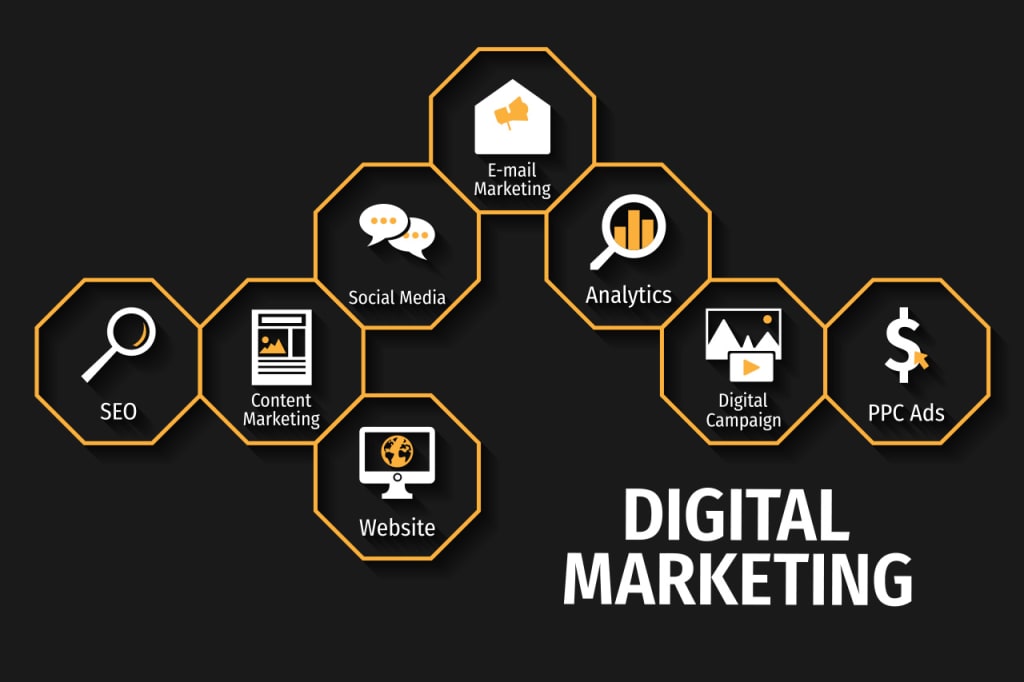
Digital marketing is a dynamic and ever-evolving field that encompasses a broad range of strategies and techniques used to promote products, services, and brands through digital channels. In today's interconnected world, where the internet has become an integral part of our daily lives, digital marketing has emerged as a crucial tool for businesses to reach and engage with their target audience.
At its core, digital marketing leverages various online platforms, such as search engines, social media, websites, email, mobile applications, and more, to deliver targeted messages and create meaningful interactions with customers. Unlike traditional marketing approaches, which predominantly rely on offline channels like print media or television, digital marketing offers a wealth of opportunities to precisely target specific audiences, measure campaign effectiveness, and drive tangible results.
The key components of digital marketing include:
Search Engine Optimization (SEO): Optimizing a website's content, structure, and technical aspects to improve its visibility in search engine rankings and drive organic (non-paid) traffic.
Pay-Per-Click Advertising (PPC): Placing targeted ads on search engines or other platforms and paying only when users click on them, enabling businesses to drive immediate traffic to their websites.
Social Media Marketing: Leveraging social media platforms like Facebook, Instagram, Twitter, LinkedIn, and others to build brand awareness, engage with audiences, and promote products or services.
Content Marketing: Creating and distributing valuable, relevant, and consistent content (such as blog posts, videos, infographics, etc.) to attract and retain customers, establish thought leadership, and drive conversions.
Email Marketing: Sending targeted emails to a subscriber list to nurture leads, promote products or services, and build long-term relationships with customers.
Influencer Marketing: Collaborating with influential individuals on social media or other digital platforms to tap into their audience and leverage their credibility and reach for brand promotion.
Mobile Marketing: Optimizing marketing efforts for mobile devices, including mobile-friendly websites, mobile apps, SMS marketing, and location-based targeting.
Data Analytics and Tracking: Utilizing tools and technologies to measure, analyze, and optimize marketing campaigns, gaining insights into customer behavior, preferences, and campaign performance.
Digital marketing offers numerous advantages, including global reach, precise targeting, cost-effectiveness, real-time feedback, and the ability to adjust strategies on the fly. It has revolutionized the way businesses connect with their customers, allowing for personalized and interactive experiences that drive engagement, foster brand loyalty, and ultimately contribute to business growth.
As the digital landscape continues to evolve, digital marketers must stay updated on emerging trends, new technologies, and shifting consumer behaviors to adapt and stay competitive in this fast-paced industry.
ADVANTAGES OF DIGITAL MARKETING:
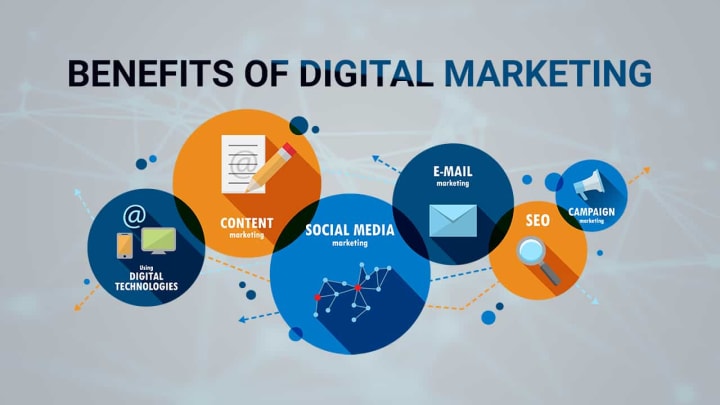
Digital marketing offers several advantages over traditional marketing methods. Here are some key advantages of digital marketing:
Global Reach: Digital marketing allows businesses to reach a global audience, breaking down geographical barriers. With the internet's widespread accessibility, you can connect with potential customers around the world, expanding your market and customer base.
Targeted Advertising: Digital marketing enables precise targeting of specific audience segments based on demographics, interests, behavior, and more. This targeted approach ensures that your marketing messages reach the right people, increasing the chances of engagement and conversion.
Cost-Effectiveness: Digital marketing can be more cost-effective compared to traditional marketing methods. Online advertising platforms often offer flexible budget options, allowing businesses of all sizes to create campaigns within their financial means. Additionally, digital marketing provides better measurement and analytics, allowing you to optimize your campaigns and allocate your budget more efficiently.
Measurable Results: With digital marketing, you can track and measure the performance of your campaigns in real-time. Various analytics tools provide insights into key metrics such as website traffic, conversions, engagement rates, and more. This data allows you to evaluate the effectiveness of your strategies and make data-driven decisions to improve your marketing efforts.
Interactivity and Engagement: Digital marketing allows for interactive and engaging experiences with your target audience. Through social media, email marketing, live chats, and personalized content, you can create two-way communication, build relationships, and encourage customer engagement and feedback.
Personalization: Digital marketing enables personalized marketing experiences tailored to individual customers. By leveraging data and segmentation, you can deliver personalized content, recommendations, and offers, enhancing customer satisfaction and increasing the likelihood of conversions.
Flexibility and Agility: Unlike traditional marketing methods, digital marketing allows for quick adjustments and optimizations. You can make changes to your campaigns in real-time, test different approaches, and adapt your strategies based on the data and feedback received. This agility ensures that you stay relevant and responsive to market trends and customer needs.
Brand Building and Thought Leadership: Digital marketing offers numerous opportunities to build and strengthen your brand identity. Consistent messaging, valuable content, and engaging interactions help establish your brand as an authority in your industry, fostering trust and loyalty among your audience.
Higher Conversion Rates: Digital marketing techniques, such as personalized targeting, remarketing campaigns, and optimized user experiences, contribute to higher conversion rates. By delivering the right message to the right people at the right time, digital marketing helps increase the likelihood of conversions and sales.
Integration and Multichannel Approach: Digital marketing allows for seamless integration across multiple channels. You can create cohesive marketing campaigns that span across websites, social media, email, mobile apps, and more. This integrated approach ensures consistent messaging and a unified brand experience for your customers.
Overall, digital marketing provides businesses with an array of advantages, including wider reach, precise targeting, cost-effectiveness, measurability, interactivity, personalization, flexibility, and increased conversion rates. Embracing digital marketing strategies has become essential in today's digital landscape to stay competitive and effectively engage with the modern consumer.
About the Creator
Keep reading
More stories from warda ali khan and writers in Education and other communities.
INTRODUCTION TO DATA SCIENCE
Data science is an interdisciplinary field that combines various techniques, tools, and methodologies to extract knowledge and insights from data. It involves using scientific methods, algorithms, and systems to analyze structured and unstructured data, uncover patterns, make predictions, and derive meaningful information.
By warda ali khan3 years ago in Education
What to Eat (And Avoid) During Colon Cancer Treatment: A Nutritionist-Approved Guide
When undergoing colon cancer treatment, your diet is more important than ever. The right nutrition can support your immune system, reduce side effects, and even enhance the effectiveness of treatments like chemotherapy and radiation. But knowing what to eat and what to avoid can be overwhelming.
By Erika Phillips 4 days ago in Education
Hands of Hope: The Impact of Volunteer Service in Faith-Based Communities
Faith is often expressed through prayer and reflection, but its true strength is revealed through action. Volunteers play a vital role in translating belief into meaningful service, helping churches grow and positively influence the communities around them. Through dedication, compassion, and teamwork, volunteers become the driving force behind outreach, support, and connection. Their efforts demonstrate how service rooted in faith can create lasting change.
By Mike Signorelli6 days ago in Education




Comments
There are no comments for this story
Be the first to respond and start the conversation.