

Data science is an interdisciplinary field that combines various techniques, tools, and methodologies to extract knowledge and insights from data. It involves using scientific methods, algorithms, and systems to analyze structured and unstructured data, uncover patterns, make predictions, and derive meaningful information.
The primary goal of data science is to gain a deeper understanding of data and leverage that understanding to solve complex problems and make informed decisions. Data scientists utilize a wide range of skills, including statistics, mathematics, programming, machine learning, and domain expertise to extract value from data.
Here are some key components and concepts associated with data science:
Data Collection: Data scientists gather data from various sources such as databases, APIs, sensors, social media platforms, and more. They ensure the data is relevant, comprehensive, and reliable.
Data Cleaning and Preprocessing: Raw data often contains errors, missing values, inconsistencies, and noise. Data scientists perform data cleaning and preprocessing tasks to handle these issues, ensuring the data is in a usable format.
Exploratory Data Analysis (EDA): EDA involves examining and visualizing data to discover patterns, relationships, and trends. It helps data scientists gain initial insights into the data and guide further analysis.
Statistical Analysis: Statistical methods are employed to analyze data and uncover meaningful insights. Techniques such as hypothesis testing, regression analysis, and clustering are used to identify patterns and relationships in the data.
Machine Learning: Machine learning algorithms are used to build models that can make predictions or take actions based on patterns in the data. This includes techniques like classification, regression, clustering, and deep learning.
Data Visualization: Data scientists use visual representations, such as charts, graphs, and dashboards, to communicate findings effectively. Visualization helps stakeholders understand complex information and make data-driven decisions.
Big Data and Distributed Computing: With the rise of big data, data scientists often work with large datasets that cannot be processed using traditional methods. Distributed computing frameworks like Apache Hadoop and Spark enable the processing and analysis of big data.
Ethical Considerations: Data scientists must adhere to ethical guidelines when working with sensitive or personal data. They need to ensure privacy, fairness, transparency, and accountability in their data-related activities.
Domain Expertise: Data scientists often specialize in specific domains, such as healthcare, finance, marketing, or cybersecurity. Domain knowledge helps them understand the context and apply data science techniques effectively.
Continuous Learning: Data science is a rapidly evolving field. Data scientists need to stay updated with the latest tools, techniques, and research to keep improving their skills and adapt to new challenges.
Data science finds applications in various industries and domains, including healthcare, finance, retail, manufacturing, telecommunications, and social media. It helps organizations make data-driven decisions, optimize processes, improve customer experiences, and gain a competitive edge in the market.
ADVANTAGES OF DATA SCIENCE :
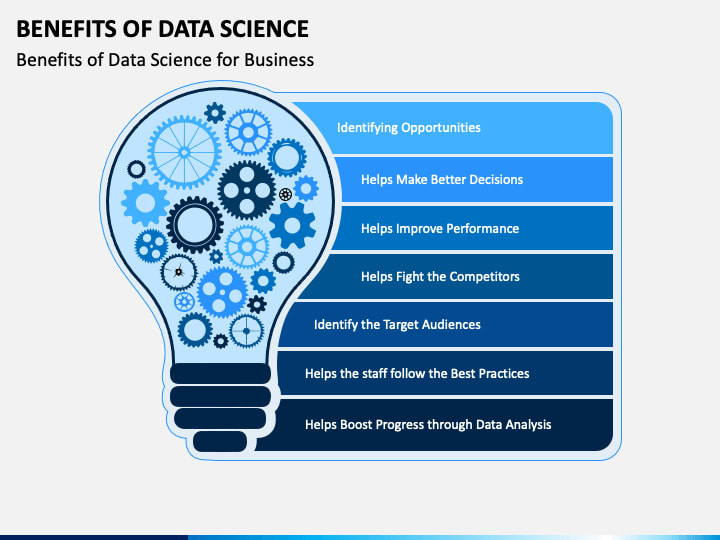
Data science offers several advantages that make it a valuable field in various industries. Here are some key advantages of data science:
Data-Driven Decision Making: Data science enables organizations to make informed decisions based on evidence and insights derived from data analysis. By leveraging data, organizations can identify patterns, trends, and correlations, which helps them make accurate predictions, optimize strategies, and mitigate risks.
Improved Operational Efficiency: Data science techniques can help organizations streamline their operations and improve efficiency. By analyzing data, organizations can identify bottlenecks, optimize processes, and make data-driven adjustments to increase productivity and reduce costs.
Enhanced Customer Insights: Data science allows organizations to gain a deeper understanding of their customers. By analyzing customer data, organizations can identify preferences, behavior patterns, and trends. This information helps in developing targeted marketing campaigns, personalized recommendations, and improved customer experiences.
Product and Service Innovation: Data science plays a crucial role in driving innovation. By analyzing market trends, customer feedback, and usage patterns, organizations can identify opportunities for new products or service enhancements. Data science techniques also enable organizations to test and iterate their ideas, leading to more successful and customer-centric innovations.
Fraud Detection and Risk Mitigation: Data science techniques are valuable in identifying fraudulent activities and mitigating risks. By analyzing patterns and anomalies in data, organizations can detect potential fraud in financial transactions, insurance claims, cybersecurity threats, and more. This helps in preventing losses, protecting assets, and ensuring security.
Predictive Analytics: Data science enables organizations to make accurate predictions and forecasts. By analyzing historical data and using machine learning algorithms, organizations can predict customer behavior, market trends, demand for products or services, and more. Predictive analytics helps in making proactive decisions, optimizing resource allocation, and staying ahead of the competition.
Data-Backed Marketing and Sales Strategies: Data science empowers organizations to develop targeted marketing and sales strategies. By analyzing customer data, organizations can identify their target audience, personalize marketing campaigns, optimize pricing strategies, and improve customer segmentation. This leads to more effective marketing efforts, increased customer engagement, and higher conversion rates.
Improved Healthcare and Medical Research: Data science has significant implications for the healthcare industry. By analyzing patient data, medical records, and genomic data, researchers can gain insights into diseases, identify risk factors, and develop personalized treatments. Data science also helps in optimizing healthcare operations, resource allocation, and disease outbreak prediction.
Competitive Advantage: Organizations that effectively leverage data science gain a competitive edge in the market. By utilizing data-driven insights, organizations can make better strategic decisions, improve operational efficiency, and deliver enhanced products or services. This enables them to stay ahead of their competitors and respond quickly to market changes.
Continuous Learning and Improvement: Data science is an iterative process that encourages continuous learning and improvement. Organizations can collect feedback, measure the effectiveness of their strategies, and use data science techniques to refine their approaches. This leads to a culture of learning and innovation within the organization.
Overall, data science offers numerous advantages that help organizations extract value from their data, make better decisions, and drive innovation across various industries.
About the Creator
Keep reading
More stories from warda ali khan and writers in Education and other communities.
INTRODUCTION OF WEB DESIGNING
Web designing is the process of creating and designing websites. It involves various disciplines and skills such as layout design, graphic design, typography, color theory, user experience (UX) design, and coding. Web designers use these skills to develop visually appealing and user-friendly websites that effectively convey information and engage the audience.
By warda ali khan3 years ago in Education
Beyond Speed: How High-Performance Computing Is Shaping Tomorrow’s Discoveries
High-Performance Computing is changing how people explore ideas, test theories, and solve complex problems. It allows machines to work together at great speed. These systems can handle tasks that are far too large for standard computers. As a result, High-Performance Computing and the future of discovery are closely linked.
By Jason Pruetabout 21 hours ago in Education
Why Did Einstein Dislike Quantum Mechanics? The Greatest Scientific Disagreement Ever
Einstein Helped Create Quantum Mechanics It is often forgotten that Einstein was a pioneer of quantum physics. In 1905, Einstein proposed that light comes in discrete packets called photons. This explained the photoelectric effect and earned him the Nobel Prize. His work was one of the pillars of quantum theory.
By shahkar jalal4 days ago in Education
Wild Card Weekend Recap: What Happens Now?
I think I figured out why I love Wild Card Weekend so much. It's because it's the first playoff anything of the calendar year. The NFL season starts in the fall, and once upon a time, the champion was crowned either on or slightly before New Year's. The evolution of the NFL schedule has resulted in the playoffs starting just into the New Year, and currently, the final week of the season falls on the first weekend of the New Year, with Wild Card Weekend coming a week after that. So yes, chronologically, the NFL's Wild Card Weekend serves as the first playoff anything of the calendar year.
By Clyde E. Dawkins4 days ago in Unbalanced




Comments
There are no comments for this story
Be the first to respond and start the conversation.