
Integrating AI in RPG Level Design: A Practical Approach
Unlock the power of artificial intelligence to streamline RPG level design, enhance creativity, and build immersive game worlds more efficiently than ever before

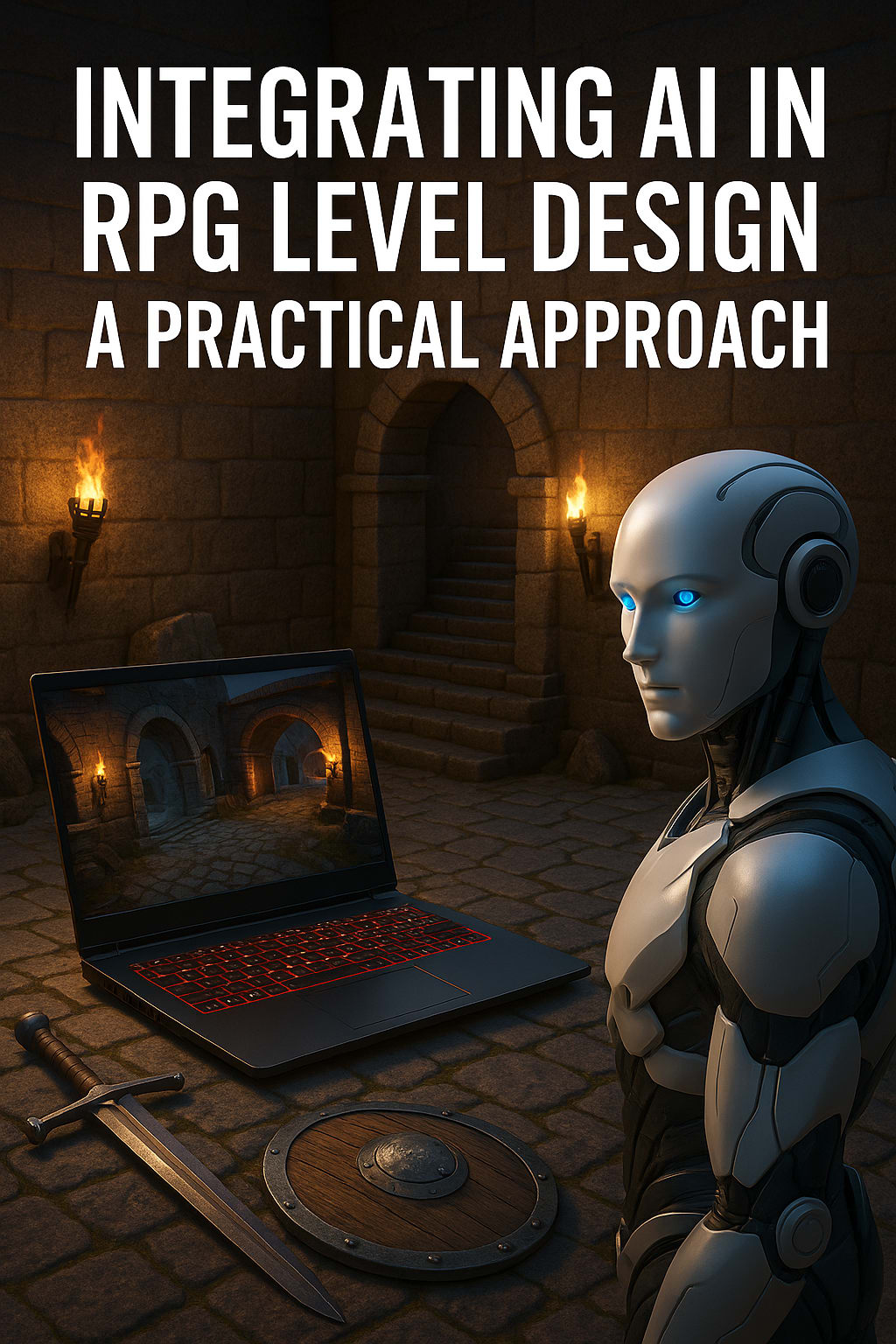
Artificial Intelligence is no longer a futuristic buzzword; it’s rapidly becoming a practical tool in game development. In role-playing games (RPGs), where level design is central to immersion, pacing, and storytelling, AI is beginning to reshape traditional workflows.
The integration of machine learning and procedural intelligence into RPG level design isn't just a matter of automation—it’s a rethinking of how worlds are created, how players explore them, and how stories are told through space.
Why AI Matters in RPG Level Design
RPGs thrive on complexity. Branching narratives, nonlinear exploration, dynamic encounters, and layered environments form the genre's backbone. Designing such experiences is time-consuming and resource-heavy. This is where AI steps in—not to replace human designers, but to augment them.
AI in level design can accelerate prototyping, reduce repetitive tasks, and introduce variation that might not arise from human intuition alone. When integrated thoughtfully, AI can even offer new ways of thinking about space, challenge, and player behavior.
It becomes not just a tool, but a collaborator.
Understanding the Role of AI
Before diving into application, it's crucial to understand the types of AI involved in level design. Generally, we deal with two broad categories:
- Procedural Generation Algorithms: These include rule-based systems, Perlin noise, cellular automata, and more complex grammar-based systems. While not always classified as "AI" in the strictest sense, these form the foundation for generative content.
- Machine Learning Models: These are trained on data—levels, playthroughs, player choices—and used to predict, generate, or evaluate content. Neural networks, reinforcement learning, and genetic algorithms are common here.
Each approach has strengths. Procedural systems are transparent and easy to tune.
Machine learning models, though often opaque, can uncover patterns and possibilities humans might overlook. The key lies in knowing when and how to use each.
Practical Applications: From Concept to Execution
1. Automating Terrain and Environment Layout
Creating the skeleton of a map—caves, forests, towns, dungeons—often starts with blockouts. AI can assist by generating rough layouts based on criteria like narrative pacing, biome type, or difficulty progression.
For instance, a trained model can look at thousands of past dungeon layouts and generate a plausible new one in seconds.
But human input remains essential. Designers fine-tune paths, add storytelling beats, and ensure the generated spaces support intended gameplay.
Think of AI as the assistant laying down the stone, while the designer sculpts the statue from it.
2. Dynamic Encounter Placement
One of the more nuanced challenges in RPGs is placing enemies, NPCs, and interactive elements in a way that feels balanced yet surprising. AI can analyze player progression, previous encounters, and skill level to suggest (or dynamically place) encounters that suit the current context.
This is especially powerful in open-world or systemic RPGs where handcrafted control over every moment isn’t feasible. AI ensures variety and challenge without breaking immersion.
3. Learning from Player Behavior
With reinforcement learning or behavior modeling, AI can watch how real players interact with environments. Which paths are taken? Which areas are ignored? Where do players get lost, or stuck?
This feedback loop allows for rapid iteration. Levels can be adjusted or even regenerated based on live data, making each version smarter than the last. It's the difference between designing in a vacuum and designing in conversation with your audience.
4. Enhancing Procedural Storytelling
Procedural content is often criticized for lacking narrative depth. But with natural language generation and AI-driven event systems, that’s changing. AI can now string together modular narrative beats based on world states, character arcs, and past player decisions.
In a practical setting, this means you might generate not just a cave system, but a reason for its existence. The abandoned mine might contain evidence of a forgotten war, discovered dynamically through AI-curated storytelling sequences.
Tools and Techniques for AI Integration
There’s no one-size-fits-all toolchain, but some approaches have proven effective:
- GANs (Generative Adversarial Networks) for map generation. These can create believable terrain features or floor layouts trained on real-world maps or legacy game levels.
- Markov Chains for lightweight procedural generation, especially useful in creating logical room sequences or encounter flows.
- Reinforcement Learning Agents that “playtest” levels autonomously, exposing balance issues and unintended exploits.
- Unity ML-Agents, Houdini, and Unreal Engine’s procedural systems offer direct pipelines for integrating intelligent generation into commercial workflows.
However, tooling must serve design. No AI solution should be implemented without a clear benefit to player experience or developer workflow.
Common Pitfalls and How to Avoid Them
Overreliance on Automation
It’s tempting to lean too heavily on generative systems, especially under tight deadlines. But unfiltered output leads to sameness, or worse, incoherence. Always apply human curation, especially in narrative-heavy RPGs.
Ignoring Design Intent
AI must be guided. A model that generates impressive layouts might ignore crucial gameplay needs: line of sight, backtracking loops, safe zones. Set rules. Feed constraints. Teach it your design philosophy.
Lack of Iteration
AI-generated content needs as much playtesting as handcrafted work. Blind trust leads to broken loops or softlocks. Implement systems for review, feedback, and quick tuning.
The Future of AI in RPG Level Design
We're still at the beginning. The future holds immense possibilities: AI that adapts levels in real-time based on mood, weather, or player emotion. Generators that co-write lore, design architecture styles, and create regional cultures procedurally. Worlds that feel not just big, but alive.
But getting there requires careful integration today. Practical use over theoretical perfection. Collaboration between AI and human creativity.
Integrating AI into RPG level design isn’t about replacing imagination—it’s about scaling it. The best AI tools don’t dictate design; they empower it.
They build bridges between intention and execution, allowing developers to focus on what really matters: crafting worlds that feel real, stories that resonate, and experiences that players remember long after the credits roll.
Used wisely, AI becomes more than code. It becomes part of the creative process.
About the Creator
Richard Bailey
I am currently working on expanding my writing topics and exploring different areas and topics of writing. I have a personal history with a very severe form of treatment-resistant major depressive disorder.
Keep reading
More stories from Richard Bailey and writers in Education and other communities.
What to Eat (And Avoid) During Colon Cancer Treatment: A Nutritionist-Approved Guide
When undergoing colon cancer treatment, your diet is more important than ever. The right nutrition can support your immune system, reduce side effects, and even enhance the effectiveness of treatments like chemotherapy and radiation. But knowing what to eat and what to avoid can be overwhelming.
By Erika Phillips 5 days ago in Education
Surviving Cancer: Entering the Golden Alchemical Door to Teaching
It starts with love . . . Entering the Golden Door: Who Am I? Going through cancer treatments with chemo, a strange thing happened, for I started to forget things, even who I am because my wife ghosted me and my friends would have nothing to do with me. Without human contact, you forget what it means to be human. I am a professor at a university, but I forgot what I taught. . . .
By WILD WAYNE : The Dragon Kingabout 10 hours ago in Education




Comments
There are no comments for this story
Be the first to respond and start the conversation.