
Creating Tactical Combat Systems for Grid-Based RPGs: A Deep Dive
Master the art of designing deep, strategic, and engaging turn-based combat systems for grid-based RPGs with this comprehensive guide for game developers

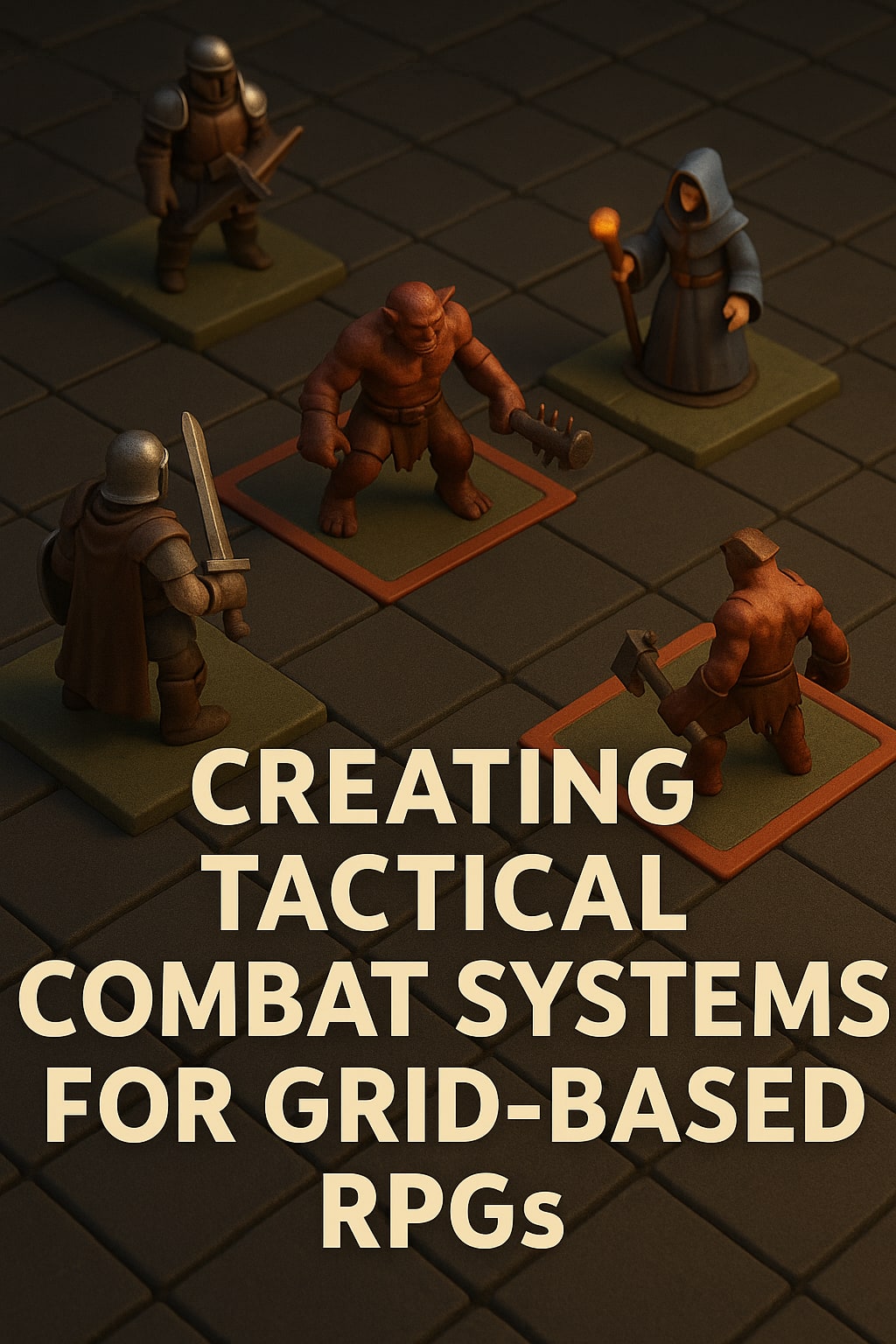
Tactical combat in grid-based RPGs is more than just numbers and tiles. It's a balancing act between systems, feedback loops, player psychology, and raw strategic depth.
At its best, it transforms basic movement and action choices into tense, meaningful decisions. But getting there isn’t easy.
This article will take you through the design process. We'll explore the building blocks of tactical systems, how they interact, and what separates forgettable combat from unforgettable encounters.
Why Grid-Based Combat Still Works
Despite trends toward real-time action, grid-based tactical systems remain relevant.
Why? They offer clarity.
The grid provides structure, enabling players to measure and predict outcomes precisely. Movement, line of sight, range, and area-of-effect mechanics are more readable and intuitive.
Clarity, however, is just the surface. The real draw lies in choice density. A simple 10x10 grid can offer thousands of move combinations. Combine that with abilities, environmental effects, and enemy behavior, and each turn becomes a puzzle waiting to be solved. That's the core appeal.
Step 1: The Foundation – Grids, Units, and Turns
Before spells fly and swords clash, you need a core structure.
The Grid
Decide on dimensions. Square grids are standard, but hexes offer smoother diagonal movement and better balance between adjacent cells.
Squares introduce complications like diagonal cost and flanking rules, but also open up more orthogonal tactics.
Unit Stats
Define stats with care. HP, AP (action points), movement, attack range, defense, status resistances, these are your verbs. Every stat should create or limit player options. Avoid bloat.
Each value should influence decision-making in a distinct way.
Turn Economy
How many actions per turn? Do you allow movement and attack, or create a pool of points to be spent freely? Are actions interruptible? Can they be queued?
Think of the turn system as the skeleton. It holds everything else up.
Step 2: Designing Core Mechanics
At the heart of any tactical system are the mechanics that govern how players interact with the battlefield.
Movement and Positioning
Movement isn’t just locomotion. It’s a tactical expression. Add terrain modifiers, slow zones, high ground, and cover to make movement choices matter. Create abilities that reward clever positioning.
Let the battlefield tell a story, and make players move through it meaningfully.
Attack Rules
Basic attacks need to feel tight. Avoid too much randomness; players hate losing because a 95% chance failed. Instead, add randomness around damage variance, not success. Introduce clear telegraphs, predictable enemy AI, and meaningful counters.
Status Effects
Stuns, slows, burns, silences—status effects add layers of strategy. But don't overuse them. If every enemy inflicts a debuff, it becomes noise. Build status effects with clear trade-offs and synergy in mind. Let players craft combos.
Step 3: Systems of Risk and Reward
Cover and Line of Sight
Cover systems add tactical richness. Hard cover can completely block damage, while soft cover might reduce accuracy. Integrate line of sight rules with elevation, fog of war, and obstacles to turn the environment into a weapon or a shield.
Critical Hits and RNG
A little RNG adds excitement. Too much makes planning feel useless. If you use critical hits, tie them to positioning or conditional triggers, e.g., hitting from behind, attacking after movement, or combo-ing with a specific ability.
Cooldowns vs. Resource Costs
Abilities need constraints. Cooldowns add timing considerations; mana or energy systems introduce economy management. Decide which fits your pacing. Hybrid systems can work, but they risk overcomplicating things.
Step 4: AI That Doesn’t Feel Artificial
Enemy AI is one of the most overlooked parts of tactical RPGs. Good AI doesn't mean perfect play. It means believable play.
Design enemy behavior with intent. Basic enemies should use simple logic: move, attack, retreat when low on health. Bosses, on the other hand, should use more advanced tactics, targeting healers, flanking, and coordinating with allies.
Pattern-based AI can work wonders. Show players enough consistency that they can learn and counter. Then, add unpredictability just often enough to keep them on their toes.
Step 5: Designing for Variety and Replayability
Combat that plays the same every time becomes stale quickly.
Unit Classes and Synergy
Create clear unit archetypes, tanks, ranged attackers, support casters, but blur the lines a little. Let players mix and match skills. Synergy between units should emerge naturally, not just through predefined combos.
Environmental Interaction
Let players push enemies off cliffs. Burn bridges. Freeze water. Turn the terrain into a tactical toybox. This increases the mental load, yes—but also the fun.
Objectives Beyond “Kill All Enemies”
Add variety with secondary objectives: defend, escape, escort, and control zones. These encourage movement, force split decisions, and keep combat feeling fresh.
Step 6: Feedback, UX, and Player Feel
Even the best-designed system falls flat without proper feedback.
Clarity of Information
Make ranges, area-of-effect zones, and enemy intents visible. Use tooltips, overlays, and subtle animations. Show the turn order clearly. The player should never be confused about what's happening or why.
Weight and Impact
Combat should feel satisfying. Use sound, camera shake, hit pause, and visual effects to sell the impact of an action. Without feedback, even the smartest tactics can feel dull.
Undo Systems and Safeguards
Allow players to preview moves. Include undo options, even if limited. Mistakes in tactical RPGs often stem from misclicks, not bad strategy. Respect the player's intent.
Step 7: Balancing the System
Balance isn't just about numbers. It's about pacing, progression, and how choices evolve over time.
Start Small, Scale Gradually
Early battles should teach mechanics clearly. Don't overwhelm the player. Layer in complexity. Let them grow into the system before testing their mastery.
Difficulty Curves
Introduce spikes, but with fair warning. Let the player learn from failure. Build optional challenges for veterans, but keep the main path accessible.
Meta-Progression and Loadouts
Give players reasons to experiment. Whether through skill trees, gear, or unlocks, reward experimentation. But be cautious, don’t let the metagame make tactics irrelevant.
Designing for the Mind Behind the Mouse
Tactical combat isn’t about the system. It’s about the player’s mind moving through it.
Design with psychology in mind. Give them tension. Let them feel clever. Let them suffer a little, then soar. A great tactical system offers a mental dance, part puzzle, part prediction, part creative expression.
And always, always test with real players. The numbers can’t tell you what a person feels. Only people can do that.
Build your system like a battlefield: structured, complex, and alive. Then invite players to master it.
About the Creator
Richard Bailey
I am currently working on expanding my writing topics and exploring different areas and topics of writing. I have a personal history with a very severe form of treatment-resistant major depressive disorder.
Keep reading
More stories from Richard Bailey and writers in Education and other communities.
The Art of Crafting Compelling Game Narratives on a Limited Budget
Creating a game that resonates emotionally with players doesn't require millions in funding or a blockbuster-sized team. In fact, some of the most memorable stories in gaming history have come from indie developers working with tight budgets and limited resources. The secret? Mastering the art of storytelling.
By Richard Bailey11 months ago in Education
AI in eLearning Market to Reach USD 12.2 Billion by 2033: Driving Personalized Learning
Market Overview Artificial Intelligence in eLearning represents the integration of machine learning, natural language processing, and advanced analytics into digital learning systems. These technologies allow educational platforms to analyze learner behavior, automate assessments, and provide adaptive learning experiences. AI driven tools can identify learning gaps, recommend personalized study paths, and improve student engagement through interactive digital environments. As education increasingly shifts toward digital platforms, the role of AI technologies in improving learning efficiency continues to expand.
By Roberto Crum3 days ago in Education
Where Energy, Finance, and Technology Converge: Shaping the Future of Modern Infrastructure
In today’s global economy, the boundaries between industries are becoming less distinct. Energy, finance, and technology are no longer separate sectors operating independently. Instead, they are increasingly connected, forming a dynamic ecosystem that supports modern infrastructure and economic development. Navigating the intersection of these three fields requires a deep understanding of how innovation, capital, and energy systems interact.
By Matthew J Smitha day ago in Education
Early March 2026: 4 Goals Accomplished
It's early March and I've now accomplished my 4th writing goal for the year of 2026. Before diving into the behind-the-scenes of it... why not tell you up front what that accomplishment was? I was published in a 2nd publication for this year. Published in Helix Literary Magazine out of Central Connecticut State University. You can read it for free right now!
By Stephen Kramer Avitabilea day ago in Writers



Comments
There are no comments for this story
Be the first to respond and start the conversation.