
how many weeks in a school year
Discover how many weeks are typically in a school year

How Many Weeks Are in a School Year?
When planning for the academic year, one of the most common questions parents, teachers, and students ask is: "How many weeks are in a school year?" The answer isn't always straightforward, as it can vary based on the country, educational system, and school district. However, understanding the typical duration of a school year and the factors that influence its length can help set expectations and allow for better planning.
The Standard Duration of a School Year
In most countries, the school year generally lasts between **36 to 40 weeks** of instruction. This is the number of weeks students are typically in class, not including weekends, holidays, or school breaks. Let’s explore the variations across different educational systems:
1. United States
In the U.S., a typical school year lasts around **36 weeks**, with about 180 school days. This period is broken down into two semesters, with breaks for holidays, winter, and spring. These 36 weeks can vary slightly depending on the state or school district, but 180 days is a common benchmark mandated by most states.
For instance, a typical school year might start in late August or early September and end in late May or early June. However, there may also be summer school programs, extended breaks, and variations in the number of instructional days based on local decisions
2. United Kingdom
In the UK, the school year typically runs for **39 weeks**, divided into three terms: Autumn, Spring, and Summer. However, students also have holidays such as Christmas, Easter, and summer breaks, which reduce the number of actual instructional days. The exact duration may vary slightly depending on the local education authority or school.
3. Canada
In Canada, the school year generally spans **36 to 40 weeks**, similar to the U.S. Schools typically begin in early September and end in late June. There are typically 180 school days, with holidays like Christmas and spring break in between
4. Australia
In Australia, the school year runs for about **40 weeks**, split into four terms. The academic year starts in late January or early February and finishes in December. Like other countries, Australian students have several breaks, including summer vacation, which is different from the Northern Hemisphere due to the reversed seasons.
5. Other Countries
The length of the school year can also vary in other countries, but it generally falls within the range of **36 to 40 weeks**. Countries in Europe, like France and Germany, have similar school-year lengths, typically running about 36 to 39 weeks. Meanwhile, in some countries, such as Japan, the school year can be slightly longer, running up to **40 weeks** or more.
Factors Influencing the Length of a School Year
The duration of a school year can be influenced by a variety of factors, including:
1. National and Regional Regulations
Many countries have regulations that mandate a minimum number of instructional days or weeks. For instance, in the U.S., the federal government does not set the length of the school year, but most states have their own requirements. In contrast, countries like Japan or South Korea may have longer school years to accommodate their rigorous educational systems.
2. School Holidays
Holidays significantly impact the length of the school year. Christmas, Easter, and summer breaks all reduce the number of instructional days. In addition, some countries have regional holidays that may vary from district to district, adding further complexity.
3. Weather and Natural Disasters
In some parts of the world, the school year may be altered or extended due to weather events like snowstorms or natural disasters like hurricanes. Schools may close for several days or even weeks, which can impact the total number of weeks students are in class.
4. School Types
Private schools and charter schools sometimes have different schedules compared to public schools. For instance, private institutions may offer more flexible or specialized calendars that include year-round schooling, extending the school year and providing shorter but more frequent breaks.
Why Does the Length of the School Year Matter?
The length of the school year can have a significant impact on students' academic performance and overall well-being. Here are some reasons why the length matters:
- Academic Achievement: Longer school years may provide students with more time to learn and absorb material, potentially leading to better academic outcomes. However, the quality of teaching and learning also plays a crucial role in this.
- Breaks and Mental Health: Adequate breaks are essential for students' mental health. Extended holidays, particularly summer break, offer time to rest and recharge, which can contribute to a more productive and less stressful school year.
- Summer Learning Loss: In many countries, students experience a decline in knowledge over the long summer break. This is known as "summer learning loss," and it can be a factor in why some education systems explore year-round schooling or extended school years.
Conclusion
While the typical school year lasts anywhere from 36 to 40 weeks of instruction, the specific duration can differ depending on the country, region, and school district. Understanding the number of weeks in a school year helps families and educators plan their schedules effectively. Whether you're a parent, teacher, or student, knowing the school year’s length is essential for managing time, balancing academic goals, and ensuring sufficient breaks for recovery and relaxation.
About the Creator
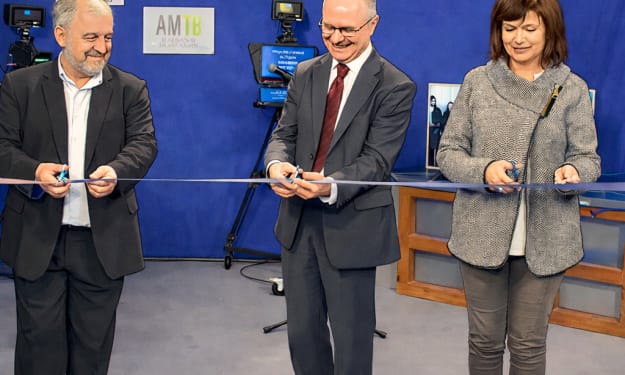
The Unique Case of Alma Mater TV
(A Review of Charmaine Voigt's Dissertation on Practical Media Training) Abstract This review examines the Bulgarian case study of Alma Mater TV as discussed in Charmaine Voigt's doctoral dissertation College Television: Practical Media Training in US and German Higher Education. While Voigt's work focuses primarily on Anglo-American and German contexts, the Bulgarian example stands out as an exceptional and largely unmatched model of student television in Europe. Alma Mater TV, based at the Faculty of Journalism and Mass Communication at Sofia University 'St. Kliment Ohridski', functioned not merely as a training platform but as a fully operational public-facing television project. Students produced and aired original programmes on Bulgaria's largest national broadcasters without censorship or editorial interference, while simultaneously participating in the creation of a European student television network. This review argues that Alma Mater TV represented a globally unique pedagogical and institutional experiment whose decline resulted not from structural failure but from a lack of strategic vision at the university leadership level. Particular attention is paid to the decisive roles of Professor Svetla Bozhilova and Professor Peter Ayolov in establishing and sustaining this model.
By Peter Ayolova day ago in Education
Why Understanding the Problem Matters More Than the Stack
Modern software development places extraordinary emphasis on tools. New frameworks promise productivity, new languages promise safety, new architectures promise scale. Engineers debate stacks with near-ideological intensity. Yet many of the most expensive failures in software have nothing to do with poor technology choices. They stem from something more fundamental: a shallow understanding of the problem being solved.
By Gustavo Woltmanna day ago in Education



Comments
There are no comments for this story
Be the first to respond and start the conversation.