
How Loan Rejections Leave a Mark on Your CIBIL Credit Report
Learn how loan rejections impact your CIBIL credit report. Understand how repeated loan applications lower your score, why hard inquiries matter, and smart ways to avoid damaging your credit profile.


It can seem like taking a huge step towards your financial goal when you apply for a mortgage. Most people seek financial assistance from banks and other financial institutions, whether it is for a home purchase, a car, an education or for personal reasons. Many applicants are shocked when they find out that their loan application has been rejected. Even more shocking, these rejections can have a long-lasting impact on your CIBIL Credit Report.
This blog will explain the impact of loan rejections on your credit score. We'll also discuss how repeated applications can negatively affect your score and ways to avoid it.
What Happens If You Request a Loan
The lender will check your CIBIL Credit Report every time you request a credit card or loan to determine your creditworthiness and repayment history. This is known as a “hard inquiry”.
- Your credit report will show a Hard inquiry.
- When you submit a single application to multiple banks, they will all conduct a thorough investigation.
- If you make too many requests in a very short period of time, it may give the impression that your "credit is not secure."
Repeated applications can lower your CIBIL rating.
Does your report show loan rejections?
It is a common myth that your credit score will reflect the actual rejection. The truth is:
- The rejections are not directly recorded.
- The Hard Inquiries of lenders are recorded.
- Your report will tell future lenders that you were not approved if it shows multiple inquiries, but no loans.
While the effect of rejection is not visible directly, it can be seen through patterns in inquiry.
How repeated loan applications affect your CIBIL report
- More Inquiries = Low Score Every hard enquiry can reduce your score by several points. The damage is multiplied by multiple inquiries.
- Perceived risk :- The lender assumes that someone who applies to multiple banks has financial difficulties. It reduces the chances that you will be approved.
- Negative Cycle :- Rejected Application - More Inquiries - Lower Score - It is harder to Get Approved The cycle of rejections can lead you into a downward spiral.
- Effect on Future Credit Needs A history of excessive credit applications may stay on your record for many years and make it difficult to get favorable terms.
How to avoid Loan Rejection?
1. Review Your CIBIL report first
Before you apply, check your credit history for any errors or unpaid accounts. Before applying, correct any issues.
2. Improve Your Score
- EMIs, credit cards and other bills must be paid on time.
- Keep a low credit usage ratio.
- Pay past dues to avoid defaults.
3. Apply Only When Eligible
Research lender requirements--minimum score, income level, documents--before applying. It reduces your risk of being rejected.
4. Spread Out Your Applications
Don't Rush to Apply for Another Lender If One Rejects You, Do Not Apply For Another. Then, wait a couple of months to improve your credit score and apply with a strategic approach.
5. Pre-Approved Loans
Often, banks offer pre-approved loans to customers who have a solid track record. By accepting such offers, you can avoid unnecessary inquiries.
Last Thoughts
The rejection of a loan is not the end, but the CIBIL score will show the traces. The rejection is not listed on your CIBIL report, but the number of hard inquiries does. Repeated rejections lower your credit score, making future approvals even more difficult.
Plan carefully, build your credit score, and don't apply to several lenders simultaneously. Smart planning will help you protect your credit and get the loans that you need.
FAQs
Q1. Does a loan rejection directly appear on my CIBIL report?
No, rejections don’t directly appear. However, the hard inquiries made by lenders are recorded, indirectly signaling the rejection.
Q2. How many points does a hard inquiry reduce my CIBIL score?
Typically, each hard inquiry can reduce your score by 5–10 points. Multiple inquiries within a short period can significantly lower your score.
Q3. How long do hard inquiries stay on my report?
Hard inquiries usually remain on your report for up to 2 years.
Q4. Can I apply for another loan immediately after rejection?
It’s not advisable. Instead, review the reason for rejection, improve your score, and wait a few months before reapplying.
Q5. Will checking my own CIBIL score affect my report?
No. Checking your own score is considered a soft inquiry, which has no impact on your credit score.
About the Creator
Akhil Sharma
I'm Akhil sharma, a dedicated digital marketer at SurePass, a leading provider of API and background verification solutions. With a passion for leveraging technology to streamline processes and enhance security.
Keep reading
More stories from Akhil Sharma and writers in Education and other communities.
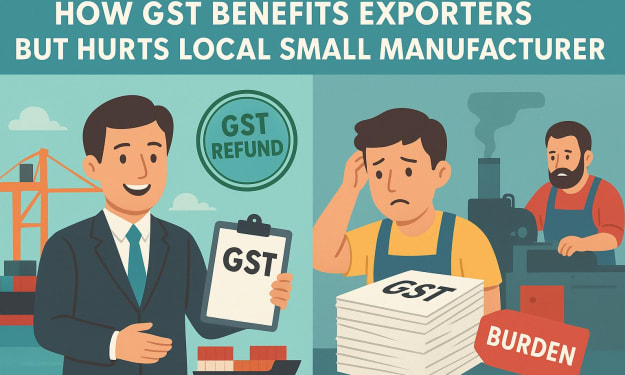
How GST Benefits Exporters but Hurts Local Small Manufacturers
The Goods and Services Tax (GST) was enacted in India as part of the "one nation, one tax" change with the aim of reducing indirect taxes as well as creating a single market. Although it has simplified several processes, its effect was not evenly distributed across different sectors. Exporters generally reap the most benefits of GST however small local manufacturers are stymied by compliance expenses, cash flow problems as well as stiff competitors. We will look into the positives and negatives of GST especially for exporters as well as small-scale manufacturers.
By Akhil Sharma5 months ago in Education
What Market Volatility Means for Your Investment Plan and Financial Future
Market volatility is a common but often misunderstood feature of investing. It refers to the unpredictable and sometimes dramatic changes in asset prices over short periods. These fluctuations are driven by factors such as economic data, corporate earnings, geopolitical events, and investor sentiment. For many, volatility can cause anxiety, but with the right knowledge and strategy, it becomes something to navigate, not fear.
By Winston Fengabout 2 hours ago in Education
The Path to Salvation
The late autumn evening air filled the monk's lungs, but it wasn't the season that chilled his bones. The heavy-handed presence of evil he had sensed upon entering the woods surrounding this mountain village had not bothered to conceal itself from him.
By Made in DNA5 days ago in Fiction



Comments
There are no comments for this story
Be the first to respond and start the conversation.