
General Geographic
What is the closest planet to Earth?


The closest planet to Earth is a question that might seem straightforward, but the answer can vary depending on how you measure "closeness." In terms of average distance from the Sun, Mercury is the closest planet to Earth, followed by Venus and then Mars. However, if we consider the closest approach between two planets during their orbits, things become more interesting.
When discussing the closest planet to Earth, it's essential to understand the concept of planetary orbits and relative distances. The planets in our solar system follow elliptical orbits, and their distances from the Sun vary throughout their journey. This variation means that at certain points in their orbits, planets can be closer to Earth than at other times.
Mercury is indeed the closest planet to the Sun, and on average, it is closer to the Sun than any other planet, including Earth. However, it doesn't necessarily mean it's always the closest to Earth. Due to the varying positions of planets in their orbits, there are times when Venus is the closest planet to Earth.
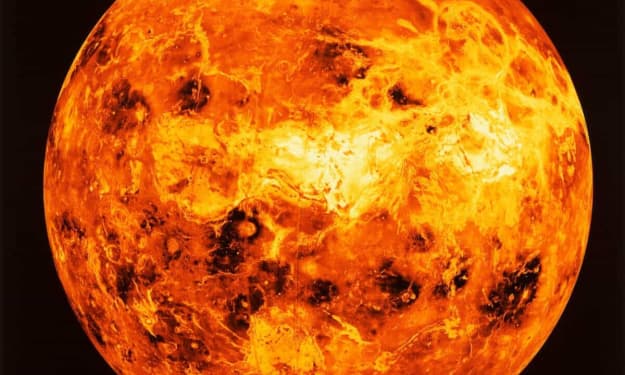
Venus and Earth are often referred to as "sister planets" because they are similar in size and composition. They both have rocky surfaces and are located within the Sun's habitable zone, where conditions could theoretically support liquid water. This makes Venus a particularly interesting neighbor for Earth.
The orbits of Venus and Earth are also important factors to consider. Earth orbits the Sun at an average distance of about 93 million miles (150 million kilometers), while Venus is, on average, about 67 million miles (108 million kilometers) away from the Sun. This means that Venus is indeed closer to the Sun than Earth.
However, the key to understanding the closest planet to Earth lies in their relative positions during their orbits. Since Venus orbits the Sun inside Earth's orbit, it periodically comes between the Sun and Earth, resulting in what is known as "inferior conjunction." During an inferior conjunction, Venus is positioned directly between the Sun and Earth.
At this point, Venus can be exceptionally close to Earth, and it appears as the brightest "star" in the sky, known as the "Evening Star" or "Morning Star," depending on whether it is visible after sunset or before sunrise. This unique phenomenon occurs because Venus is not only closer to the Sun but also in alignment with Earth.
In contrast, Mars is an outer neighbor of Earth, and its orbit is located outside of Earth's orbit. This means that Mars is usually more distant from Earth than Venus is during their respective closest approaches. However, Mars can still be relatively close to Earth during a phenomenon known as "opposition."
Opposition occurs when Mars and Earth are on the same side of the Sun, with Earth positioned between Mars and the Sun. During this alignment, Mars appears especially bright and is more visible from Earth. It's an ideal time for observing Mars through telescopes, and it occurs approximately every two years.
In summary, while Mercury is the closest planet to the Sun on average, when considering their positions during their orbits, Venus can be the closest planet to Earth at certain times. Venus and Earth's inner orbits create opportunities for close approaches known as inferior conjunctions, making Venus the closest planet to Earth during those specific moments. Mars, on the other hand, is typically farther away from Earth but can come close during opposition events every couple of years. Each of these neighboring planets has unique characteristics that continue to capture the interest of scientists and space enthusiasts alike.
About the Creator
Keep reading
More stories from Arline Valencia and writers in Education and other communities.
Healing the Hidden: Healthcare for the World’s Most Remote Populations
Across the globe, millions of people live in areas where access to healthcare is limited or nearly impossible. These communities, often tucked away in mountains, deserts, forests, or on distant islands, face challenges beyond the scope of ordinary medical care. Isolation, inadequate infrastructure, and shortages of trained medical professionals create a situation in which even basic health services are hard to obtain. Addressing these challenges requires creative solutions, collaboration, and a commitment to ensuring that no population is left behind.
By Baitulmaal7 days ago in Education
Autonomy Is The Real Privilege
Good morning, freedom-seekers! Today we’re gonna be looking at autonomy. A strange word, I know; one many would probably look at blankly and run away from on sight. We’re gonna figure out what it actually means, consider how it’s achieved, and decipher just how deeply most of us are tangled up in dependence without realising it.
By That ‘Freedom’ Guy5 days ago in Humans



Comments
There are no comments for this story
Be the first to respond and start the conversation.