
Exploring the Influence of Implicit Bias on Social Justice
Unveiling the Hidden Forces

Introduction
The goal of social justice is to create a just and equitable society where everyone has the same opportunities and is treated with respect, no matter what their background. Implicit bias, however, is a hidden force that lurks just below the surface of our conscious brains and threatens to thwart our efforts. Implicit prejudice is the term used to describe the unintentional attitudes and stereotypes that shape our perceptions, conclusions, and actions. This sort of bias frequently results in inadvertent discrimination and the continuation of societal injustices. In order to promote a more inclusive and just society, understanding implicit prejudice is essential.
I. Unveiling Implicit Bias: What Lies Beneath
Under our conscious awareness, implicit bias shapes our perceptions and behaviors in subtle ways. Implicit biases can creep into our decision-making and interpersonal relationships and are often rooted in social standards, media portrayals, and personal experiences. These prejudices can be based on racial, gender, age, religious, and sexual preferences, among other societal constructs. The first step in resolving implicit bias' impact on social justice is to recognize and acknowledge its existence.
II. The Influence of Implicit Bias on Social Perceptions
Implicit bias frequently results in prejudiced judgments and unfair treatment since it has a significant impact on how we see and understand the world around us. Implicit biases can affect a variety of processes, including job decisions, criminal justice system sentencing, healthcare delivery, and educational access, according to research. For instance, research shows that even when a candidate's qualifications are the same as those of candidates with traditionally "white" names, discrimination occurs when a candidate's name has an ethnic ring to it. Implicit biases can also affect teachers' expectations of their students, which can result in unequal access to educational opportunities.
III. The Consequences of Implicit Bias
Implicit prejudice perpetuates structural inequities by having wide-ranging effects on people and communities. The victims of these biases are frequently marginalized populations who get unfair treatment, little chances, and restricted access to resources. Implicit bias has an effect that goes beyond one-on-one interactions and permeates organizations and policies, aggravating socioeconomic inequality. It is crucial to understand that implicit prejudices are firmly ingrained in societal institutions and historical legacies rather than simply being the result of personal prejudice.
IV. Breaking the Cycle: Addressing Implicit Bias
At both the individual and systemic levels, proactive efforts are required to address the effects of implicit prejudice on social justice. Here are a few tactics:
a) Spreading Knowledge: Emphasizing the existence and effects of unconscious prejudice requires extensive education and awareness initiatives. People can become more aware of their prejudices and take steps to eliminate them by participating in open discussions, workshops, and training programs.
b) Self-Reflection: People should reflect on themselves to understand their own unconscious biases. This entails assessing individual values, attitudes, and preconceptions that could affect how they interact and make choices. In order to challenge and unlearn these prejudices, one must first recognize them.
c) Organizations and institutions must have inclusive policies and practices in place in order to fight prejudice. This include inclusive recruiting procedures, objective assessment standards, and the incorporation of unconscious bias education into professional development courses. Institutions can lessen the negative effects of implicit biases on social justice by promoting an inclusive culture.
d) Eliminating Structural disparities: Eliminating systemic disparities must be a priority in addition to addressing unconscious prejudice. This entails reexamining the laws, regulations, and practices that support discrimination and working to ensure that everyone has access to opportunities that are equal.
V. Building Bridges: Collaborative Efforts for Change
Collective effort is needed to address implicit bias's negative effects on social fairness. To confront and change biased systems, people must work together as individuals, communities, and institutions. Positive change can be effected via collaborative actions such as neighborhood discussions, grassroots movements, and alliances between various sectors. We may progressively tear down the obstacles that stand in the way of progress toward a more just society by amplifying minority voices, supporting diversity, and fighting for equal rights.
VI. Overcoming Implicit Bias: The Power of Empathy and Exposure
Although implicit biases may appear to be deeply ingrained, there are methods people can use to get past them. Empathy is a potent tool. Understanding the viewpoints and experiences of others, especially those from underrepresented populations, requires intentional seeking. By challenging and reshaping our biases through empathy, we can build a better feeling of compassion and advance social justice.
Exposure to various perspectives and experiences is another powerful strategy. It can be helpful to actively seek out opportunities to interact with people from various backgrounds in order to challenge prejudices and deepen our understanding. This can be accomplished through reading varied literature, going to cultural events, taking part in community projects, or having intercultural conversations. As a potent countermeasure to latent biases, exposure to varied perspectives and narratives promotes empathy, understanding, and eventually, social justice.
VII. The Role of Media and Representation
The media significantly influences how people perceive the world and how they behave. Implicit prejudices might be strengthened or challenged by it. Media representation must be inclusive, authentic, and diverse in order to advance social justice. Media may dispel misconceptions and tell a more inclusive story by accurately and fairly representing underrepresented groups. Media outlets should also make an effort to give platforms to marginalized voices and perspectives in order to highlight their experiences and tales. We can combat unconscious biases and plow the way for a more equal society through responsible and inclusive media practices.
VIII. The Ongoing Journey
The fight against implicit bias's effects on social justice is an ongoing process that calls for constant self-examination, public awareness, and group effort. It demands a dedication to confronting our own prejudices and fighting for systemic change. We can promote a culture where equality and justice are the norm by admitting the existence of unconscious biases and actively trying to eliminate them.
Conclusion
Implicit bias presents a serious obstacle to social justice, sustaining structural injustices and impeding the development of a just and equitable society. Understanding implicit bias' effects is crucial for raising awareness and starting real change. We may question our prejudices, destroy discriminatory structures, and create a society that cherishes diversity, equality, and social justice through engaging in self-reflection, education, and collaborative activities. We can build a future in which every person is treated with dignity, respect, and justice regardless of their background or social identity by working together in this way.
About the Creator
Keep reading
More stories from Msughter Maor and writers in Education and other communities.
Decentralized Finance (DeFi)
Introduction In recent years, a revolutionary concept has emerged in the world of finance, challenging the traditional banking system and offering new avenues for financial transactions and services. This concept is known as Decentralized Finance, or DeFi. By leveraging blockchain technology and smart contracts, DeFi has the potential to disrupt the traditional banking industry by providing individuals with unprecedented control over their financial assets and eliminating the need for intermediaries.
By Msughter Maor3 years ago in Education
Earning Money Online Through Freelancing
Earning Money Online Through Freelancing In today’s digital world, earning money online has become easier than ever before. One of the most popular and trusted ways to make money online is through freelancing. Freelancing allows people to work independently, use their skills, and earn income without being tied to a traditional office job. With just a computer, an internet connection, and useful skills, anyone can start freelancing from anywhere in the world.
By Bilal Mohammadia day ago in Education
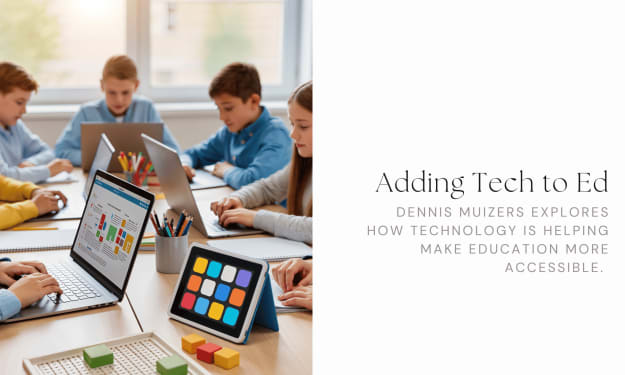
Adding Tech to Ed
Technology is reshaping education in ways that were unimaginable just a generation ago. While access to quality learning was once limited by geography, income, language, or physical ability, digital innovation is steadily removing many of those barriers. Today, technology is not simply enhancing classrooms—it is expanding who education is for, when it happens, and how it is experienced. By increasing flexibility, personalization, and inclusion, technology is making education more accessible to learners of all ages and backgrounds.
By Dennis Muizers Lovejoyabout 20 hours ago in Education



Comments
There are no comments for this story
Be the first to respond and start the conversation.