
Evolution of Entertainment
#222, for your amusement

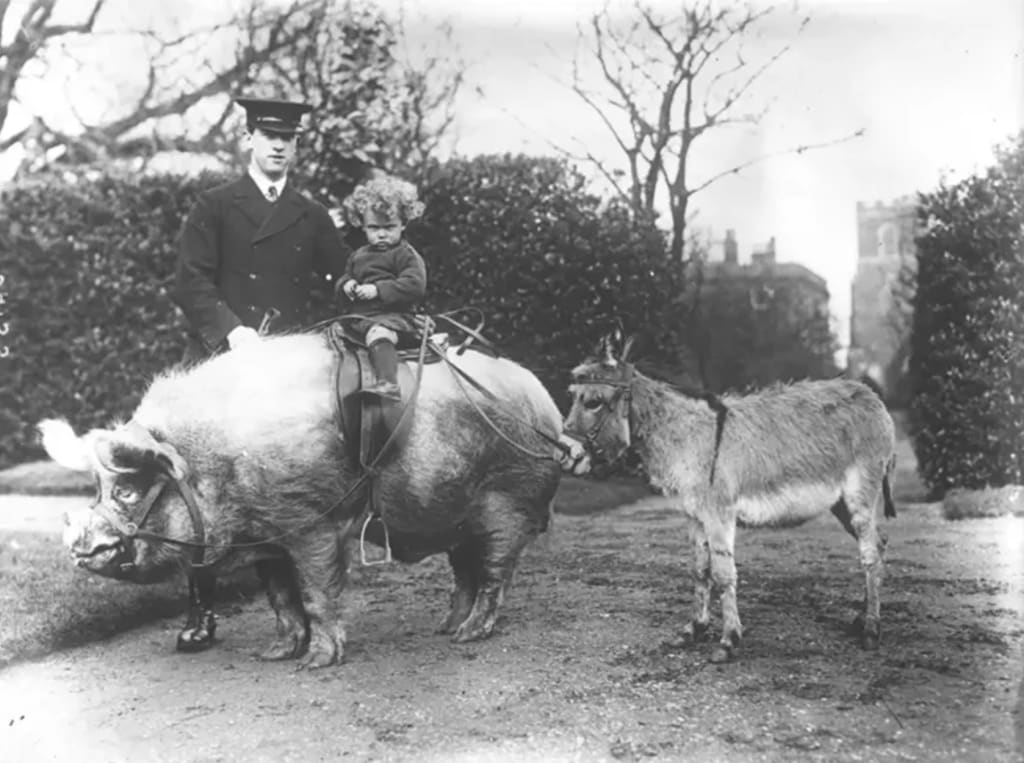
This is my 222nd story here on Vocal. I love "2" as I consider it my "lucky number" (born on the second day of the second month), so I wanted to write something light and humorous for it.
I came across the cover picture for this story on the Rare Historical Photos website and was fascinated by it. It made me think about how we as humans changed the way we entertain ourselves in a short period of time of 110 years.
The picture was taken in 1914, years before radio went commercial in 1922. So the only media for entertainment at the time were print (books, newspapers, and magazines), music records, and movies, still in their nascent stage. Thus, most people would had to come up with their own ways to entertain themselves, and riding a huge hog on a farm sounds like a great one! Reminded me of our numerous trips to petting zoos and my toddler son's attempts to mount a goat or a pig after petting them and establishing trust with them. Must be a boy thing...
Only one hundred and 10 years later, in 2024, we have such a variety of visual and highly engaging forms of entertainment through so many different platforms - computers, TV, mobile and virtual reality devices - that we as humanity become less focused, more near-sighted, and so demanding and expecting of being endlessly amused that we even consume news only as infotainment, as our brains refuse to think about even important, serious issues if there's no amusing element to them. The fact that we've made huge progress from the 1902 A Trip to the Moon movie to the 2024 3-Body Problem show on Netflix in such a short period of time is a great testament to how we value engaging entertainment.
To make it worse, we have no lack of entertaining content that comes at us from so many angles and sources! In this sense, Neal Postman's 1985 book Amusing Ourselves to Death has become truly prophetic. I highly recommend it, by the way: It will give you a new perspective on what television has done in terms of dumbing down the public discourse. And social media and other realities of our brave new digital world only add to the problem.
However, I'd like to turn to the lighter side of history, as promised. Back in my first Master program in 1995-96, I took a course in applied social science research methods and one of the classes was about the evolution of entertainment and the importance of studying it through research methods we have available. It was a small class of only six master students, and we quickly established great rapport and trust with the teacher, who was quite a debonair character himself, with great wits and style about him.
To start the discussion of importance of entertainment in human life, our teacher asked us to rememgine (remember and/or imagine) the world before mass books, let's say in late medieval times, when most people were illiterate and the only book they'd have, if any, would be the hand-copied Bible. "What would be the forms of entertainment available for them at the time?" our teacher asked.
For the noble class, we said, it was music we consider classical today, opera, masquerades, and ballet, which started to develop in the 15th century right before Gutenberg put together his printing press.
"Yes," our teacher said, "But what about non-elites, regular people?"
"Folk dancing, signing, jesting, and all sorts of warrior competitive events and seasonal rituals and rites," we said.
"Ok, I'll give you that," our teacher said. "But what else? What would be the cheapest and most easily accessible form of fun and joy for peasants and merchants?"
That question stumbled us, and our teacher went into giving us more details to ponder about: "Remember, ordinary people at the time didn't live too long, 40 years on average, had a pretty bad and unsteady diet of mostly bread, milk, and meat, consumed no more than 1,200-1,500 calories a day (modern humans need 2,500 calories to function normally), worked very long hours in the field or shops, and had a host of various health problems because modern medicine didn't exist..."
"Yeah, their teeth were all rotten and falling out, they were constantly tired and at 40 they looked like 75-year-olds today," we chimed in.
"Also, lots of 'venereal' diseases," someone added. "I wonder if they started to call them 'venereal' then, a beautiful word to cover up for ugly STDs."
"Yes!" our teacher said excitedly. That should have been our clue.
"So, what do you think the main form of entertainment was for them then?" he asked again. We still were perplexed, thinking that we have exhausted all entertainment options.
"Sex!" he finally exclaimed after a long pause, quite pleased with his own cleverness and our cluelessness.
"On 1,500 calories a day?" I exclaimed, in disbelief, "How did they have the energy for it?"
The entire class erupted with laughter.
About the Creator
Lana V Lynx
Avid reader and occasional writer of satire and short fiction. For my own sanity and security, I write under a pen name. My books: Moscow Calling - 2017 and President & Psychiatrist
@lanalynx.bsky.social
Keep reading
More stories from Lana V Lynx and writers in Education and other communities.
Ditched - Index
This index is just for my subscribers. I finished and published this long story or short novella of 6,000 words recently. I tried to link all previous parts of the story in the next one, so if you went along you shouldn't have been lost. This index is just put everything in one place.
By Lana V LynxExclusive • 4 months ago
Hosting a Book Fair
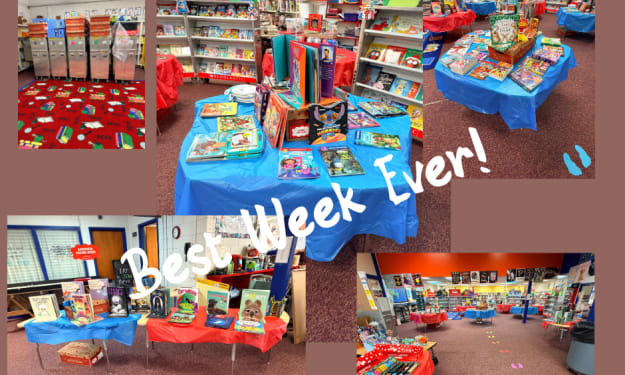
How many of you remember the “best week ever!” from when you were a child? Book fairs were the staple of many of our childhoods with Scholastic leading the way. While there are many choices for book fairs today and I absolutely want to talk about them, that’s going to be a later article.
By Reb Kreyling3 days ago in Education
Communicating with Confidence: Building Trust Through Simplicity
Trust is the cornerstone of any meaningful relationship, whether professional or personal. At the heart of trust lies the ability to communicate clearly. People naturally respond to straightforward, reliable, and easy-to-understand information. Professionals who prioritize clarity establish credibility and foster confidence in others. Clients, colleagues, and partners feel assured that they can make informed decisions when the messages they receive are transparent and well-articulated.
By Stacey Yimabout 22 hours ago in Education



Comments (5)
Ahhh, making your own entertainment 😉
I was thinking it had to be sex...they were pretty prolific back then, but it was before birth control. This was great!!!
Oh Lana, your classmates must have loved you! What a good point you brought up, LOL 🤣🤣🤣
Hahahahhahahahahahah never in my wildest dreams would I have thought sex was their form of entertainment 🤣🤣🤣🤣🤣🤣🤣🤣 But then again, that explains the hugeeeee number of children that people used to have those days. Also, I thought that people back in the day lived longer than us because there's less nonsense chemicals in the food they are and there wasn't fast food or processed food. But what you mentioned here makes sense too. And with 1500 calories a day and lots of sex, that would explain the difference in the rate of obesity now and then 🤣🤣🤣🤣🤣🤣🤣🤣
That is a great story! I saw the teacher's response coming, but didn't see yours! The world truly is fascinating in so many ways - no all good, but fascinating nevertheless!