

English: A language that transcends borders
English, a West Germanic language that originated in England, has now become one of the most widely spoken languages in the world. Increasing globalization and the prevalence of the internet have led to English becoming a lingua franca, a medium of communication between speakers of different languages.
The history of English can be traced back to the 5th century, when Anglo-Saxon settlers from Germany invaded England. These settlers brought their own language, which evolved over time to become what we now know as Old English. The language went through various stages of evolution and was influenced by several languages such as Latin, French, and Norse.
Today, English is spoken by over 1.5 billion people worldwide, making it the third most spoken language after Mandarin Chinese and Spanish. It is also the official language of 67 countries, including the United States, Canada, Australia, and the United Kingdom.
One of the reasons for the widespread usage of English is the dominance of the English-speaking countries in terms of economy, politics, and culture. The United States is the world's largest economy and is often considered as the leader of the Western world. The influence of the English language can be seen in the worldwide popularity of Hollywood movies and American music.
English has also become the language of international business and has replaced French as the dominant language in diplomacy. It is used in international organizations such as the United Nations, the European Union, and the World Bank.
The importance of English has been recognized by many countries, and it has become a mandatory subject in schools worldwide. The ability to communicate effectively in English is seen as an essential skill in the global job market.
However, the dominance of English has also led to concerns about the loss of other languages and culture. Many cultures are threatened by the spread of English, and the loss of their languages can lead to the loss of their identity.
In conclusion, English has become a language that transcends borders and has played an important role in globalization. Its widespread usage has made it an integral part of our daily lives. However, we must also be mindful of the impact of English on other languages and cultures.
One of the main characteristics of the English language is its flexibility. But for all the benefits of being a flexible and adaptable language, English can sometimes be too flexible. Even simple words like set or fine can baffle speakers of other languages with their multiple meanings and contexts. Linguistic phenomena like polysemy—different meanings for a single word—are common (and confounding) characteristics of English. The language is also notorious for contronyms, words that appear the same but have multiple meanings that are the exact opposite—for example, sanction can mean either to approve or to censure; clip can mean either to bind or to detach. Moreover, this same versatility can make English rules of grammar seem maddeningly arbitrary to non-native speakers. The subtle complexities of English can also bedevil even the most well-versed speakers. Even as ubiquitous a word as what has far more meanings than you’d think.
FACTS
“I am” is the shortest complete sentence in the English language.
A pangram sentence is one that contains every letter in the language.
For example, the sentence “The quick brown fox jumps over the lazy dog” is a pangram.
There are “ghost words” that mean nothing
The shortest, oldest, and most commonly used word is “I.
A new word is added to the dictionary every two hours.Citations:
- Crystal, D. (2003). English as a global language. Cambridge University Press.
- Kachru, B. (1985). Standards, codification, and sociolinguistic realism: The English language in the outer circle. English in the world: Teaching and learning the language and literatures (pp. 11-30).
- McArthur, T. (1998). The English languages. Cambridge University Press.
About the Creator
Keep reading
More stories from writers in Education and other communities.
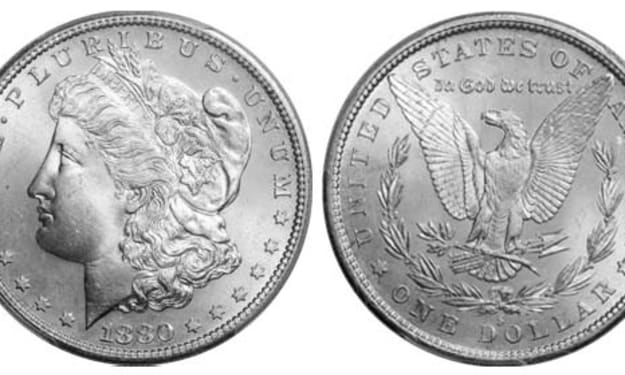
Morgan Silver Dollars: A Beginner's Guide to Identifying Key Dates and Mint Marks
For over eight years as a Senior Numismatic Analyst, I've seen the glint in a new collector's eye when they hold their first Morgan Silver Dollar. It's a powerful feeling—the weight of 90% pure silver, the history in Lady Liberty's profile, the sheer size of America's most iconic coin. Yet, with hundreds of millions minted across 27 years and five mints, it's easy to feel overwhelmed. A common 1921 Morgan might be worth $50, while a pristine 1895 Proof commands over $100,000. The difference lies in the tiny details of dates and mint marks. This guide will give you the foundational map to navigate this classic series, turning confusion into confident identification.
By Laura Bennett4 days ago in Education



Comments
There are no comments for this story
Be the first to respond and start the conversation.