
Donald Trump Asserts No Mistakes in Economy and Stock Market Performance
Stock Market Performance
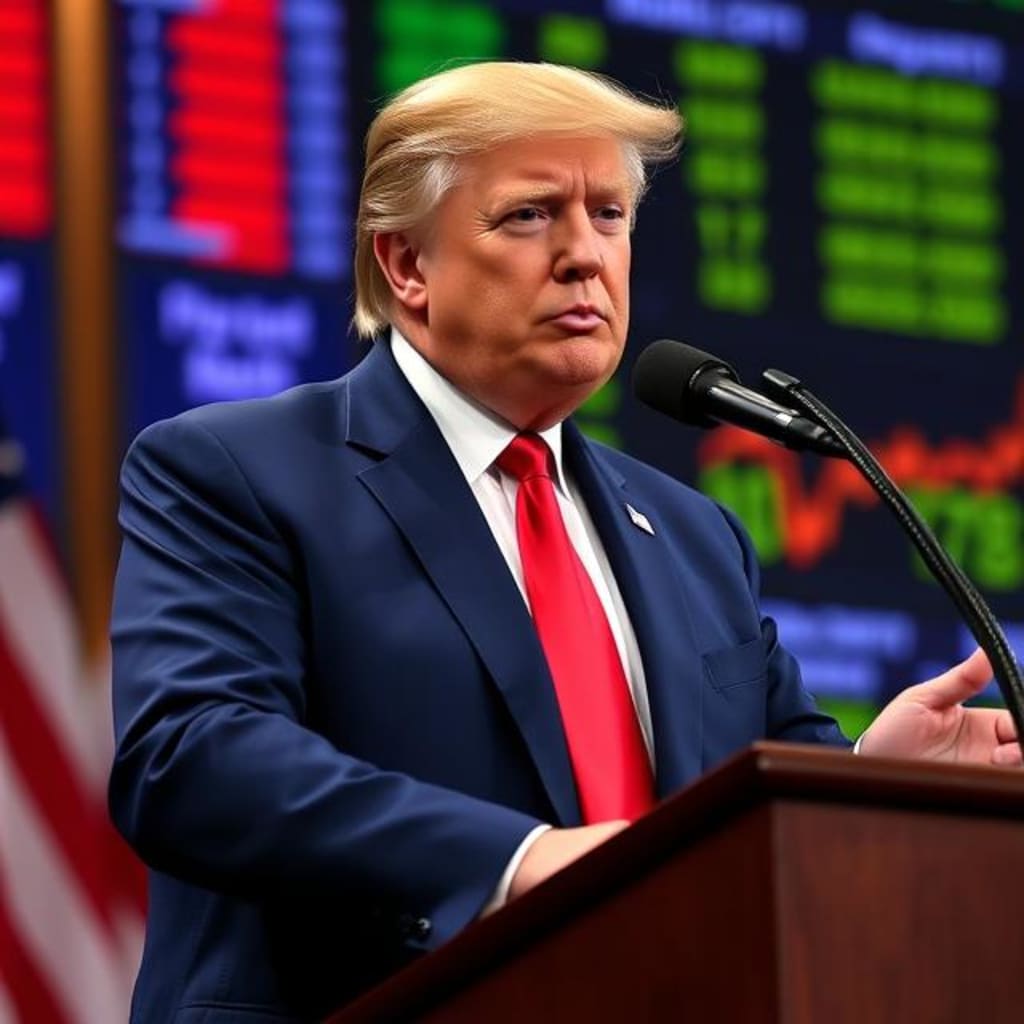
Donald Trump Asserts No Mistakes in Economy and Stock Market Performance
In a recent public appearance, former President Donald Trump reaffirmed his belief that his administration left the U.S. economy in excellent shape, emphasizing that there were no mistakes during his tenure that negatively impacted economic growth or the stock market. Trump’s comments come amidst ongoing political debates, economic analyses, and a backdrop of fluctuating markets, as he continues to position himself as a key architect of a prosperous American economy.
Trump’s Defense of His Economic Record
During a rally-style speech, Trump lauded the economic achievements of his time in office, pointing to record-low unemployment rates, significant stock market gains, and robust GDP growth prior to the COVID-19 pandemic. He argued that the policies enacted under his leadership—such as tax cuts, deregulation, and trade negotiations—were instrumental in creating a thriving economic environment.
“I look at the numbers, I look at the stock market, and I see nothing but success,” Trump stated confidently. “We had the best economy in the history of the United States, and I believe that we didn’t make any mistakes that hindered that progress.”
He dismissed recent criticisms from political opponents and economic analysts who attribute some of the market fluctuations and economic challenges to broader global issues or policy shortcomings. Instead, Trump maintained that his policies set the stage for economic resilience and that the subsequent downturns were beyond his control.
Economic Achievements Under Trump’s Presidency
Before the onset of the COVID-19 pandemic in early 2020, the U.S. economy experienced remarkable growth. Unemployment rates fell to historic lows, with minority groups seeing some of the lowest unemployment figures on record. The stock market soared, with major indices like the Dow Jones Industrial Average and S&P 500 reaching new highs. Consumer confidence was high, and GDP growth was steady.
Tax reforms, notably the Tax Cuts and Jobs Act of 2017, played a significant role in incentivizing investment and spurring economic activity. Deregulation efforts aimed at reducing bureaucratic burdens for businesses also contributed to a business-friendly environment. Trump frequently credited these policies for the economic boom and claimed that they benefited American workers and taxpayers.
The Impact of the COVID-19 Pandemic

However, the COVID-19 pandemic in 2020 drastically affected the economy, leading to a sharp recession, massive job losses, and market volatility. While Trump often claimed that his administration responded swiftly and effectively—highlighting historic stimulus packages and efforts to reopen the economy—critics argued that some policies may have exacerbated inequalities or failed to contain the health crisis effectively.
Despite these challenges, Trump contended that his economic policies laid the groundwork for a quick recovery once restrictions eased. He pointed to the rapid rebound of stock markets and employment figures in the latter part of 2020 and into 2021 as evidence of a resilient economy largely driven by his policies.
Market Performance and Public Perception
The stock market's performance remains a focal point of Trump’s defense. During his presidency, the markets experienced significant gains, which he often touted as a testament to his economic leadership. Critics, however, note that stock market success does not always translate to broad economic well-being, citing issues like income inequality and wage stagnation that persisted during his tenure.
Moreover, some analysts have argued that the market gains were fueled by low-interest rates and monetary policies beyond the direct influence of any single administration. Nevertheless, Trump stands firm in asserting that his policies directly contributed to the economic prosperity.
Political Context and Future Implications
Trump’s recent remarks are not just about defending his record; they also serve political purposes as he positions himself for potential future campaigns. By emphasizing economic success, he aims to appeal to voters who prioritize economic stability and growth.
His statements come at a time when the nation faces ongoing economic uncertainties, including inflationary pressures, supply chain disruptions, and global geopolitical tensions. In this context, Trump’s narrative of economic superiority seeks to differentiate his leadership style from current policymakers.
Critics and Counterarguments
While Trump remains confident about his economic legacy, many economists and political opponents challenge his assertions. Critics argue that the economic gains during his presidency were uneven, benefiting primarily the wealthy and corporations, while median wages and income inequality issues persisted.
Furthermore, some experts caution against attributing the stock market’s performance solely to presidential policies, emphasizing the complex interplay of global markets, monetary policy, and technological innovation.
Looking Ahead
As discussions about the economy continue, Trump’s unwavering stance underscores his belief that his leadership was instrumental in creating a thriving economic environment. His assertions of having made no mistakes reflect a broader narrative of confidence and self-assessment that he has maintained throughout his political career.
Whether this narrative resonates with the wider public remains to be seen, especially as economic challenges persist and new policies are debated. Nonetheless, Trump’s emphasis on his economic record is likely to remain a central theme in his ongoing political discourse, shaping his strategy as he seeks to maintain influence within the Republican Party and potentially mount a future presidential bid.
Conclusion
In summary, Donald Trump’s recent statements reaffirm his view that his presidency was marked by economic success and that he bears no responsibility for any shortcomings in the economy or stock market performance. While this stance is supported by his supporters and certain economic indicators, critics continue to raise questions about the broader impacts and sustainability of the growth experienced during his time in office. As the nation navigates future economic challenges, the debate over Trump’s economic legacy is expected to remain a significant aspect of American political discourse.
About the Creator
Sumon Ahmed
Writer, dreamer, and curious thinker. I explore life through stories—travel, culture, personal growth, and more. Sharing insights, inspiration, and the beauty of everyday moments one word at a time.
Keep reading
More stories from Sumon Ahmed and writers in Education and other communities.
The Success Story of a Failed Man
Once, in a crowded city that moved too fast for anyone to notice a man stumbling, there lived someone known as Rajan. He was once a dreamer, like most people in their twenties—full of ideas, ambition, and plans. He started a business at 26. It failed. Tried again at 30. It failed harder. Married at 32. Divorced by 34. Every time he stood up, life swept his legs out from under him.
By Sumon Ahmed8 months ago in Chapters
Taher Saifuddin: Transforming Toronto’s Classrooms with Inclusive and Future-Focused Education
In the heart of Canada’s most diverse city, Toronto educator Taher Saifuddin is quietly leading a transformation in the way learning is delivered, measured, and experienced. With over two decades of experience, Taher is recognized for his dynamic role in teaching, academic leadership, and digital innovation across Toronto’s private and independent schools.
By Dena Falken Esq6 days ago in Education
What People Get Wrong About Consulting
Many people talk about consulting, but few understand what it truly involves. Movies, social media, and word of mouth often shape a narrow view. This creates confusion for students, business owners, and even new consultants. The topic of common misconceptions about consulting matters because these beliefs affect career choices and business decisions. When ideas are wrong, expectations break down fast.
By Nicole Metz6 days ago in Education
Silver Screen Magic with Mae West
American actress and singer Mae West became a popular film actress during the Great Depression. She started entertaining in vaudeville, then performed on Broadway, and finally went to Hollywood. She signed up with Paramount Pictures and made her debut in the 1932 film “Night After Night.” She also starred in musicals, comedies, and crime dramas. The American Film Institute named her one of the best classic Hollywood actresses.
By Rasma Raisters6 days ago in Geeks



Comments
There are no comments for this story
Be the first to respond and start the conversation.