
Data Science in Social Media and Web Analytics
360DigiTMG


1. Data Science in social media: -
In this decade, data science in social media refers to the application of data analysis and machine learning techniques to understand and gain insights into social media data. There are variety of tasks, such as:
- Sentiment Analysis: In sentiment analysis, we have to understand the sentiment of social media posts, such as whether they are positive, negative, or neutral.
- Trend Analysis: In trend analysis, we have to identify the trends and patterns in social media data, such as the topics or hashtags that are currently popular.
- Network Analysis: In network analysis, we have to study the connections and relationships between users on social media platforms, such as who follows whom and who interacts with whom.
- Influencer Analysis: In influencer analysis we have to Identify the most influential users on a social media platform, such as those with the largest number of followers or the highest engagement rates.
- Ad Targeting: Here we are Using social media data to target advertisement to the right audience, based on demographics, interests, and behavior.
- Predictive modeling: In this we Predicting future events or outcomes based on social media data, such as stock prices or consumer behavior.
In this world, data science plays a critical role in helping businesses and organizations make informed decisions about their social media strategies. By analyzing social media data, they can gain valuable insights into their target audience, track the success of their campaigns, and identify new opportunities for growth and engagement.
Also, check this Data Science courses in Bangalore to start a career in Data Science.
2. Data science in web analytics
In this decade, data science in web analytics involves using data analysis and machine learning techniques to understand and gain insights into data generated by websites. There are variety of tasks, such as:
- User behavior analysis: In user behavior analysis, we have to understand first how users interact with a website, such as what pages they visit and how long they spend on each page.
- Traffic analysis: In traffic analysis, we have to analyze the volume and source of website traffic, such as the number of visits and where they are coming from.
- Conversion rate optimization: In this, we are using data to optimize the conversion rate of a website, such as the percentage of visitors who take a desired action, such as making a purchase or filling out a form.
- Funnel analysis: In this analysis, we have to analyze the journey of a user from their first visit to a website to their conversion, such as the steps they take and where they drop off.
- A/B testing: In A/B testing, first we are conducting experiments to compare two or more variations of a website to determine which performs best.
- Personalization: Here, we are using data to personalize the user experience on a website, such as recommending content based on a user’s interests and behavior.
In this world, data science plays a critical role in helping businesses and organizations make data-driven decisions about their digital marketing strategies and improve the user experience. By analyzing data generated by websites, they can gain a better understanding of their target audience, track the success of their campaigns, and identify new opportunities for growth and engagement. The insights gained from web analytics data can be used to optimize website design and functionality, improve the user experience, and increase conversion rates.
About the Creator
Sharat Manikonda
Worked as a Data scientist for 14+ years across several industry domains
Areas of expertise: Data sciences, Machine learning, Business intelligence and Data Visualization Trained over 1,500 professional across 12 countries
Keep reading
More stories from Sharat Manikonda and writers in Education and other communities.
Is data analyst good for the future?
Yes, data analysis is expected to remain a promising career choice in the future. The increasing reliance on data-driven decision-making and the growing volume of data generated by organizations across industries have created a high demand for skilled data analysts.
By Sharat Manikonda3 years ago in Education
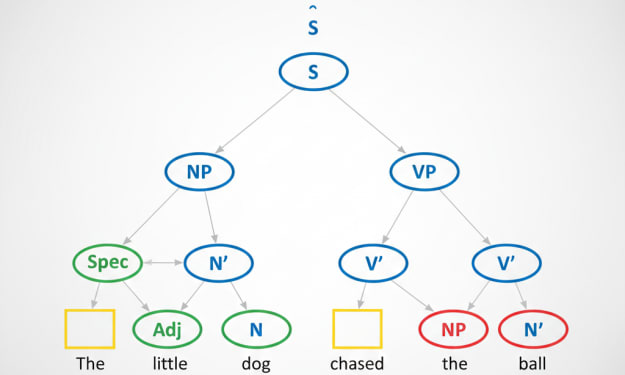
Mastering X-Bar Theory in Grammar in 10 Minutes
Grammar can often feel like a maze of confusing rules, especially when we dive into syntax — the study of sentence structure. One of the foundational tools in modern linguistics is X-Bar Theory, a framework that helps explain how words and phrases combine to form sentences. While it might sound intimidating, understanding X-Bar Theory can become straightforward if approached step by step.
By Games Mode On5 days ago in Education
The Path to Salvation
The late autumn evening air filled the monk's lungs, but it wasn't the season that chilled his bones. The heavy-handed presence of evil he had sensed upon entering the woods surrounding this mountain village had not bothered to conceal itself from him.
By Made in DNA2 days ago in Fiction


Comments
There are no comments for this story
Be the first to respond and start the conversation.