
Building a HIPAA-Compliant MVP in Healthcare – A Strategic Roadmap
HIPAA-Compliant MVP in Healthcare

The healthcare industry is undergoing a seismic shift toward digitization, with startups at the forefront of this innovation. But with great potential comes great responsibility. Designing digital health solutions means navigating the intricate requirements of HIPAA compliance, ensuring patient data protection while avoiding costly fines or breaches.
For early-stage startups, this might sound daunting, but there’s good news. You don’t need to build a fully-fledged product from day one. Instead, adopting an MVP (Minimum Viable Product) approach allows you to validate your idea, gain user feedback, and most importantly, achieve essential compliance.
This roadmap will guide you through the strategic steps to design and build a HIPAA-compliant MVP, enabling you to balance innovation, scalability, and compliance.
Why HIPAA Compliance Matters
Before jumping into the how, it’s crucial to understand why HIPAA compliance should be a top priority.
The Health Insurance Portability and Accountability Act (HIPAA) sets strict guidelines for protecting sensitive patient health data (PHI). Non-compliance can lead to devastating consequences, including legal penalties, reputational damage, and the loss of patient trust. Consider this:
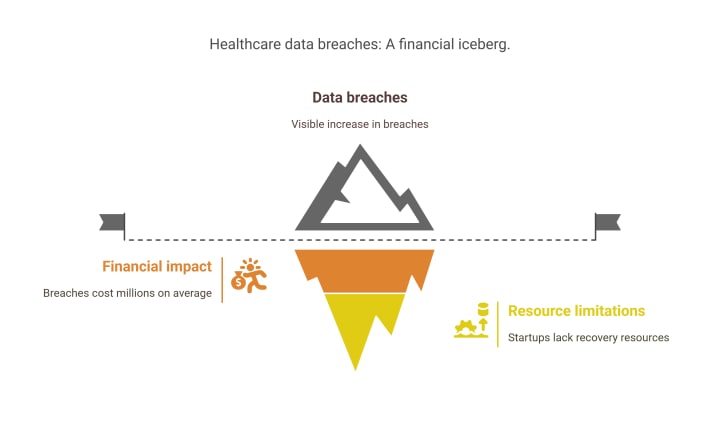
- Healthcare data breaches surged by 29% in 2020.
- The average financial impact of a breach surpasses $7 million.
- Most startups don’t have the resources to recover from such damages.
By prioritizing compliance from the MVP stage, you establish a foundation of trust and demonstrate reliability to stakeholders, customers, and investors.
Step 1: Understanding Key HIPAA Requirements
Navigating HIPAA is no simple feat, but breaking it down helps. Here are the core rules you must address in your MVP design:

1.1 Privacy Rule
- Protect patient information and limit its use or disclosure without consent.
1.2 Security Rule
Implement three types of safeguards:
- Administrative (e.g., access policies, HIPAA training for staff).
- Physical (e.g., secure server locations).
- Technical (e.g., encrypting data in transit and at rest).
1.3 Breach Notification Rule
- If a data breach occurs, you must promptly notify the affected individuals and relevant authorities.
1.4 Omnibus Rule
- This includes ensuring your third-party partners (e.g., data processors, cloud storage providers) comply with HIPAA via Business Associate Agreements (BAA).
Step 2: Strategically Planning Your MVP
The foundation of a successful HIPAA-compliant MVP lies in proper planning.

2.1 Define Your MVP Scope
- Determine the core problem your product will address. Avoid feature bloat by focusing only on functionalities essential to solving healthcare pain points while meeting compliance requirements.
2.2 Conduct a Detailed Risk Assessment
Evaluate your product to identify vulnerabilities in security. Prioritize addressing the highest risks. For instance:
- Weak data encryption protocols.
- Insufficient authentication for user access.
Create a log of risks and mitigation strategies, as this documentation will play a critical role in audits.
2.3 Choose a HIPAA-Compliant Tech Stack
Use tools and technologies that align with HIPAA standards from the start:
- Cloud Hosting: Platforms like AWS, Azure, or Google Cloud offer HIPAA-compliant services.
- Database Management: Opt for encrypted databases (e.g., PostgreSQL with encryption).
- Data Transmission: Use secure protocols such as TLS/SSL for API communication.
- Authentication: Implement role-based access (RBAC) and multi-factor authentication (MFA).
Step 3: Building with Compliance in Mind
When you’re ready to build, make compliance a key consideration in every line of code.
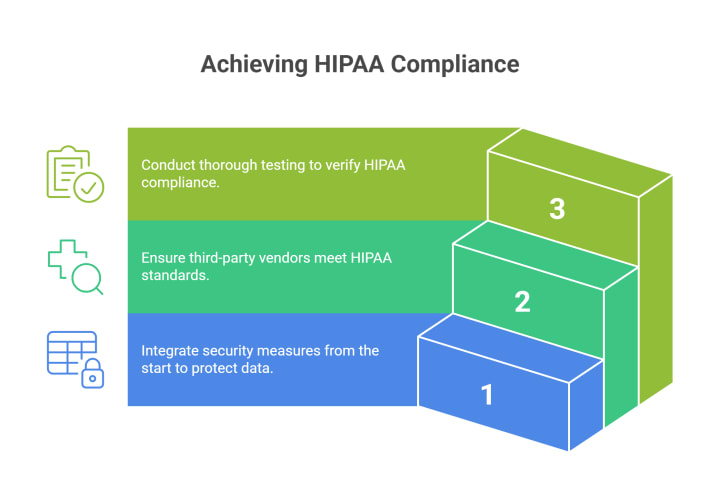
3.1 Embed Security Practices from Day 1
- Encryption: Encrypt data both at rest and in transit.
- Audit Logs: Track access to sensitive information in compliance with HIPAA’s audit requirements.
- Minimum Necessary Data: Only collect what’s absolutely required for functionality.
3.2 Vet Third-Party Vendors
It’s likely your MVP will rely on external service providers for functionality (e.g., SMS, email APIs). Be sure they are HIPAA-compliant and sign BAAs with all vendors managing PHI. Examples include:
- Twilio for communication.
- SendGrid for secure email.
3.3 Test for Compliance
Before launch, conduct:
- Penetration Testing to identify potential vulnerabilities.
- Vulnerability Scanning to ensure all systems are protected from known issues.
Step 4: Launching & Scaling Your MVP
The MVP launch is an exciting milestone, but it’s also just the beginning. Maintaining compliance and iterating your product are essential for long-term success.
4.1 Pilot Testing
Test your MVP with a controlled group of healthcare providers or patients. Gather feedback on usability, features, and security concerns, but ensure PHI remains protected during this phase.
4.2 Audit Readiness
Prepare for potential audits by maintaining organized documentation of your compliance efforts. For added credibility, strive for certifications like SOC 2 Type II.
4.3 Scale Gradually
When scaling beyond your MVP, continuously monitor and update your security measures. Every new feature should undergo strict compliance checks to maintain HIPAA standards as you grow.
Common Pitfalls (and How to Avoid Them)
Even with the best intentions, many startups stumble when implementing HIPAA compliance. Here are the most common missteps to avoid:
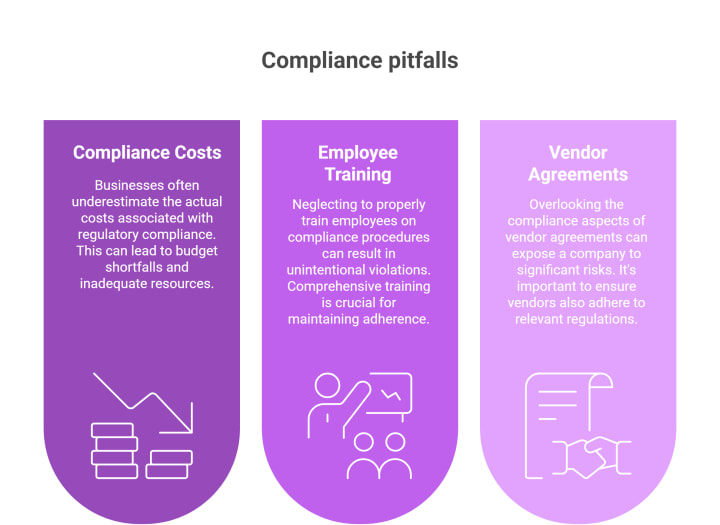
- Underestimating Compliance Costs
Compliance isn’t cheap, but the cost of non-compliance is far higher. Allocate a realistic budget for tools, audits, and expertise.
- Neglecting Employee Training
A well-trained team is essential. Ensure everyone understands their role in protecting PHI.
- Ignoring Vendor Agreements
Always establish BAAs when partnering with third-party vendors. Missing this step is a common (and costly) oversight.
Taking the First Step Toward HIPAA Compliance
Designing a HIPAA-compliant MVP may seem challenging, but breaking it into manageable steps ensures success. By focusing on essential security measures, leveraging compliant technologies, and maintaining organized documentation, you can build a product that excels in functionality, innovation, and trust.
Need more guidance? Download our HIPAA Compliance Checklist or schedule a free consultation to discuss your product’s specific needs.
Every revolutionary health product starts with a compliant foundation. Is your team ready to build one?
About the Creator
Metizsoft Inc
Metizsoft Inc. – Product engineering & MVP development service experts. We turn ideas into scalable, market-ready solutions with agile tech & innovation. From concept to deployment, we engineer success. 🚀 Let’s build the future!
Keep reading
More stories from Metizsoft Inc and writers in Education and other communities.
Enterprise Product Engineering for Scalable Solutions
Building scalable, efficient solutions is more important than ever for organizations striving to stay competitive in today’s fast-evolving business landscape. Enterprise product engineering plays a critical role in this equation, helping businesses create systems that are not only robust and future-ready but also adaptive to change.
By Metizsoft Inc8 months ago in Education
Could Dark Matter Interact With Itself?
What Is Dark Matter? Dark matter is a form of matter that does not emit, absorb, or reflect light. Because it is invisible, astronomers cannot observe it directly through telescopes. Its presence is inferred from its gravitational influence on visible matter.
By shahkar jalal3 days ago in Education


Comments
There are no comments for this story
Be the first to respond and start the conversation.