
Beyond the Textbook: How Personalized Learning is Rewriting the Rules of Education
From Factory Model to Future-Ready: How Personalized Learning is Empowering Every Student to Thrive
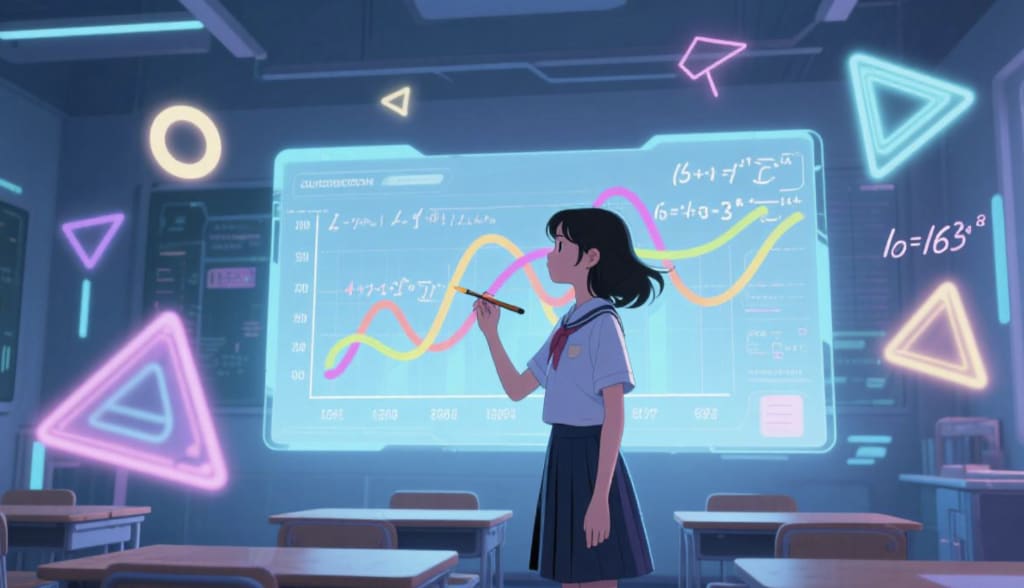
Let me tell you a story. Last year, I sat in on a 9th-grade math class at a public high school in Brooklyn. Maria, a quiet student with a knack for art, slumped over her algebra worksheet, erasing the same problem for the fifth time. Her teacher, Ms. Carter, circulated the room, pausing to help a boy struggling with fractions and then a girl confused by quadratic equations. By the bell, Maria’s paper was still half-blank—she’d spent the hour staring at problems that felt like hieroglyphics, while the concepts she wanted to explore (like how geometry shapes art) sat unaddressed in her notebook.
This isn’t an isolated story. For decades, education has operated on a one-size-fits-most model: 30 students, 60-minute lectures, a textbook pace that leaves some bored and others drowning. But here’s the good news: the system is breaking. Technology, data, and a growing recognition that every student learns differently are paving the way for something revolutionary: personalized learning. And it’s not just for tech-savvy kids in Silicon Valley—it’s for Maria, for your cousin who hates math but loves coding, and for anyone tired of feeling like a number in a classroom.
The Problem with “Standardized” Education
Let’s start with the elephant in the room: the current system was built for factory workers, not future innovators. In the early 20th century, when public education expanded, the goal was to create a literate workforce for manufacturing. Students sat in rows, memorized facts, and were tested on their ability to regurgitate them. Today? We live in a world where information is at our fingertips, and success depends on creativity, critical thinking, and adaptability. Yet many classrooms still operate like it’s 1915.
Consider these stats:
• A 2024 report by the National Center for Education Statistics found that 68% of high school students feel “unengaged” or “bored” in class.
• Only 23% of teachers believe their curriculum allows for meaningful differentiation between students’ learning speeds.
• Students who learn at a “below-average” pace often fall so far behind by middle school that they’re 4x more likely to drop out.
The root issue? One pace doesn’t fit all. Some kids grasp math concepts in 10 minutes; others need 45. A history lesson on the Civil War might ignite a debate in one student but put another to sleep. When we force everyone to move at the same speed, we’re not just failing the “slow” learners—we’re boring the “fast” ones, too.
Enter Personalized Learning: Education’s Great Equalizer
Personalized learning flips the script. Instead of teaching to the middle, it uses data, technology, and human insight to tailor education to each student’s strengths, weaknesses, interests, and pace. Think of it as a GPS for learning: the system identifies where you are, where you want to go, and adjusts the route in real time.
Here’s how it works in practice:
• Adaptive software (like the tools I’ll mention later) analyzes a student’s answers to questions, identifies knowledge gaps, and serves up targeted practice. Struggling with fractions? The system will keep serving up pizza-slice diagrams until you nail it. Ace that? It’ll move you to decimals—and maybe even introduce you to how fractions power game design.
• Project-based learning lets students dive into topics they care about. A biology class might let a future vet study animal anatomy through dissections, while a budding environmentalist researches local water quality.
• Teachers as guides (not just lecturers) spend less time repeating basics and more time mentoring. In a personalized classroom, Ms. Carter might use software to track Maria’s progress, then spend lunchtime brainstorming art projects that tie in geometry—turning her weakness into a strength.
The Tools Making It Possible (And Why You Should Care)
The best part? You don’t need to be a tech genius or a millionaire to access personalized learning. Here are three tools (yes, I’ve tested them!) that are already transforming classrooms—and could transform your learning journey, too.
1. Knewton Alta (www.knewton.com/alta)
If you’ve ever wished for a tutor who never sleeps, Knewton Alta is your new best friend. This adaptive learning platform uses AI to adjust its lessons in real time. Let’s say you’re learning precalculus: miss a question on derivatives? Alta will slow down, explain the concept with interactive graphs, and throw in some basketball analogies (because who doesn’t love free throws?). It’s used by over 1,000 schools and even by adults brushing up on math for career transitions. Pro tip: The free trial includes a diagnostic test to pinpoint your exact gaps—no more guessing what you “should” know.
2. Outschool (www.outschool.com)
Remember when “extracurricular” meant joining the chess club or yearbook? Outschool blows that out of the water. It’s a marketplace of small-group classes taught by teachers, experts, and even passionate amateurs—all focused on interests, not grades. Want to learn how to code a video game? There’s a class for that. Obsessed with dinosaurs? Try “Paleontology for Teens” with a paleontologist who’s excavated fossils in Montana. Prices start at $5, and many classes are live online—so you can learn from a marine biologist in Australia while sipping hot cocoa in your PJs.
3. Duolingo Max (www.duolingo.com/max)
Language learning just got a glow-up. Duolingo’s premium tier uses AI to create hyper-personalized lessons. Struggle with Spanish verb conjugations? Max will notice and serve up mini-games focused on that (no more mindless flashcards). It even adjusts based on your goals: want to chat with locals in Mexico City? It’ll prioritize conversational phrases over textbook grammar. I’ve seen friends go from “hola” to ordering mole poblano confidently in 3 months—way faster than traditional classes.
The Human Element: Why Tech Alone Isn’t Enough
Before you think, “Great, now robots will teach my kids!”—let’s talk about balance. Personalized learning isn’t about replacing teachers; it’s about empowering them. In the classrooms I’ve visited that use these tools, teachers spend 30% less time on admin work (grading papers, tracking attendance) and 30% more time on what matters: connecting with students.
Take Maria, the art-loving student from earlier. Her school adopted Knewton Alta for math, and her teacher used the data to see she struggled with abstract concepts but excelled at visual problem-solving. They paired her with a peer tutor who loved math and art, and together they designed a project where Maria created geometric murals—calculating angles and proportions along the way. By the end of the semester, she aced her math test and presented her art at a local gallery. That’s the magic of personalized learning: it doesn’t just teach skills—it nurtures passion.
Your Turn: How to Get Started
So, whether you’re a student, parent, or lifelong learner, here’s your action plan:
1. Identify your goal: Do you want to boost math skills? Learn a language? Explore a hobby?
2. Pick one tool: Start small—try Duolingo Max for 10 minutes a day, or audit a free Outschool class.
3. Talk to your teacher: If you’re a student (or a parent), ask if your school uses adaptive tools. If not, share this article—many districts are open to pilot programs.
Education shouldn’t be a race; it should be a journey. And with personalized learning, that journey just got a whole lot more interesting.
What’s one thing you wish your school had taught you? Let me know in the comments—I might just build a class for it.
---
Disclosure: Some links in this article are affiliate links, meaning I may earn a small commission if you click through and make a purchase. This helps support my work in exploring innovative education tools—thank you for your support!
About the Creator
Keep reading
More stories from liang ming and writers in Education and other communities.
Beyond the Textbook: How Modern Education is Redefining Learning for a Changing World
It’s 8:30 a.m. on a Tuesday, and 14-year-old Mia stares at her math worksheet, eraser in hand. The problem—“Solve for x: 3(2x – 5) + 7 = 4x + 12”—looks simple enough, but she’s been stuck for 20 minutes. Her teacher, Ms. Carter, circulates the room, but with 28 students, she can’t pause to unpack every confusion. By lunchtime, Mia scribbles down a half-hearted answer and moves on, her confidence in math wavering.
By liang ming6 months ago in Education
Connected Wealth: Why Strong Networks Are Essential to Smarter Financial Planning
Financial planning is often associated with spreadsheets, forecasts, and long-term projections. While these technical elements are essential, they represent only one side of the process. Relationships, shared knowledge, and access to broader communities strengthen a truly effective financial plan. Networks—both personal and professional—play a critical role in shaping smarter, more resilient financial strategies.
By Lee Generous6 days ago in Education
Rethinking Math Education in the 21st Century: Lessons from the Casie Hynes Perspective
Mathematics has long been considered a fundamental pillar of education. It develops critical thinking, nurtures problem-solving abilities, and plays an essential role in science, technology, engineering, and finance. Yet despite its importance, math remains one of the most challenging and misunderstood subjects for students worldwide. As we step deeper into a data-driven era, reforming how we approach math education is more urgent than ever.
By Casie Hynesabout 18 hours ago in Education
So You Decided To Become a Nurse Practitioner:
So you decided to become an "Advanced Practice" nurse. Congratulations!... is what I would say if this was a good idea. Grad school? In this economy? What were you thinking? Likely it was something along the lines of either 1) “I've seen these other chucklefucks do it— Why can't I?” or even 2) “I've got a nice career, I should shake it up. I miss feeling like I have no clue what I'm doing.”
By Sandor Szabo3 days ago in Fiction




Comments
There are no comments for this story
Be the first to respond and start the conversation.