
Artificial Intelligence VS Machine Learning
In this post, we will delve into the similarities and differences between AI and ML, and explore their real-world applications. We will also discuss the future of these technologies and their potential impact on society and industries. So, if you’re interested in getting a deeper understanding of AI and ML, read on!

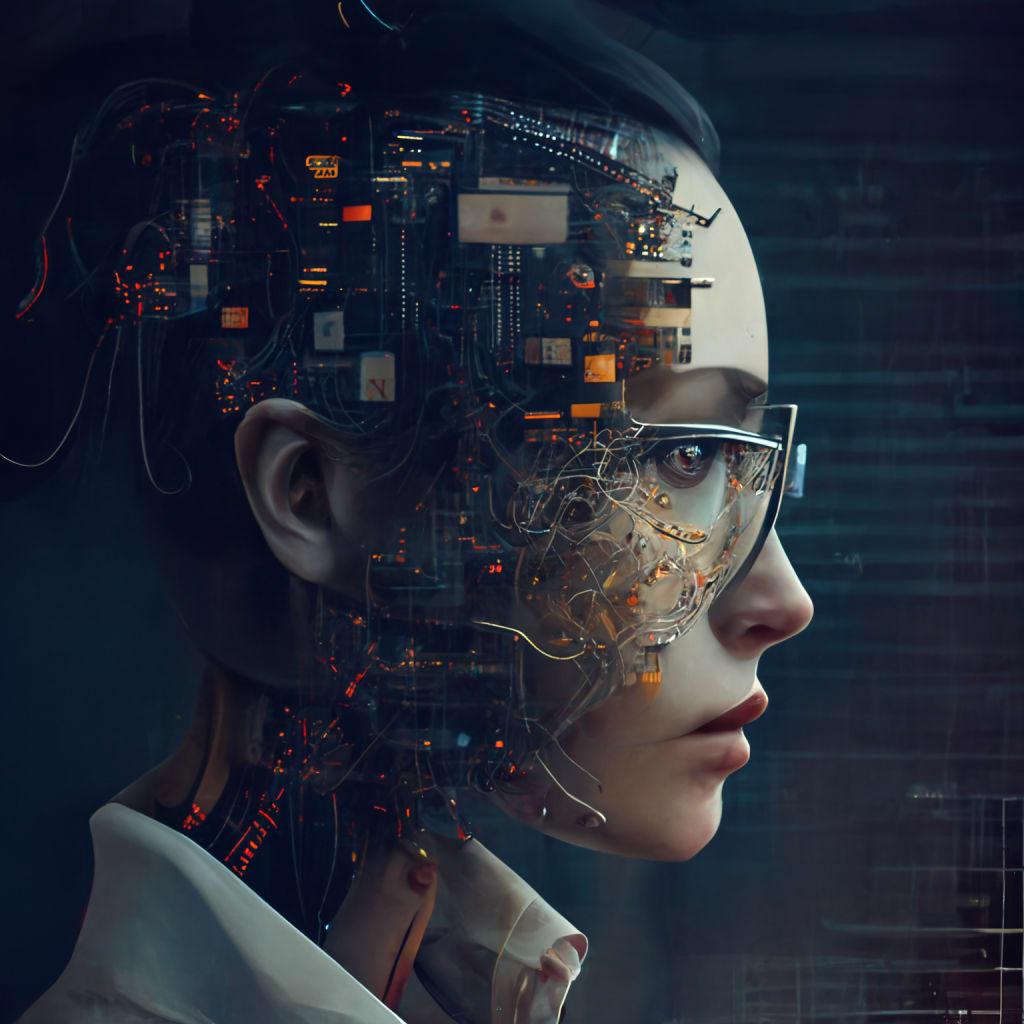
Artificial Intelligence (AI) and Machine Learning (ML) are buzzwords that have been making waves in the tech world for quite some time now. But what exactly do they mean and how do they differ? This article aims to shed light on the topic by defining AI and ML, giving a brief overview of their relationship, and highlighting the purpose of the article.
A subfield of computer science called artificial intelligence (AI) focuses on building machines that can carry out tasks that would typically need human intelligence. This include activities like decision-making and the comprehension of spoken and written language.
On the other hand, Machine Learning (ML) is a subset of AI that involves teaching computers to learn from data, rather than being explicitly programmed. This allows machines to improve their performance on a specific task over time, without being explicitly told what to do.
Artificial Intelligence

What is Artificial Intelligence
Artificial Intelligence (AI) is a branch of computer science that deals withcreating machines that can perform tasks that would normally require human intelligence to complete. This includes things like understanding natural language, recognizing images, and making decisions.
History of Artificial Intelligence
The concept of AI can be traced back to the 1950s when computer scientists first began exploring the idea of creating machines that could perform tasks that normally require human intelligence. However, it wasn’t until the late 20th century that AI began to gain traction, thanks to advancements in computer hardware and algorithms.
Types of Artificial Intelligence
There are several different types of AI, each with its own unique characteristics and applications. Some of the most common types of AI include:
Reactive Machines: These are simple AI systems that can only respond to the environment and do not have the ability to store memories or learn from past experiences.
Limited Memory: These AI systems have the ability to store limited information about the environment and use it to make decisions.
Theory of Mind: This type of AI aims to simulate human-like reasoning and is still in the early stages of development.
Self-Aware: This type of AI, also in its early stages, would have a sense of self and consciousness.
Applications of Artificial Intelligence
AI has a wide range of real-world applications and is used in various industries, including healthcare, finance, and retail. Some of the most common uses of AI include:
Chatbots: These are AI systems that can interact with humans in natural language, providing customer service and support.
Image recognition: AI algorithms can be used to analyze and categorize images, such as in facial recognition systems.
Fraud detection: AI can be used to identify fraudulent activities by analyzing large amounts of financial data.
Personalized recommendations: AI algorithms can be used to make personalized recommendations, such as in online shopping and streaming platforms.
AI is a rapidly growing field that has the potential to revolutionize the way we live and work. With its ability to perform tasks that would normally require human intelligence, AI has the potential to greatly improve our lives in numerous ways.
Machine Learning

What is Machine Learning
Machine Learning (ML) is a subset of Artificial Intelligence (AI) that involves teaching computers to learn from data, rather than being explicitly programmed. This allows machines to improve their performance on a specific task over time, without being explicitly told what to do.
History of Machine Learning
The history of ML can be traced back to the 1950s when computer scientists first began exploring the idea of teaching computers to learn from data. However, it wasn’t until the advent of big data and advances in computing power that ML began to gain traction and become a key area of research in AI.
Types of Machine Learning
There are several different types of ML, each with its own unique characteristics and applications. Some of the most common types of ML include:
Supervised Learning: This type of ML involves training a model on a labeled dataset, where the correct answers are provided.
Unsupervised Learning: This type of ML involves training a model on an unlabeled dataset, where the correct answers are not provided.
Reinforcement Learning: This type of ML involves teaching an agent to make decisions by receiving rewards or penalties based on its actions.
Deep Learning: This type of ML involves training artificial neural networks on large datasets.
Applications of Machine Learning
Machine Learning has a wide range of real-world applications and is used in various industries, including healthcare, finance, and retail. Some of the most common uses of ML include:
Predictive modeling: ML algorithms can be used to make predictions about future events, such as stock prices or customer behavior.
Natural language processing: ML algorithms can be used to analyze and process natural language text, such as in sentiment analysis.
Fraud detection: ML can be used to identify fraudulent activities by analyzing large amounts of financial data.
Personalized recommendations: ML algorithms can be used to make personalized recommendations, such as in online shopping and streaming platforms.
Machine Learning is a rapidly growing field that has the potential to greatly impact numerous industries. With its ability to learn from data and improve performance over time, ML has the potential to revolutionize the way we live and work.
Artificial Intelligence vs Machine Learning

Similarities between AI and ML
Artificial Intelligence (AI) and Machine Learning (ML) are two closely related concepts in the field of computer science. Both AI and ML are focused on creating systems that can perform tasks that would normally require human intelligence, such as understanding natural language, recognizing images, and making decisions.
Differences between AI and ML
While AI and ML are related, there are some key differences between the two. AI is a broad field that encompasses various techniques and technologies, including ML. ML, on the other hand, is a specific type of AI that involves teaching computers to learn from data.
In other words, ML is a subset of AI and is used to create systems that can learn and improve over time, while AI encompasses a wider range of techniques and technologies that can be used to create intelligent systems.
When to use AI and when to use ML
When deciding whether to use AI or ML, it’s important to consider the specific task you are trying to accomplish and the type of data you have available.
For example, if you have a large labeled dataset and want to create a system that can make predictions about future events, you may want to use ML. If, on the other hand, you want to create a system that can understand natural language and provide customer support, you may want to use AI.
Examples of AI and ML in real-world applications
AI and ML are being used in a variety of real-world applications and are having a significant impact on numerous industries. Some examples of AI and ML in real-world applications include:
Chatbots: AI systems that can interact with humans in natural language and provide customer support.
Fraud detection: ML algorithms can be used to identify fraudulent activities by analyzing large amounts of financial data.
Personalized recommendations: AI and ML algorithms can be used to make personalized recommendations, such as in online shopping and streaming platforms.
Image recognition: ML algorithms can be used to analyze and categorize images, such as in facial recognition systems.
AI and ML are two closely related fields that are having a significant impact on the way we live and work. With their ability to perform tasks that would normally require human intelligence, AI and ML have the potential to greatly improve our lives in numerous ways.
conclusion
In this post, we have discussed the concepts of Artificial Intelligence (AI) and Machine Learning (ML) and explored the similarities and differences between the two. We also discussed when to use AI and when to use ML and provided examples of their real-world applications.
AI and ML are rapidly evolving fields that are changing the way we live and work. The potential for these technologies to revolutionize various industries is immense, and we can expect to see even more exciting developments in the future.
If you’re interested in learning more about AI and ML, there are many resources available online that can help you expand your knowledge and develop your skills. From online courses and tutorials to research papers and blogs, the information is out there for anyone who wants to explore these fascinating fields.
Whether you’re a beginner or an experienced professional, taking the time to learn about AI and ML can help you stay ahead of the curve and make an impact in your field. So why not start learning today and be a part of the exciting future of AI and ML!
About the Creator
Digital Techno
Daily Post about Technology, Business & Finance, Cryptocurrency, Blockchains, NFT, Metaverse, etc.
Keep reading
More stories from Digital Techno and writers in Education and other communities.
Can Machine Learning Predict the Stock Market?
What is Machine Learning? Machine learning is a subfield of artificial intelligence that involves the use of algorithms to automatically identify patterns and relationships in data. These algorithms are trained on large amounts of data and can then be used to make predictions about new data points. This makes machine learning well-suited for a wide range of applications, including stock market analysis.
By Digital Techno3 years ago in Education
How to Implement Digital Signage in Your Pharmacy
I'll never forget the first time I walked into a pharmacy with digital signage displays showing real-time prescription wait times and health tips. As someone who'd spent years waiting in line wondering how much longer I'd be there, seeing that information displayed so clearly felt revolutionary. That experience stuck with me, and when I later helped my cousin implement digital signage in her independent pharmacy, I realized just how transformative this technology could be for both pharmacy owners and customers.
By Jerry Kane about 22 hours ago in Education
How Social Media Helps Small Businesses Grow Faster
Small businesses need smart ways to grow without large budgets. Social media offers one of the fastest and most affordable paths. When used well, it helps small brands reach new customers, build trust, and drive steady sales. Growth that once took years can now happen in months.
By Michael Kazma7 days ago in Education
Five—One Grounding
Five—Locked in a perpetual battle against my failing senses and reason, I fight to survive, to get through; I am afraid of... nothingandeverythingallatonce—...—my mouth is dry, and my muscles seize up... what can I see? I can see the birdcage and birds; I can see the watercolour my beautiful wife painted many years ago and unlocked her journey into art; I can see the empty mug of tea as it sits perilously on the arm of the sofa; how many is that now? Three down, two to go; I can also see a jackdaw on the roof of our neighbour's house across the road and a bookcase of potential—Five things you can see.
By Paul Stewart5 days ago in Poets




Comments
There are no comments for this story
Be the first to respond and start the conversation.