
Artificial Gravity Systems for Space Crews: Turning Science Fiction Into Reality
Space

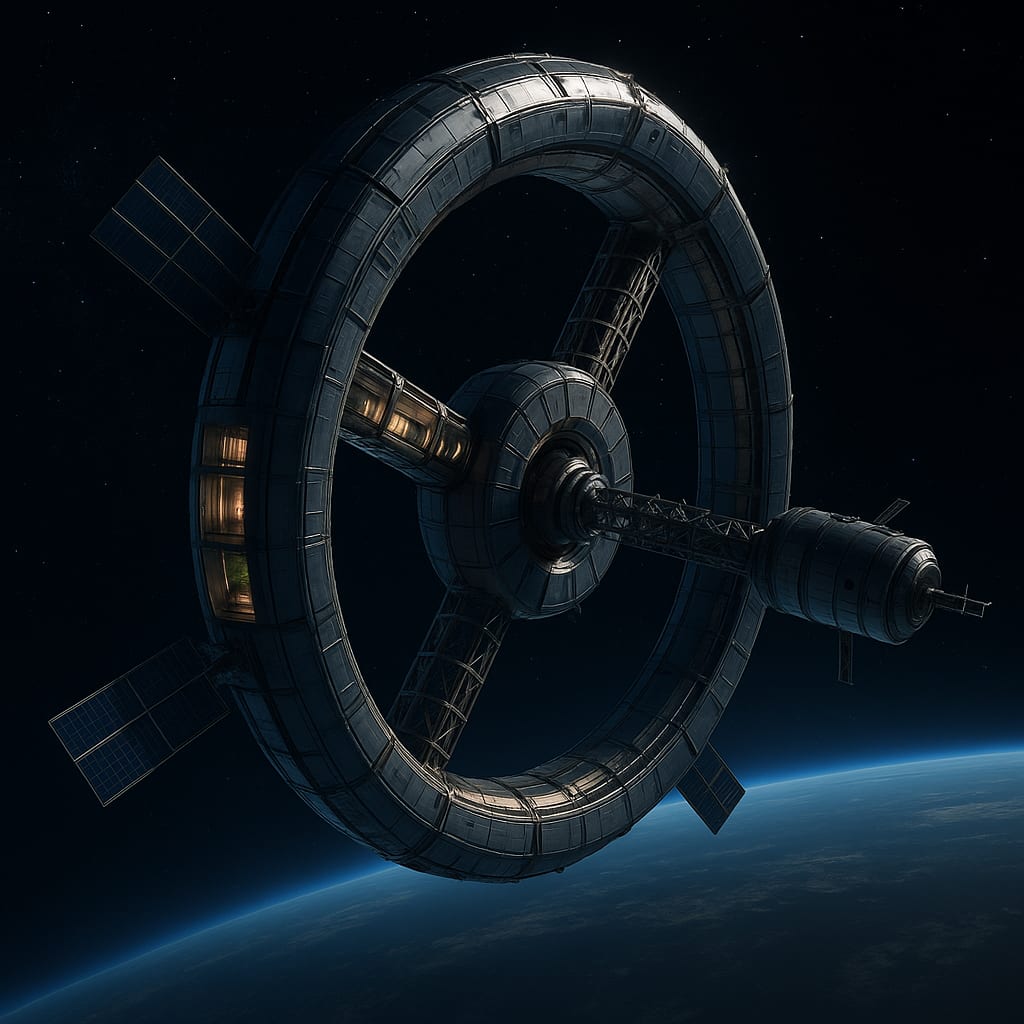
When we imagine astronauts journeying to Mars or even further into deep space, we often picture sleek spacecraft, breathtaking views of the stars, and groundbreaking discoveries. What we don’t always picture, however, are the very real and serious health problems that come with spending months or even years in microgravity. Human bodies evolved under Earth’s gravity, and when that force disappears, things quickly start to go wrong. Muscles shrink, bones weaken, fluid redistributes in odd ways, and the heart doesn’t have to pump as hard.
Currently, astronauts counteract these effects by working out for two or more hours every day on treadmills, stationary bikes, and resistance machines aboard the International Space Station. This regimen helps—but it’s not a perfect solution. For long-duration missions, such as a trip to Mars that could last three years, relying on exercise alone may not be enough. That’s why engineers and scientists are seriously exploring a concept that used to belong mostly to science fiction: artificial gravity.
Why Artificial Gravity Matters
Artificial gravity could revolutionize space travel for several reasons:
Protecting crew health. Simulated gravity would slow or even prevent muscle atrophy and bone loss, reducing the risks of fractures or long-term osteoporosis. It could also help maintain cardiovascular strength, since astronauts’ hearts would still need to work against gravity.
Psychological comfort. Imagine floating for months, never standing upright, never lying down in a bed. While astronauts adapt, the lack of "up" and "down" can be mentally taxing. A rotating habitat that allows people to walk normally could provide a profound boost to morale.
Practical advantages. In microgravity, even drinking water is tricky—liquids float in globules, crumbs scatter into the air, and small tools drift away if you let go. A little gravity makes day-to-day living and working much simpler.
How Do You Create Gravity Without a Planet?
Of course, gravity itself can’t be manufactured—it’s the natural pull of a massive body like Earth. But astronauts can experience something very similar using centripetal force, created by rotation. Here are the leading approaches being studied:
Onboard centrifuges. Imagine a rotating pod or treadmill inside a spacecraft. By spinning at the right speed, it pushes the occupant against its wall, simulating gravity. This approach could be added to existing ships or stations, though the effect is limited to short training sessions rather than full-time living.
Rotating habitats. The classic vision of artificial gravity is a giant rotating space station, like the famous “Stanford Torus” design from the 1970s or the O’Neill cylinder. In these concepts, the entire living space rotates, creating a sense of weight on the inside walls. The larger the radius, the more natural the experience, because the rotation can be slower and gentler.
Hybrid spacecraft. Some engineers propose spacecraft with both rotating and non-rotating sections. Crews could work in weightlessness for certain tasks but rest and recover in rotating, gravity-simulating modules. This design offers flexibility without requiring enormous structures.
The Challenges of Spinning a Spaceship
It sounds straightforward: just spin the ship! But in reality, artificial gravity comes with major challenges:
Engineering complexity. A rotating spacecraft must withstand continuous stresses on its structure. Joints, bearings, and seals would all need to survive years of spinning without failure.
Motion sickness. Rapid rotation can create disorienting effects due to the Coriolis force. For example, when you turn your head while moving inside a rotating room, fluids in your inner ear react strangely, which can cause dizziness or nausea.
Energy and cost. The larger the habitat, the more realistic and comfortable the gravity. But building and launching massive rotating stations would require immense resources.
Despite these obstacles, research continues, because the benefits are just too important to ignore.
Real-World Projects on the Horizon
Although no crewed spacecraft has yet flown with artificial gravity, serious steps are being taken. NASA and the European Space Agency have conducted ground-based tests with human centrifuges, where volunteers spend extended time in rotating habitats to study the effects.
Meanwhile, private companies are pushing bold ideas. For example, Vast Space and Orbital Assembly Corporation are actively developing commercial space stations that could include rotating modules to create partial gravity. Their long-term vision includes orbital hotels where guests could enjoy a simulated “downward pull” while gazing at Earth.
Looking ahead, artificial gravity may not just be a convenience—it could be the key to survival on multi-year missions. A crew traveling to Mars, for instance, might arrive healthier and more prepared to explore if they had lived in a rotating habitat during their journey.
From Science Fiction to Science Fact
For decades, movies and books have portrayed futuristic starships where crews stroll along corridors under artificial gravity. Today, that vision is moving from fiction into the realm of engineering possibility. While there are still many hurdles to overcome, the idea that astronauts could one day walk, run, and even sleep under simulated gravity is no longer just a dream.
If humanity is serious about becoming a multi-planetary species, artificial gravity may be one of the essential technologies that bridge the gap between fragile human biology and the unforgiving reality of space. The first generation of rotating space habitats might seem clunky and experimental, but one day they could be as common as airplanes are today.
For now, we remain in the early stages of experimentation—but every concept sketch, every prototype, and every ambitious plan brings us one step closer to a future where humans don’t just survive in space, but thrive.
About the Creator
Keep reading
More stories from Holianyk Ihor and writers in Education and other communities.
Riding the Light: The Vision of Breakthrough Starshot
For centuries, the stars have been the ultimate symbol of unreachable horizons. We looked up, dreamed, and wondered if we would ever set foot beyond the Sun’s neighborhood. While telescopes gave us glimpses of faraway worlds, the idea of sending a spacecraft to another star system always felt like science fiction. After all, even our fastest probes, like Voyager 1, would need tens of thousands of years to reach the nearest stars.
By Holianyk Ihor4 months ago in Education
Half Dollars That Defied Time: Kennedy, Franklin & Walking Liberty
If you’ve found yourself holding an old half dollar, you’ve probably wondered: is this just pocket change, or could it be something more? I’ve had that same conversation with countless collectors in my eight years as a numismatist. The answer often hinges on three legendary names: Walking Liberty, Franklin, and Kennedy. More than just silver, these coins are tangible pieces of 20th-century America. This guide will help you understand their stories, values, and which one might be the perfect fit for your goals, whether you're building a collection or an investment.
By Laura Bennett3 days ago in Education


Comments
There are no comments for this story
Be the first to respond and start the conversation.