
Zebra Nerite Snail Eggs: The Tiny White Dots Taking Over Your Tank
Meet the Zebra Nerite Snail: The Striped Superstar


Imagine you’re gazing at your pristine aquarium, admiring the gentle sway of your plants and the darting colors of your fish, when suddenly, you spot them—tiny white specks scattered across your driftwood, rocks, and tank glass. At first, you might think they’re some kind of algae or debris, but nope, those are zebra nerite snail eggs!
If you’re an aquarium enthusiast in the USA, chances are you’ve come across these little capsules of chaos courtesy of the zebra nerite snail (Neritina natalensis). These snails are the unsung heroes of algae control, but their egg-laying habits? Well, let’s just say they can turn your tank into a polka-dot masterpiece. Snail Eggs in Aquatic Ecosystems.
Meet the Zebra Nerite Snail: The Striped Superstar
Before we get into the nitty-gritty of their eggs, let’s give a shout-out to the zebra nerite snail itself. These little guys, with their striking black and gold stripes, are like the zebras of the aquarium world—hence the name! Native to the coastal rivers and estuaries of Eastern Africa, they’re hardy, low-maintenance, and absolute algae-eating machines. Whether it’s scrubbing your tank glass or munching on that stubborn green algae, zebra nerites are the MVPs of any freshwater setup. They typically grow to about 1 inch in diameter, making them a perfect fit for tanks of all sizes, from nano setups to sprawling 100-gallon ecosystems.
But here’s the catch: these snails have a prolific egg-laying habit that can catch even seasoned aquarists off guard. If you’ve ever wondered why your tank looks like it’s been sprinkled with sesame seeds, you’re not alone. Let’s unpack the mystery of zebra nerite snail eggs and figure out what’s going on.
What Do Zebra Nerite Snail Eggs Look Like?
Zebra nerite snail eggs are small, white, oval-shaped capsules that stick to hard surfaces like glue. Think of them as tiny, stubborn stickers that refuse to budge. Each capsule is about the size of a sesame seed (1-1.5mm long) and contains anywhere from 30 to 100 microscopic eggs. That’s right—those little dots are actually egg sacs, not individual eggs! They’re usually bright white when first laid but may darken slightly as they age. You’ll find them plastered on driftwood, rocks, aquarium decor, and even the tank glass, creating a speckled look that’s equal parts fascinating and frustrating.
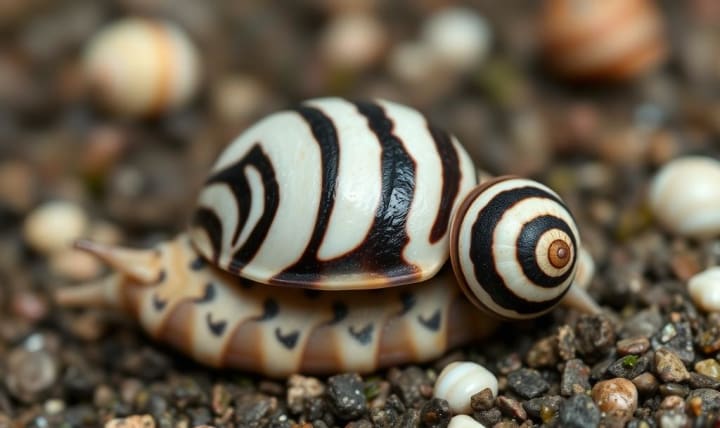
Fun fact: these eggs are super durable, with a hard outer shell that protects the embryos inside. This makes them tough to remove (more on that later), but it also means they’re built to withstand the wild conditions of brackish estuaries in their natural habitat.
In your freshwater tank, though, these eggs are more of a decorative nuisance than a baby snail factory. Why? Because zebra nerite snail eggs need brackish water to hatch, and your typical freshwater aquarium just doesn’t cut it.
The Egg-Laying Lowdown: Why So Many Eggs?
So, why do zebra nerites lay eggs like they’re trying to set a world record? It all comes down to biology and environment. Unlike many freshwater snails that reproduce asexually, zebra nerites are dioecious, meaning they have distinct males and females.
A female nerite will lay eggs whether or not a male is around to fertilize them, which explains why your lone snail might still be decorating your tank with white dots. If you’ve got a mix of males and females, those eggs might be fertilized, but don’t expect a snail invasion just yet.
In the wild, zebra nerites live in brackish environments where fresh and saltwater mix. Their eggs are designed to hatch into planktonic larvae that drift out to sea, feed on plankton, and eventually return to freshwater as fully formed snails. This complex life cycle is why breeding zebra nerites in a home aquarium is like trying to win the lottery—it’s possible, but it takes serious effort.
Factors like warm water (around 79°F), plenty of algae to munch on, and a slightly dirty tank (yep, they love a bit of organic matter) can trigger egg-laying frenzies. So, if your tank’s looking a little too “egg-tastic,” it might be time to check those water parameters.
The Great Egg Debate: To Keep or To Scrape?
Now, let’s address the million-dollar question: what do you do with all those zebra nerite snail eggs? For most American aquarists, these eggs are more of an aesthetic issue than a population problem. Since they won’t hatch in freshwater, you don’t have to worry about your tank turning into a snail nursery. But those white dots can make your tank look like it’s got a bad case of dandruff, and unhatched eggs can dissolve over time, potentially spiking ammonia levels and messing with water quality.
If you’re the type who loves a spotless tank, you’ll probably want to remove those eggs. Here’s how to tackle it without losing your sanity:
Scrape Gently: Use a new stainless steel razor blade or a magnetic algae scraper to carefully scrape eggs off glass or smooth surfaces. Be gentle to avoid scratching your tank.
Brush It Off: For driftwood or decor, a soft-bristled toothbrush or cotton swab works wonders. Just don’t expect the eggs to come off without a fight—they’re sticky little buggers!
Spoon It Up: Collect fallen eggs with a stainless steel spoon to keep them from floating around and clogging your filter.
Prevention Is Key: If you want to minimize egg-laying, try keeping your water cleaner and cooler (around 72-75°F). You can also quarantine new snails in a bucket for a few weeks to check if they’re female (females will lay eggs even without males).
Pro tip: If you’re dealing with a serious egg invasion, consider adding snail-eating fish like loaches or Cory catfish. They won’t eat the eggs, but they’ll keep the snail population in check if any do hatch in a brackish setup.
Breeding Zebra Nerites: A Challenge for the Brave
For the adventurous aquarist who wants to try breeding zebra nerites, buckle up—it’s not for the faint of heart. To hatch those eggs, you’ll need a separate brackish tank with a specific gravity of 1.005-1.015 and a temperature around 79°F. Move the egg-covered decor to this tank within three days of laying, using a slow drip acclimation process to avoid shocking the embryos. Once the eggs hatch (in about 2-3 weeks), the larvae will need marine conditions (specific gravity ~1.024) and a steady supply of plankton or green water to survive their 21-day veliger stage. After they develop shiny shells, you can slowly acclimate them back to freshwater over a few weeks.

Sound like a lot of work? It is! Most hobbyists in the USA stick to enjoying their zebra nerites as algae cleaners rather than aspiring snail breeders. But if you pull it off, you’ll have bragging rights in the aquarium community.
Final Thoughts: Why We Love Zebra Nerites
Zebra nerite snails are the unsung heroes of American aquariums, blending function with charm. Their black-and-gold stripes add flair, while their algae-eating prowess keeps tanks sparkling. Sure, those pesky eggs can speckle your decor, but they’re a small price for such quirky, low-maintenance buddies. Watching them glide, leaving clean trails, feels like hosting tiny landscapers.
For busy hobbyists from coast to coast, zebra nerites fit perfectly, bringing nature’s magic to your living room. So, embrace the eggs, laugh at their antics, and cherish these striped superstars—they’re proof your tank’s alive and thriving!
About the Creator
Arjun
Aquarium hobbyist sharing simple, real-world fixes for snail, shrimp, and plant problems. Clear guides, no fluff just practical tips to keep your tank healthy and thriving.
Early March 2026: 4 Goals Accomplished
It's early March and I've now accomplished my 4th writing goal for the year of 2026. Before diving into the behind-the-scenes of it... why not tell you up front what that accomplishment was? I was published in a 2nd publication for this year. Published in Helix Literary Magazine out of Central Connecticut State University. You can read it for free right now!
By Stephen Kramer Avitabilea day ago in Writers



Comments
There are no comments for this story
Be the first to respond and start the conversation.