
World’s Oldest Glaciers Discovered Sitting Under South Africa’s Gold Fields
They were discovered below the world's greatest gold reserves.

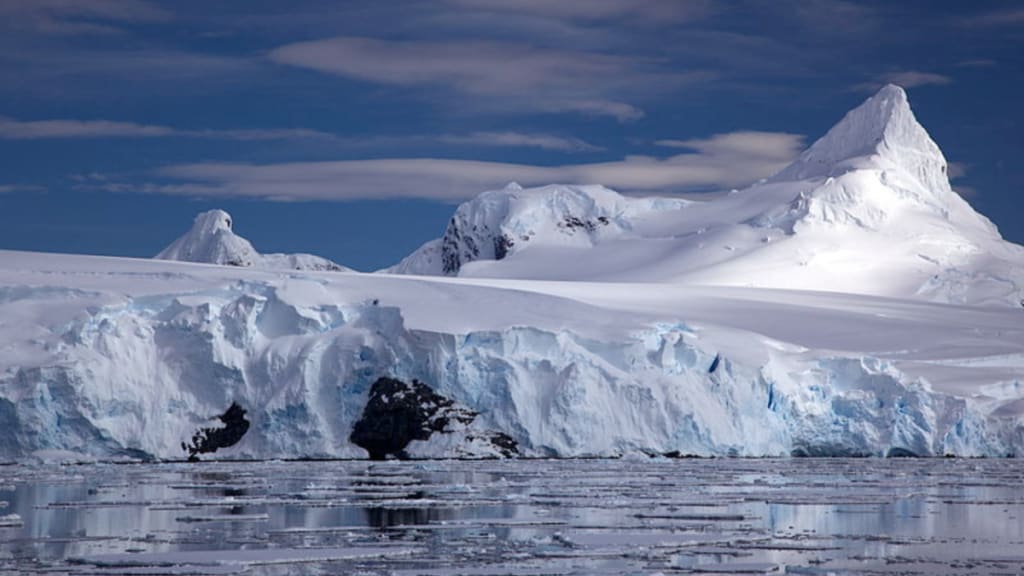
In South Africa, beneath the greatest known gold reserves, scientists have found evidence of the 2.9 billion-year-old glaciers that formerly existed there. This implies that there were continental ice caps present at the time, either because the region was closer to the poles or because parts of the Earth may have been frozen during a hitherto unrecognized "snowball Earth" period of extremely cold weather.
Following a recent peer-reviewed publication, this work is being presented for the first time at the Goldschmidt geochemistry conference in Lyon. The early Earth's climate must have undergone significant fluctuations, according to scientists, but compelling proof of the precise circumstances has been difficult to come by.
Researchers Professor Axel Hofmann from the University of Johannesburg in South Africa and Professor Ilya Bindeman from the University of Oregon in the United States have now discovered physical proof as well as evidence from relative oxygen isotope concentrations in ancient rocks, showing clear evidence of glaciers, 2.9 billion years ago.
Ilya Bindeman stated, "We discovered very well-preserved glacial deposits near the South African gold fields. One of the few places on Earth still mostly unaltered and undamaged from the early Earth is this region. These occurrences are fossilized glacial moraines, which are essentially the waste materials left behind as a glacier slowly melts and contracts.
The oldest deposits of a moraine have ever been discovered. Additionally, we were able to link this to the oxygen isotope study of these rocks, which demonstrated that the environment at the time the rocks were deposited must have been frigid.
"We examined the relative concentrations of 16O, 17O, and 18O, three oxygen isotopes. All of these forms of oxygen differ only very slightly in weight. These rocks possessed extremely low levels of 18O and extremely high levels of 17O, which showed that they were created at frigid temperatures. That denotes ice.
When you combine the geochemical and moraine information, you might conclude that the glaciers are the oldest ones that have ever been discovered on Earth.
The researchers proposed the following theories as potential explanations: "It's possible that this location was near the poles. A "snowball Earth" scenario, in which low atmospheric CO2 and CH4 concentrations caused a "reverse greenhouse effect" and caused much of the planet to cool, is another possibility.
This may have occurred a few times in the recent past, according to scientists. If correct, this would be the world's first recorded cooling period. Both scenarios are intriguing from a scientific standpoint, according to Axel Hofmann.
The greatest sedimentary gold deposits are located in slightly younger rocks that are positioned atop the rocks we analyzed, he continued. The creation of such gold deposits may have benefited from a shift from icehouse to greenhouse temperatures, but this needs to be proven and requires more research.
Dr. Andrey Bekker, associate professor at the University of California, Riverside's Department of Earth & Planetary Sciences, said.
"Sedimentological evidence has been the subject of intense discussion and controversy regarding the evidence for glaciation of this age, with theories ranging from high altitude to high latitude glacial.
Analysis of the triple oxygen isotopes adds a completely new line of support to this claim. These findings are expected to inspire further research on transitory oxygenation at that time because the biogeochemical carbon cycle regulates not only the climate but also atmospheric oxygen concentration.
In South Africa's gold fields, the first traces of the earliest glaciers yet found have been unearthed. The biggest gold resources in the world were underlain by exceptionally well-preserved glacial deposits, which offered solid proof of the early Earth's climate.
Based on the article "Earth's first glaciation at 2.9 billion years ago.
About the Creator
Keep reading
More stories from Francis Dami and writers in Earth and other communities.
Greenland News
Greenland News Greenland has increasingly drawn global attention in recent years due to its political developments, environmental changes, and growing strategic importance. As the world looks more closely at the Arctic region, news from Greenland reflects a unique mix of local priorities and international interest. From climate-related challenges to economic opportunities and governance issues, Greenland continues to shape its own path while remaining closely connected to global affairs.
By America today about 2 hours ago in Earth
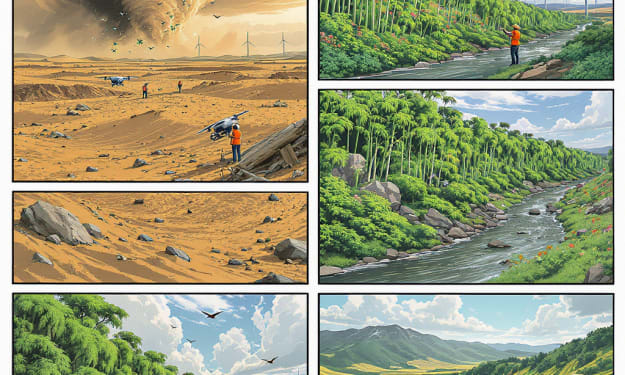
Chinese Planetary Engineering: The Great Green Wall and the Reclamation of Climate
There are junctures in history where a civilization no longer chooses between comfort and progress, but between adaptation and extinction. At the dawn of the new millennium, China hit one of those silent thresholds where geography ceases to be a backdrop and becomes an adversary. The desert was advancing, not as a metaphor for decay, but as a physical, methodical, and relentless force. Sand was devouring the horizon, winds grew heavy with dust, and the soil lost its fertile memory, taking with it the promise of social stability.
By Laurenceau Porte4 days ago in Earth



Comments
There are no comments for this story
Be the first to respond and start the conversation.