
Winter Storm Watch. What It Means and How to Prepare
A winter storm watch is an important weather alert that signals the possibility of severe winter conditions in your area. Issued by meteorological authorities, such as the National Weather Service in the United States, this watch warns residents that significant snowfall, freezing rain, sleet, or dangerously low temperatures could occur within the next 24 to 48 hours. While it does not guarantee that a storm will hit, it highlights a strong potential for hazardous weather that could disrupt daily life, travel, and safety. Understanding what a winter storm watch means and knowing how to prepare can make a major difference. These early warnings give people time to plan, gather supplies, and take precautions to reduce risks and stay safe.

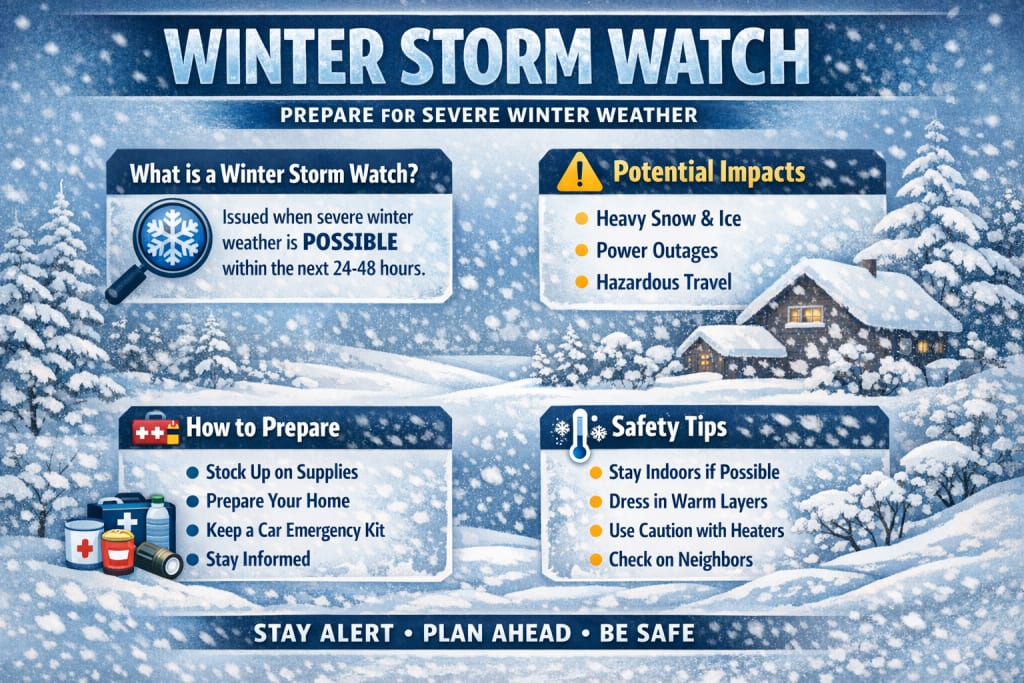
What Is a Winter Storm Watch?
A winter storm watch is issued when forecasters identify the possibility of severe winter weather, but the exact timing, location, or intensity is still uncertain. This alert is different from a winter storm warning, which is given when dangerous winter conditions are imminent or already happening.
The watch phase is essentially a heads-up. It allows individuals, businesses, and local governments to start preparing before conditions worsen. During this time, meteorologists continue to analyze weather patterns and refine their forecasts. If confidence in the storm increases, the watch may be upgraded to a warning or advisory.
Typical conditions associated with a winter storm watch include heavy snow accumulation, ice storms, strong winds, reduced visibility, and extreme cold. These elements can create treacherous roads, power outages, and health risks, especially for vulnerable populations.
Potential Impacts of a Winter Storm
Winter storms can affect nearly every aspect of daily life. Travel becomes dangerous as roads turn icy and visibility drops due to blowing snow. Flights may be delayed or canceled, and public transportation systems can experience major disruptions.
Power outages are another common consequence. Heavy snow and ice can weigh down power lines and tree branches, causing them to snap. Without electricity, homes can quickly become cold, increasing the risk of hypothermia. Communication systems may also be affected, making it harder to get updates or emergency assistance.
Health risks rise during winter storms, especially for older adults, young children, and individuals with medical conditions. Frostbite and hypothermia can occur when people are exposed to low temperatures for extended periods. Additionally, carbon monoxide poisoning becomes a risk when people use improper heating methods indoors.
Why Winter Storm Watches Matter
Winter storm watches are not meant to cause panic—they are meant to promote preparedness. They give people time to plan, avoid unnecessary risks, and protect themselves and their families. By taking these alerts seriously, communities can reduce injuries, prevent accidents, and minimize disruptions.
Staying informed, being proactive, and respecting the power of winter weather can make all the difference when a storm approaches. A winter storm watch is your reminder to slow down, prepare wisely, and put safety first.
Conclusion
In conclusion, a winter storm watch serves as an early warning that serious winter weather may be on the way. While it does not confirm that a storm will occur, it highlights the strong possibility of dangerous conditions developing within a short time frame. This advance notice is valuable because it allows individuals, families, and communities to take proactive steps before the weather becomes severe.
Preparing ahead of time can greatly reduce the risks associated with winter storms. Simple actions like stocking up on essential supplies, charging electronic devices, checking heating systems, and ensuring proper insulation can make a big difference. For those who rely on vehicles, having a winter emergency kit and keeping the gas tank full can help prevent dangerous situations if roads become impassable. Staying informed through reliable weather updates is equally important, as forecasts may change rapidly.
Safety should always be the top priority during winter weather events. Slippery roads, poor visibility, and freezing temperatures increase the likelihood of accidents and injuries. Limiting travel, dressing warmly, and avoiding exposure to extreme cold can prevent frostbite and hypothermia. Using heating equipment safely is also crucial, as improper use can lead to fires or carbon monoxide poisoning.
Winter storm watches are not meant to create fear but to encourage awareness and preparation. When people take these alerts seriously, they are better equipped to protect themselves and others. Communities that plan ahead are more resilient and able to recover faster after storms pass.
Ultimately, respecting the power of winter weather and responding wisely to warnings can save lives. By staying alert, making thoughtful preparations, and helping those around us, we can face winter storms with greater confidence and safety.
About the Creator
USA daily update
News, Politics, Technology Updates
Keep reading
More stories from USA daily update and writers in Earth and other communities.
Northern Lights May Be Visible in 10 States Jan. 20 as Earth’s Magnetic Field “Rings Like a Bell” After CME Impact
What Happened: A Massive CME Hit Earth On Jan. 19, 2026, a powerful CME associated with a major X1.9-class solar flare erupted from the sun and traveled the approximately 93 million miles to Earth in around 25 hours — much faster than most such events. When it reached Earth’s magnetic field at about 2:38 p.m. EST, it triggered a severe geomagnetic storm, classified as G4 on NOAA’s geomagnetic storm scale.
By USA daily update 2 months ago in Earth
When the Stars Whispered
The Night Sky Like Never Before I had always been fascinated by astronomy, spending countless nights in my backyard with a modest telescope, charting constellations, tracking planets, and occasionally glimpsing distant galaxies as faint smudges of light against the infinite darkness. But on one crisp night in March 2026, something extraordinary occurred that defied both expectation and explanation, a cosmic phenomenon that no scientific journal could easily classify, and yet it felt intimately personal, as if the universe itself were reaching out to communicate. The sky was unusually clear, the stars sharp and luminous like diamonds scattered across black velvet, and the Milky Way stretched overhead in a ribbon of silvery light that seemed to pulse ever so slightly, a rhythm I hadn’t noticed before.
By The Curious Writerabout 18 hours ago in Earth


Comments
There are no comments for this story
Be the first to respond and start the conversation.