
Wings of Ice: The Silent Elegance of the Snowy Owl
In a world of frost and light, one bird reigns in silent splendor.

High above the Arctic tundra, where snow falls like whispered secrets and the sun hovers low on the horizon, a lone figure waits. Clad in a cloak of white, it perches on a windswept ridge—silent, still, and striking. This is the Snowy Owl (Bubo scandiacus), a creature so perfectly woven into its wintry world that it almost seems sculpted from the snow itself.
Born of the Arctic
Unlike most owls, the Snowy Owl is a daylight hunter. This rare trait, known as diurnality, is a remarkable adaptation to its homeland—the polar regions of North America and Eurasia. Here, daylight can stretch for weeks or vanish entirely for months. The Snowy Owl thrives in both extremes, mastering the light and the dark with equal grace.
Its snowy plumage is more than just beautiful—it's essential. The white feathers serve as flawless camouflage in icy terrain, while a thick layer of insulation protects the bird from temperatures that can plunge far below freezing. Even its feet are wrapped in dense feathers, a fluffy armor against the Arctic chill.
Eyes That Speak of Mystery
The Snowy Owl’s golden eyes are one of its most mesmerizing features. They gleam with ancient wisdom, wide and alert, always watching. These powerful eyes help it spot prey from incredible distances—usually small mammals like lemmings, voles, or arctic hares. And when it flies, it does so in near silence, its broad wings designed for quiet stealth rather than showy flight.
It is this combination of strength, silence, and sharp vision that makes the Snowy Owl such an efficient predator, even in the vast emptiness of the tundra. While some may view it as delicate due to its beauty, in truth, it is a survivor. A ghost of the north. A master of solitude.
A Wanderer Beyond the Snow
When prey becomes scarce, the Snowy Owl embarks on long migrations, traveling far beyond its frozen birthplace. Some journey as far south as the northern United States, surprising observers with their sudden, magical appearance in unfamiliar places. These rare southern visits—known as irruptions—turn ordinary winter landscapes into scenes from a fairytale.
For many people, spotting a Snowy Owl is a once-in-a-lifetime moment. Whether seen in the wild or from afar, its presence stirs something ancient within us—a reminder of nature’s elegance and endurance.
Unexpected Travelers
Though native to the Arctic, Snowy Owls are full of surprises. In certain years, when lemming populations crash, they embark on epic migrations southward—a phenomenon called an irruption. They’ve been spotted as far as Texas and even Bermuda, astonishing birdwatchers with their majestic and sudden appearances.
This ability to adapt—to shift across continents in search of survival—reveals a hidden strength beneath their delicate beauty. They are not fragile symbols of the north; they are resilient navigators of Earth’s changing patterns.
Feathers Like Snowflakes: The Beauty of Their Plumage
At a glance, the Snowy Owl’s plumage looks purely white, like fresh Arctic snow. But take a closer look—and you’ll notice subtle patterns and speckles, especially in females and younger owls. These markings act like natural camouflage, breaking up their shape against icy terrain and helping them blend seamlessly into snow-covered landscapes.
Interestingly, male Snowy Owls tend to be whiter than females, sometimes appearing almost completely spotless. This may be part of mating strategy—where the brightest males stand out as strong, healthy partners. On the other hand, the darker flecks in females may offer better concealment while nesting on the ground.
This quiet detail—the interplay of white and shadow across their feathers—gives each Snowy Owl a unique appearance, like snowflakes with their own silent identity. Their feathers aren’t just beautiful; they’re functional artistry crafted by nature for both elegance and survival.
Final Thought: When Silence Becomes Majesty
The Snowy Owl is nature’s quiet masterpiece. It doesn't dazzle with song or color. It commands attention through presence—calm, patient, and powerfully silent. In a world that often rushes and roars, the Snowy Owl reminds us of the beauty in stillness, the strength in solitude, and the wisdom in waiting.
Its white plumage mirrors the snowscape, blending not to hide weakness, but to become part of something larger. It teaches us that survival can be graceful, that elegance doesn’t need extravagance, and that even the most remote corners of the Earth hold wonders worth protecting.
So when the frost bites and the wind howls, somewhere—perched on a snowdrift beneath an Arctic moon—there waits a sentinel cloaked in white. Watching. Enduring. Enchanting.
About the Creator
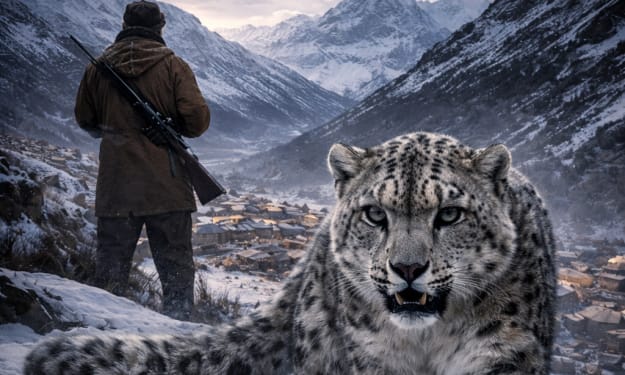
Human Revenge: A Hidden Cause Behind the Decline of Snow Leopards
High in the rugged mountains of Central and South Asia lives one of the world’s most mysterious and beautiful big cats—the snow leopard. Known for its thick grey-white fur, long tail, and incredible ability to blend into rocky landscapes, this elusive predator has fascinated scientists and wildlife lovers for decades. Yet despite its beauty and ecological importance, the snow leopard faces a growing threat: human revenge.
By Irshad Abbasi 7 days ago in Earth
History of The Three Stooges (Part I: The Beginnings and Columbia Pictures - 1920s-1936)
I have been itching to write about The Three Stooges on Vocal for close to two years, but I couldn't figure out how to do it. I wanted to do it by third Stooge, but that's a bit complicated. I know this much. I was about eight or nine years old when I first saw The Three Stooges. I remember one of my local channels had the Stooges on for hours, and I tried my damnedest to be up for those shorts. I remember that the Family Channel actually had an hour of the Stooges on from 11PM to midnight, and it was the entire library on during that time.
By Clyde E. Dawkins4 days ago in Geeks



Comments
There are no comments for this story
Be the first to respond and start the conversation.