
Why Your Houseplants Might Be Watching You
More Than Just Decoration


I once brushed off the idea of houseplants being anything more than mere decorations—simple, green entities sitting in the corner, occasionally offering some fresh air and a bit of color to my home. But something odd happened one day that made me think twice. My peace lily seemed to react to my movements—its leaves shifted, almost as if it noticed me. I didn't immediately jump to conclusions, but soon, I couldn’t shake the thought: maybe plants are more aware than we give them credit for.
Most of us view plants as silent, passive objects, but recent scientific discoveries suggest they might actually be far more perceptive than we realize. Plants have an impressive ability to sense their environment in ways we might never have imagined. Touch, sound, and even chemical communication between plants are just the beginning. Could they actually be more attuned to our presence than we know?
🌿 The Hidden Senses of Plants
Research has been revealing some mind-blowing facts about plants that are making us reconsider everything we thought we knew about them. For example, plants can sense vibrations and sounds, like water flowing through pipes. This discovery, which emerged from studies at University of Western Australia, found that certain plants will even grow their roots toward the sound of water. Not only that, but plants can respond to physical touch, not just in the way you'd expect from a sensitive plant like the Mimosa pudica.
Did you know that plants like tomatoes can actually shift their growth patterns when touched repeatedly? This responsiveness happens on a cellular level, meaning plants can "feel" when they're being interacted with. Their ability to sense changes around them is far more sophisticated than we previously thought.

But it doesn’t stop there. Plants can even communicate chemically. When one plant is under attack from pests, it sends out chemical signals that alert nearby plants to bolster their defenses. This process is similar to how we react to danger—our body releases signals to prepare us to face it. Plants don’t have eyes or ears, but they’ve got their own set of tools for interacting with their world in ways that are still hard to comprehend.
🌿 Tuning In: My Personal Experiment with Plants
I was curious to see if I could tap into this hidden world of plant awareness. So, I decided to spend more time with my plants, not just as objects to water or admire but as living beings. I started talking to them—yes, I know it sounds strange, but bear with me. I wanted to see if they responded differently when I took the time to connect with them. It wasn’t about waiting for them to “talk back,” but more about how I interacted with them.
It turns out, paying attention to my plants in a new way made a huge difference. For one, I began to notice subtle changes in their growth. My fiddle-leaf fig, which had been a bit of a challenge to keep healthy, started to look more vibrant when I gave it some undivided attention. Studies have shown that plants respond positively to regular interaction, and they even thrive when you simply talk to them. It wasn’t just about the leaves getting greener or the branches growing taller. There was something else at play—a deeper connection I couldn’t fully explain.
🌿 The Unexpected Benefits of Caring for Plants
Whether or not your plants are actually aware of your presence, there’s no denying that spending time with them brings unexpected rewards. Here’s how taking care of your plants can change more than just the air in your home:
Mindfulness: The act of tending to plants forces you to slow down. Watering, trimming, or even repotting can become a meditative practice that helps you focus on the present moment. Did you know that gardening and caring for plants have been shown to reduce anxiety and improve mental clarity? It’s a perfect way to take a break from the digital world and reconnect with something real.
Stress Reduction: Research supports the idea that simply being around plants can reduce stress and lower blood pressure. People who interact with plants regularly report feeling calmer and more relaxed. Studies show that office workers who have plants in their workspace experience lower levels of anxiety.
Stronger Connection to Nature: We often overlook how disconnected we are from nature in our fast-paced, tech-driven lives. Plants, especially indoor plants, can help bridge that gap, bringing a piece of nature into your living space.
Increased Awareness: Caring for plants makes you more aware of the environment. When you notice how temperature, light, and humidity affect your plants, you begin to appreciate the subtle balance of nature.
🌿 A Deeper Look at Plant Awareness
So, are your houseplants actually “watching” you? The idea might sound strange, but it’s not as far-fetched as it seems. Plants are aware of their surroundings in ways that go beyond what we can easily observe. From sensing light and water to feeling physical touch and releasing chemical signals in response to threats, they’re more connected to their environment—and possibly to us—than we might think.
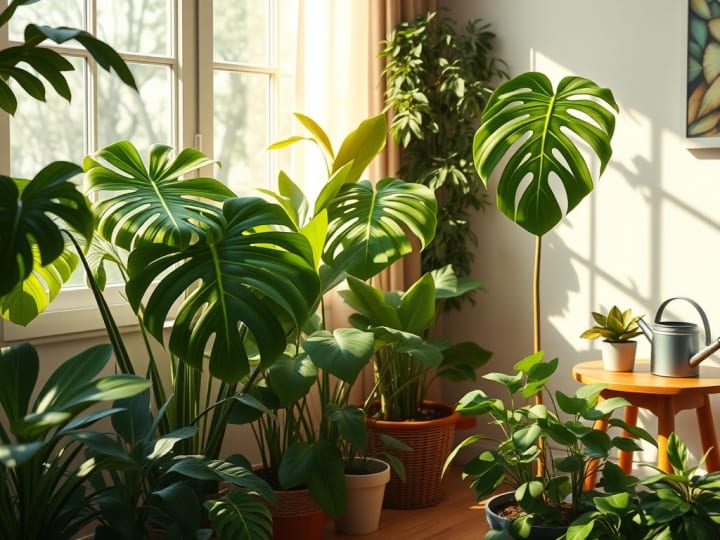
I’ve learned that caring for plants isn’t just about giving them water or sunlight. It’s about creating a space where both you and your plants can thrive. The more I tend to them, the more I feel connected not only to the plants themselves but also to the rhythms of nature. Whether or not my plants are actually aware of me, I can’t deny that the time I spend with them makes me more mindful of the present moment and of my place in the world.
🌿 The Quiet Power of Plants
Plants might not watch us in the way we imagine, but they are deeply attuned to their surroundings. The next time you tend to your plants, take a moment to really observe them. Notice how they respond when you give them a little extra care. Whether or not you believe they’re “watching” you, one thing’s for sure: they can teach us a lot about patience, mindfulness, and the quiet power of nature.
These silent companions are more than just background décor in our lives. By paying closer attention to them, we might find that our connection to the natural world—and to ourselves—grows deeper in ways we never expected. So, the next time you walk past your plants, remember that there’s a lot going on beneath the surface. Take the time to listen and maybe, just maybe, you’ll hear them speaking to you in ways you’ve never imagined.
About the Creator
Ojo
🔍 I explore anything that matters—because the best discoveries don’t fit into a box...
Human Revenge: A Hidden Cause Behind the Decline of Snow Leopards
High in the rugged mountains of Central and South Asia lives one of the world’s most mysterious and beautiful big cats—the snow leopard. Known for its thick grey-white fur, long tail, and incredible ability to blend into rocky landscapes, this elusive predator has fascinated scientists and wildlife lovers for decades. Yet despite its beauty and ecological importance, the snow leopard faces a growing threat: human revenge.
By Irshad Abbasi a day ago in Earth
Bomb Scare
It was 2027, and the world never thought it would happen. A missle hit the United States, but it wasn't where they had anticipated. A little town in the northeast was hit by a missile strike, they didn't know why, and they didn't know exactly where it hit, but they did know it was a coastal community, somewhere between Maine and Delaware.
By Gregory Payton5 days ago in Fiction




Comments
There are no comments for this story
Be the first to respond and start the conversation.