
Why the Megalodon is gone for good.
An essay using simple scientific logic and reasoning.

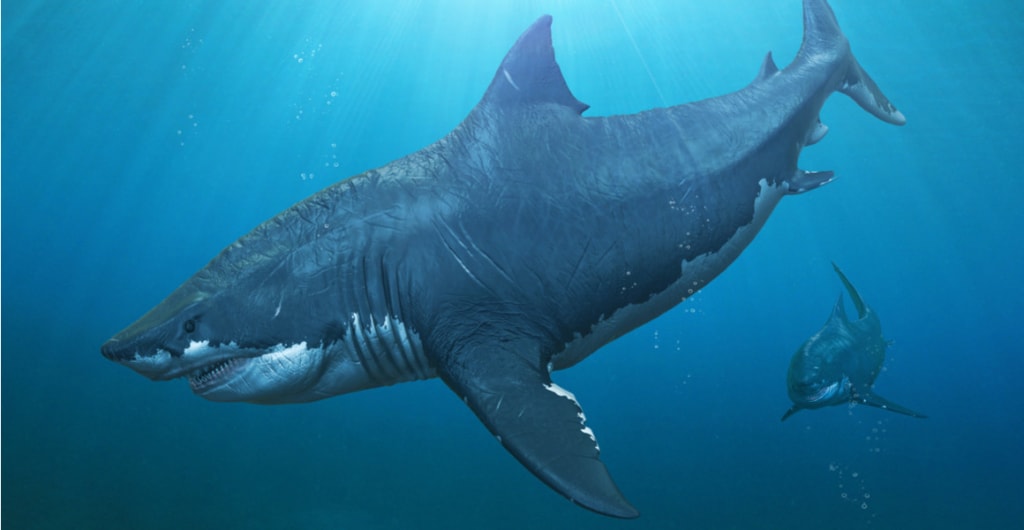
Odotus megalodon was a massive, ancient shark, with the largest specimens found to be just under 60 feet in length at about 17.9 meters. To put that into perspective, the largest (reliably measured) Great White Shark ever caught was just around 6.0 meters in length, or about 19.7 feet. The sheer size of this ancient creature is enough to simply propose (much to the dismay of many shark-lovers such as myself), that if this creature were alive today, we would have simply found it already. But, I digress, let’s jump into the details to really explain why the ancient Megalodon cannot exist in the oceans today.
The Mariana Trench Theory
Perhaps one of the most popular theories I have heard in this debate is that the Megalodon would live in the Mariana Trench. There are several issues with this theory, but I’ll start with the most obvious.
Food
For a shark as large in stature as the Megalodon, there is not possibly enough food in the Mariana Trench to sustain one shark, let alone a reputable population. On average, a Great White Shark consumes about 0.5 to 3 percent of its body weight each time it hunts once every few days. This may not seem like much, but you have to remember that sharks are much much bigger than us. And this Megalodon was 3 times the size of a Great White on average. This means that the Megalodon would have to hunt and consume a massive amount of the xenophyophores, amphipods, and small sea cucumbers that live in the depths, not one of which were a part of the creature’s diet or hunting lifestyle. It is simply not possible to see a sustainable and thriving colony of sharks living in a near ecological dead zone of their diet.
Pressure
The Megalodon is related to the order of sharks known as the Lamniformes. This order includes species such as the Great White, Thresher, and Mako sharks. The Great White, Megalodon’s closest relative, lives about as deep as 200m in the ocean. The Mariana Trench Theory would suggest that the Megalodon would be living 11,034m under the surface. The pressure that deep in the ocean is about 16,000psi, easily enough to destroy any submarine that attempts venture down there. With a cartilage skeleton, the shark’s body would simply collapse under than kind of pressure.
The Cold of the Depths
The average temperature in the Mariana Trench is about 34-39 degrees Fahrenheit, or about 1-4 degrees Celsius. Moderns Lamniformes thrive in temperatures of 54-75 degrees Fahrenheit, or 12-24 degrees Celsius. Now, studies have shown that the Megalodon thrived in slightly colder waters, and might have struggled due to the rising temperatures of climate change. However, they primarily lived in the cold during development, and returned to more coastal areas later in life. We loop once again to our point that Megalodon, if it were alive, would have been found already.
Undiscovered Descendant?
Let’s close off this essay on a good note. While it is highly unlikely we will ever find any trace of the Megalodon in the deep, we can still observe and appreciate what this creature was like in its time by observing its relatives. The modern Lamniformes of our time give us insight into how their Cretaceous ancestors lived, hunted, and bred, and their existence allows us to appreciate what many years of evolution have done to create these apex predators. Perhaps there is an undiscovered, more distant ancestor of the Megalodon thriving in the deep waters of the undiscovered sea, but even with that thought, we would still only have a piece of what it would be like to live with the great, ancient sharks of our planet’s past.
About the Creator
TW G
Just a tree-huggin’, science lovin’ nerd trying to share her ideas.
Keep reading
More stories from writers in Earth and other communities.
The AI Boom Will Increase U.S. Carbon Emissions—But It Doesn’t Have to
Artificial intelligence is reshaping the U.S. economy at a breathtaking pace. From generative AI tools and cloud computing to data-driven healthcare and finance, the AI boom promises productivity gains, innovation, and economic growth. But beneath this technological optimism lies a growing concern: AI is energy-hungry, and without intervention, it could significantly increase U.S. carbon emissions.
By Muhammad Hassana day ago in Earth
Do Not Touch the Roses
There is a quiet power in the phrase “Do Not Touch the Roses.” It sounds like a warning, but it feels like an invitation — one that asks us to pause, admire, and respect something without claiming it. Roses have long symbolized love, beauty, and passion, yet they are also guarded by thorns. That contradiction makes them the perfect metaphor for many of life’s most meaningful things.
By Aarif Lashari5 days ago in Earth
📢 Raise Your Voice Thread: 01/22/2026
Our “Raise Your Voice Threads” are hosted most alternating Thursdays at 12PM ET to offer creators more avenues to uncover exceptional stories on Vocal. As we are continuously searching for fresh creators and inspiring stories, this thread provides an opportunity to exchange and discuss the stories that have moved and motivated us on Vocal.
By Raise Your Voice by Vocala day ago in Resources



Comments
There are no comments for this story
Be the first to respond and start the conversation.