
Why the Deep Sea Mining Race Is Accelerating in 2025: Key Drivers and Global Impact
From Rare Earth Demand to Climate Goals—Explore the Economic, Environmental, and Geopolitical Factors Fueling the Surge in Deep Ocean Resource Extraction

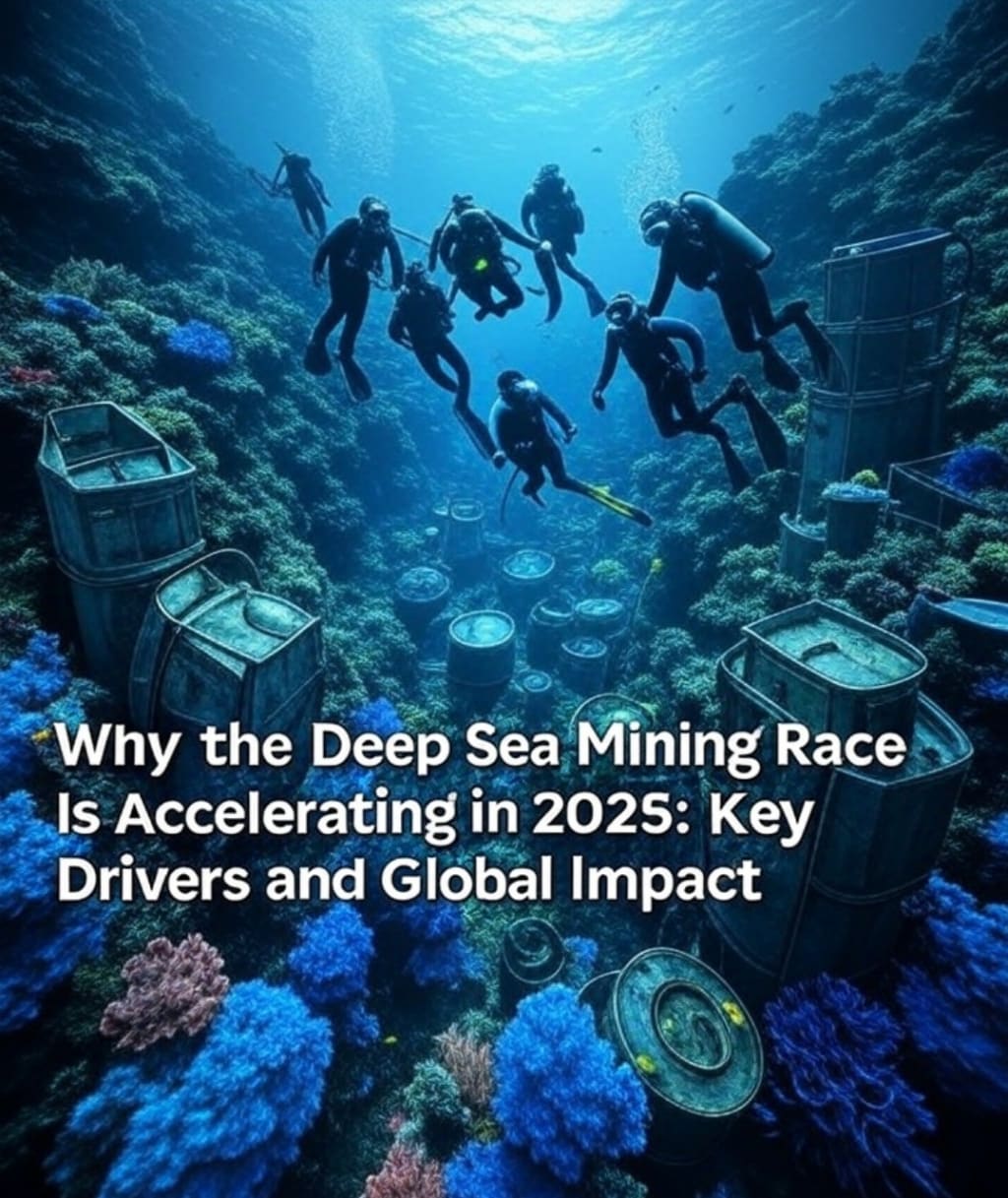
Deep-sea mines can also be used to manufacture military equipment and weapons.
While seabed mining is still a work in progress, private companies and government agencies in countries including China, India, and Russia are racing to secure rights to the area.
License applications have been submitted to the United Nations International Seabed Authority (ISA) for the Clarion-Clipperton Zone in the North Pacific, the Mid-Atlantic Ridge in the North Atlantic, the Indian Ocean, and parts of the Northwest Pacific.
are these minerals in such high demand?
Interest in deep-sea mining has grown along with the drive toward clean energy.
Electric vehicles require six times more minerals than their fossil-fueled predecessors, according to the International Energy Agency. Similarly, offshore wind turbines require 12 times more metals and minerals to generate electricity than natural gas plants.
The World Bank predicts that the amount of minerals extracted will need to increase fivefold by 2050 to meet growing demand.
This means that more than three billion tons of minerals and metals are needed to power wind, solar and geothermal energy, as well as energy storage.
Proponents of deep-sea mining argue that traditional mining cannot meet demand and point to the poor quality of the minerals due to over-extraction.
However, deep-sea mining also raises environmental concerns.
Currently, few countries dominate the onshore production of key minerals used in clean energy.
Australia leads the way in lithium production, while Chile leads in copper production.
China has turned to graphite and rare earth elements, which are used primarily in high-tech products such as smartphones and computers.
The Republic of Congo, Indonesia, and South Africa are major players in the markets for cobalt, nickel, platinum, and iridium.
China’s Deep-Sea Diving
China is also taking rapid steps to extract these minerals beyond its borders, raising concerns among Beijing’s geopolitical rivals.
China has also focused on deep-sea exploration.
China has received five mining licenses issued by the United Nations agency, the most ever granted by a single country.
India also has two licenses and has applied for two more. Russia has four licenses and shares one with other countries.
“The drive to extract, process and exploit key minerals is accelerating with geopolitical tensions and energy transitions,” says Nathan Picarsic, co-founder of data-gathering firm Horizon Advisory.
But the real geopolitical concern has been China’s role in processing these minerals before they enter the supply chain.
According to the International Renewable Energy Agency, China currently controls 100% of the supply of refined natural graphite and dysprosium, 70% of cobalt, and about 60% of processed lithium and manganese.
Beijing has also imposed various restrictions on the export of technologies used to process these valuable minerals. China says this is to protect the country’s national security and interests.
The country has banned the export of technology used in rare earth magnets, electric vehicles, wind turbines and some other electronic devices until December 2023.
U.S. Energy Secretary Jennifer Granholm highlighted the tensions at the Clean Energy Summit in August 2023, saying, “We are facing a supplier that is willing to use market power as a weapon for political gain.”
Pointing to China’s increasing efforts to acquire these valuable minerals, the commission argued that the US should take strategic steps to reduce its reliance on foreign sources for critical and strategic minerals.
In 2022, the US launched the Mining Safety Partnership with Australia, Canada, Finland, France, Germany, Japan, the Republic of Korea, Sweden, the United Kingdom, and the European Commission. Italy and India have since joined the club.
What are the caveats about deep-sea mining?
Deep-sea mining has yet to take off as the UN licensing agency, ISA, is still working on regulations.
Meanwhile, some scientists and organizations campaigning for ocean protection are warning about the environmental impacts of deep-sea mining.
Professor Lisa Levin, who works in marine and ocean ecology at the University of California, Berkeley, is a leading figure in her field.
Levin warned:
“When the final ISA regulations are finalized, likely next year, we will still have a gap in understanding how this type of mining could affect deep-sea biodiversity.”
About 20 countries, including Brazil, Canada, Costa Rica, Finland, Switzerland and Vanuatu, have called for a halt to deep-sea mining until more research is done on its potential impacts on marine ecosystems.
Nevertheless, the Norwegian parliament approved research in Arctic waters in January.
The ISA secretariat explains that member states are “increasingly aware of the potential of the deep seabed for green energy transitions and green technologies.”
Gerard Baron of Canada's The Metals Company, which is exploring the Clarion-Clipperton area, argues that "the current geopolitical situation has given new impetus to interest in seabed mining as the world's three largest countries by population focus on the potential of deep-sea resources."
But campaigners claim that deep-sea mining companies are behind the heated competition between countries.
Louisa Casson, director of Greenpeace's 'Stop Deep Sea Mining' campaign, said:
"They are lobbying governments to open up the oceans to mining by raising geopolitical tensions and talking about supply chain restrictions. They are busy spreading fear."
The ISA, responding to environmentalists' concerns about the lack of information, says it is working with international experts. The agency says there is "no consensus" on the lack of information.
About the Creator
Keep reading
More stories from Real content and writers in Earth and other communities.
Bagram Revisited: A Historic Afghan Hub at the Center of Global Tension
Bagram is once again the focal point of power narratives. Built in the 1950s by the Soviet Union at the foot of Afghanistan’s snow-covered mountains, this airbase became the military hub for two global powers — the Soviet Union and the United States. Today, it is under the administration of the Afghan Ministry of Defense. Yet, the history of this site in Parwan province in northern Afghanistan is centuries old.
By Real content4 months ago in Earth
Time Out Market to Close in Fulton Market
After years of drawing locals and tourists alike to Fulton Market, Time Out Market Chicago is set to close its doors. The popular food hall, known for bringing together some of the city’s best chefs, artisans, and culinary experiences under one roof, has announced that it will cease operations later this year. The closure marks the end of an era for one of Chicago’s most vibrant dining destinations and reflects broader trends in the restaurant and hospitality industry that have reshaped urban dining spaces over the past decade. The Rise of Time Out Market in Fulton Market Time Out Market first opened in Chicago’s Fulton Market District in 2019, quickly gaining a reputation as a destination where visitors could sample some of the city’s most celebrated chefs and street‑food vendors all in one place. The market followed a model that had already been successful in cities like Lisbon and New York: a curated collection of high-quality, chef-driven eateries, communal seating areas, and a lively atmosphere that combined dining with culture and entertainment. Located in a district already famous for its mix of historic meatpacking warehouses and trendy loft conversions, Time Out Market quickly became a hub for both food lovers and tourists seeking an authentic Chicago experience. (timeoutmarket.com) Why the Closure Is Happening While the exact reasons behind the closure are complex, several key factors appear to have contributed: 📉 Shifting Consumer Behavior The COVID-19 pandemic dramatically changed dining habits, with many customers moving toward delivery, takeout, and smaller neighborhood restaurants rather than large food halls. Even as in-person dining rebounded, some communal spaces struggled to maintain consistent foot traffic. 💰 Operational Costs Maintaining a high-quality, multi-vendor space in Fulton Market comes with significant overhead, from leasing costs to staffing and compliance with city regulations. Rising costs for ingredients, labor, and real estate have challenged profitability. 🌆 Urban Development Trends Fulton Market has evolved rapidly, attracting corporate offices, luxury condos, and boutique hotels. While the area’s growth has been positive for real estate, it has also intensified competition for dining options and raised expectations for commercial spaces, putting additional pressure on large-scale food halls. Impact on Local Vendors and Chefs One of the hallmarks of Time Out Market was its curated roster of local vendors. From acclaimed pastry chefs to innovative street-food vendors, many found a platform at Time Out Market that allowed them to reach a wide audience without the overhead of opening a standalone restaurant. The closure will leave dozens of small business owners seeking new spaces or alternative ways to reach their customers. While some may move to other neighborhoods or pop-up concepts, others may struggle to find affordable options in the city’s increasingly expensive food scene. For food lovers, the market’s closure means the loss of a one-stop destination to sample a variety of Chicago’s culinary talent in a single, vibrant location. The Cultural Significance Time Out Market was more than just a food hall—it was a social and cultural gathering place. Its communal tables encouraged interaction, its events showcased local music and arts, and its central location made it a natural meeting point for tourists and locals alike. For many, it represented the spirit of Chicago’s Fulton Market district: a place where history, innovation, and creativity intersected. Its closure will leave a gap not only in dining options but in the neighborhood’s cultural fabric. Industry Experts Weigh In Analysts note that the closure of Time Out Market is part of a broader trend affecting large-scale food halls across the U.S.. While some continue to thrive, particularly in cities with high tourist traffic or strong corporate sponsorship, others have struggled to adapt to post-pandemic consumer habits. In interviews with hospitality experts, several key points emerged: Adaptability Is Key: Food halls that survive often offer flexible layouts, hybrid dining and retail options, or smaller-footprint satellite locations. Experience Still Matters: While convenience and takeout are important, consumers continue to seek memorable experiences. Large markets must find ways to balance these two priorities. Local Partnerships Help: Collaboration with local businesses, breweries, and cultural institutions can drive consistent traffic and community engagement. What’s Next for Fulton Market? The closure of Time Out Market opens up opportunities for other businesses. Fulton Market remains a hotspot for culinary innovation, with new restaurants, bars, and pop-up venues continuing to open each year. Some industry insiders speculate that the space may be repurposed for smaller, boutique eateries, event spaces, or mixed-use commercial developments that cater to the neighborhood’s evolving demographics. Others believe the closure may inspire new concepts that combine food, culture, and technology in innovative ways. Reflections from Visitors For regular patrons, the news is bittersweet. Many recall their first visits to Time Out Market—sampling different cuisines, sharing tables with strangers, or attending weekend events. Social media posts following the announcement highlighted memories of birthday celebrations, first dates, and casual gatherings, underscoring the market’s role in the city’s social life. “It was our go-to spot for trying new chefs,” one visitor commented. “It’s sad to see it go, but we’re hoping whatever comes next keeps that spirit alive.” Conclusion: The End of an Era, and the Beginning of Something New The closure of Time Out Market in Fulton Market represents the end of a significant chapter in Chicago’s food and cultural scene. While it may be disappointing for fans and vendors alike, it also reflects broader trends shaping urban dining, commercial real estate, and consumer behavior. As the neighborhood continues to grow and evolve, there’s hope that new concepts will emerge, preserving the community-focused, culinary-driven spirit that made Time Out Market special. In the meantime, Chicagoans and visitors alike will treasure the memories and flavors that the market brought to Fulton Market, even as the city’s food scene moves forward into a new chapter.
By Muhammad Hassan2 days ago in Earth
Chinese Planetary Engineering: The Great Green Wall and the Reclamation of Climate
There are junctures in history where a civilization no longer chooses between comfort and progress, but between adaptation and extinction. At the dawn of the new millennium, China hit one of those silent thresholds where geography ceases to be a backdrop and becomes an adversary. The desert was advancing, not as a metaphor for decay, but as a physical, methodical, and relentless force. Sand was devouring the horizon, winds grew heavy with dust, and the soil lost its fertile memory, taking with it the promise of social stability.
By Laurenceau Porte3 days ago in Earth




Comments
There are no comments for this story
Be the first to respond and start the conversation.