
Why Horses Can’t Breathe Through Their Mouths — And Why That Matters
Unlike humans, horses are obligate nasal breathers. This surprising trait isn’t just quirky—it could save or risk their lives.

We often assume that most mammals, including animals like horses, share similar breathing patterns with humans. After all, when we run, we pant through our mouths. When we have a cold, we rely on both nose and mouth to get enough air. But here’s something that might surprise you: horses can’t breathe through their mouths at all.
This isn’t just a fun fact to tuck away for trivia night—it has real implications for how horses live, survive, and even how humans care for them.
Built to Breathe Differently
The horse’s respiratory system is a beautifully specialized mechanism. Horses are what scientists call obligate nasal breathers. That means the only pathway they use to draw in air is through their nostrils. Their anatomy physically prevents them from mouth breathing.
At the center of this mystery is the soft palate, a muscular flap located at the back of the mouth. In humans and many other animals, the soft palate can shift to allow airflow through either the nose or mouth. But in horses, it’s different. Their soft palate is unusually long and essentially blocks off the passage from the mouth to the trachea (windpipe). The only time it lifts is during swallowing—not during breathing.
So even if a horse opens its mouth, no air flows through. The respiratory system demands the nostrils to do all the work.
Why This Matters, Especially When Running
Horses are among the fastest land animals over distance. They were designed by nature for speed and endurance, whether sprinting from predators in the wild or galloping down a racetrack.
At full gallop, a horse’s lungs are working at maximum capacity. They breathe in rhythm with their strides—about one breath per stride, which can mean up to 120 breaths per minute during a race. All that oxygen is pulled only through the nostrils, making their nasal passages wide and efficient.
But here’s where things get tricky: if anything blocks those nasal passages, the horse can quickly go into respiratory distress. There’s no back-up route—no mouth-breathing safety net like we humans have. This is why nasal infections, allergic reactions, or even tight tack (like overly restrictive nosebands) can be dangerous for horses.
What Happens When Things Go Wrong
Because horses rely so heavily on their nasal passages, certain conditions can become critical fast. Take, for example, dorsal displacement of the soft palate (DDSP)—a condition where the soft palate moves upward and partially blocks the airway. It can cause sudden breathing difficulty, strange noises while exercising, or even collapse.
In a human, a blocked nose might be inconvenient. For a horse, it could be life-threatening.
Evolution’s Trade-Off
So why would evolution design such a “limiting” system? In truth, it’s not so limiting at all when you consider how well it works under normal conditions.
By restricting breathing to the nose, horses benefit from constant filtration, warming, and humidifying of air. The nasal passages act as natural air purifiers, especially important when galloping through dusty fields or dry environments.
It’s also energy-efficient. Unlike us, horses don’t pant to cool down. They sweat instead, regulating their body temperature through evaporation, which reduces the need for mouth breathing. Their body, in essence, found a different, and very effective, way to stay balanced.
Final Thought
The next time you see a horse, whether grazing quietly or thundering down a racetrack, remember this hidden quirk of their biology. That graceful head and flared nostrils aren’t just beautiful—they’re essential to survival. In a world where one breath can be the difference between power and peril, horses have adapted to breathe in a way that's both specialized and sensitive.
It’s a reminder of how every creature, no matter how familiar, holds mysteries just beneath the surface. Something as simple as how we breathe becomes a complex and fascinating difference between species.
Hungry for More?
If you found yourself fascinated by how horses breathe, you’re not alone. The animal kingdom is full of strange and incredible adaptations like this—some that make us smile, others that leave us in awe. From jellyfish that live without brains to beetles that fake their own death with chemical “blood,” nature never runs out of stories.
Want to explore more of these peculiar facts? Check out the rest of this collection filled with bizarre, surprising, and delightful insights into the animal world. Because sometimes, the most ordinary creatures have the most extraordinary secrets.
About the Creator
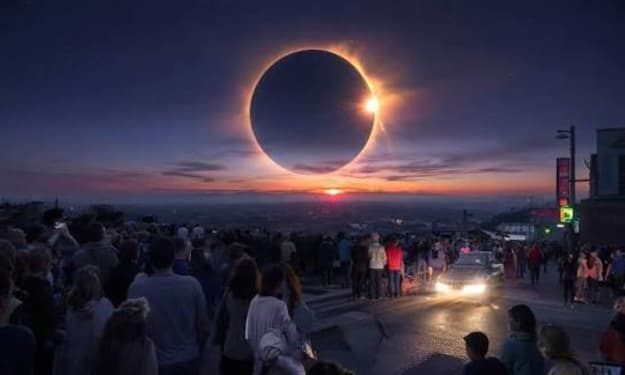
Day Will Turn to Night: Astronomers Officially Confirm the Date of the Longest Solar Eclipse of the Century
For stargazers, astronomers, and casual skywatchers alike, 2026 promises an astronomical event that will be remembered for a lifetime. Scientists have officially confirmed the date of the longest solar eclipse of the 21st century, a celestial phenomenon that will turn day into night for several minutes across parts of the globe. The announcement has sent excitement rippling through the scientific community and among enthusiasts who have long awaited a solar spectacle of this magnitude. The Science Behind the Eclipse A solar eclipse occurs when the Moon passes between the Earth and the Sun, casting a shadow on our planet and temporarily blocking the Sun’s light. While solar eclipses happen somewhere on Earth approximately every 18 months, total eclipses—where the Sun is completely obscured by the Moon—are far less common. What sets the 2026 eclipse apart is its duration. Astronomers predict that the eclipse will last for over six minutes in its longest phase, making it the longest total solar eclipse of the century. The phenomenon is a result of the precise alignment of the Sun, Moon, and Earth, as well as the Moon’s elliptical orbit, which causes slight variations in apparent size. Dr. Elena Morales, an astrophysicist at the European Southern Observatory, explains: "This eclipse is remarkable not just for its length but for its visibility. For several regions, the Sun will disappear completely, creating a surreal twilight in the middle of the day. It's an excellent opportunity to study the Sun’s corona, which is usually obscured by its brightness." Where and When to Watch The path of totality—the narrow band where the eclipse will be fully visible—stretches across several countries, including parts of the Arctic, Greenland, Iceland, and Spain. Millions of people living along this corridor will experience the full majesty of the eclipse, while a partial eclipse will be visible across much of Europe, northern Africa, and North America. Astronomers recommend planning travel in advance, as areas within the path of totality are expected to see a significant influx of visitors. Hotels, camping grounds, and viewing points are already reporting high demand, as enthusiasts from around the world seek to witness the once-in-a-lifetime event. Safety First: Protecting Your Eyes Viewing a solar eclipse can be dangerous if proper precautions are not taken. Staring directly at the Sun without specialized glasses can cause permanent eye damage. Experts emphasize the use of ISO-certified eclipse glasses or solar viewers for safe observation. Pinhole projectors, telescopes equipped with solar filters, and projection methods can also provide safe and magnified views of the eclipse. Many educational institutions and astronomical societies are planning public viewing events, combining safety with expert commentary to enhance the experience for attendees. Cultural and Scientific Significance Throughout history, solar eclipses have held deep cultural significance. Ancient civilizations often interpreted eclipses as omens or messages from the gods. Today, eclipses continue to captivate human imagination, blending scientific intrigue with awe-inspiring natural beauty. From a scientific perspective, total solar eclipses offer rare opportunities to study the Sun’s outer atmosphere, the corona, which is invisible during regular daylight. Researchers can observe solar flares, prominences, and other phenomena, gaining insights that contribute to our understanding of solar physics, space weather, and even the impact of solar activity on Earth’s climate and satellite communications. Preparing for the Experience For those planning to witness the eclipse, preparation is key. Many enthusiasts are setting up travel plans, packing eclipse glasses, cameras, and telescopes, and coordinating with local astronomy clubs for guided viewing. Timing is crucial—the totality phase, though extended in 2026, still lasts just a few minutes, making precise observation essential for both enjoyment and scientific study. Communities along the path of totality are also preparing for the influx of visitors. Local authorities are coordinating traffic management, accommodation, and public safety measures to ensure that the event remains enjoyable and safe for everyone involved. A Rare and Awe-Inspiring Event The 2026 solar eclipse is more than just a scientific event; it is a once-in-a-generation experience that reminds humanity of the vastness and beauty of the cosmos. For a brief moment, day will turn to night, and millions of people across the globe will share in the wonder of the universe’s intricate dance. Whether you are a professional astronomer or a curious skywatcher, this eclipse offers an unforgettable spectacle. It’s a moment to pause, look up, and marvel at the universe—a reminder that even in our modern, digital age, the natural world continues to inspire awe and wonder. Prepare your glasses, mark your calendars, and get ready for the longest solar eclipse of the century. For those lucky enough to witness it, it will be a memory etched in time, a celestial marvel that will be talked about for decades to come.
By Fiaz Ahmed Brohi6 days ago in Earth
United States Lawn Mowers Market Size and Forecast 2025–2033
The United States Lawn Mowers Market is expected to reach US$ 15.91 billion by 2033, rising from US$ 9.64 billion in 2024, registering a CAGR of 5.73% during 2025–2033. This strong growth trajectory reflects changing lifestyles, increased spending on home improvement, and rapid technological innovation across outdoor equipment. From battery-powered walk-behind models to autonomous robotic mowers guided by GPS and artificial intelligence, the industry is undergoing a structural shift toward efficiency, sustainability, and user convenience.
By Renub Research7 days ago in Earth



Comments (1)
hello bahi ap ko AI generated stories sy katny kama chuky hu ab tak please tell me