
Who Owns the Panama Canal?
Understanding the History, Control, and Global Importance of This Strategic Waterway

Who Owns the Panama Canal? Understanding the History, Control, and Global Importance of This Strategic Waterway
The Panama Canal is one of the most strategically and economically significant waterways in the world. Connecting the Atlantic and Pacific Oceans, this engineering marvel has been a cornerstone of global trade since its completion in 1914. However, its history of ownership and control is a fascinating tale of geopolitics, international negotiations, and national sovereignty.
The Early History of the Panama Canal
Before the canal was constructed, the idea of connecting the two oceans across the Isthmus of Panama had been considered for centuries. The French were the first to attempt the construction in the 1880s, under the leadership of Ferdinand de Lesseps, the mastermind behind the Suez Canal. However, the project was plagued by financial mismanagement, engineering challenges, and tropical diseases like malaria and yellow fever, ultimately leading to its failure.
In 1903, the United States took over the project after negotiating the Hay-Bunau-Varilla Treaty with the newly independent Republic of Panama. This treaty granted the U.S. control over a 10-mile-wide strip of land known as the Panama Canal Zone. Construction resumed under American supervision, and the canal was completed in 1914.
For much of the 20th century, the Panama Canal was controlled and operated by the United States. It played a critical role in global commerce and military strategy, particularly during World War II and the Cold War.
The Push for Panamanian Sovereignty
Despite the canal’s economic and strategic importance, Panamanians long resented U.S. control over the waterway and the surrounding Canal Zone, which they saw as a symbol of foreign domination. Protests and political movements advocating for Panamanian sovereignty grew throughout the mid-20th century.
In 1977, after years of negotiation, U.S. President Jimmy Carter and Panamanian leader General Omar Torrijos signed the Torrijos-Carter Treaties. These agreements set a timeline for the gradual transfer of control of the canal to Panama, culminating in full Panamanian ownership on December 31, 1999.
Who Owns the Panama Canal Today?
Since January 1, 2000, the Panama Canal has been fully owned and operated by the Republic of Panama. The canal is managed by the **Panama Canal Authority (Autoridad del Canal de Panamá, or ACP)**, an autonomous government agency established to oversee its operations.
The ACP is responsible for maintaining the canal, ensuring its efficiency, and handling the passage of over 14,000 vessels annually. The agency has modernized the canal to accommodate larger ships, culminating in the completion of the Panama Canal Expansion Project in 2016, which added a third set of locks.
Economic and Strategic Importance
The Panama Canal remains a vital artery of global trade, facilitating the movement of goods between Asia, the Americas, and Europe. Approximately 6% of global maritime commerce passes through the canal annually, including significant volumes of containerized cargo, liquefied natural gas, and crude oil.
The canal is also a critical source of revenue for Panama, contributing billions of dollars to the national economy. Tolls paid by vessels using the canal fund its maintenance and generate profits that support infrastructure, education, and social programs in the country.
Strategically, the canal is vital for global shipping and military logistics. Its ability to shorten travel time between the Atlantic and Pacific Oceans makes it a preferred route for maritime trade.
Geopolitical Dynamics and Challenges
Although the canal is owned by Panama, its importance to global trade and geopolitics means it remains a point of interest for major powers, including the United States and China.
China, in particular, has significantly increased its economic influence in Latin America and the Caribbean, including investments in Panama. Chinese companies are involved in port infrastructure near the canal, raising questions about how this might impact its strategic dynamics.
Meanwhile, the United States continues to view the canal as critical to its national security and economic interests. While the U.S. no longer controls the canal, it maintains a strong relationship with Panama to ensure the waterway remains open and neutral.
The canal also faces operational challenges, including the impacts of climate change. Variations in rainfall patterns and drought conditions have affected water levels in Gatun Lake, which supplies the water needed for the canal’s lock system. These challenges require ongoing innovation and investment to ensure the canal’s sustainability.
The Symbol of Panamanian Sovereignty
The transfer of the Panama Canal to Panamanian control marked a significant moment in the nation’s history, symbolizing its sovereignty and ability to manage one of the world’s most critical infrastructures. The canal’s success under Panamanian ownership has been a point of pride for the country, showcasing its capability to handle a complex and essential operation.
Conclusion
The Panama Canal, now owned and operated by Panama, stands as a testament to human ingenuity and the power of national determination. From its tumultuous history of construction to its central role in global trade today, the canal continues to be a vital link between the Atlantic and Pacific Oceans.
Under the stewardship of the Panama Canal Authority, the waterway has not only maintained its relevance but also adapted to the demands of modern shipping. Its successful management is a symbol of Panama’s sovereignty and a cornerstone of its economic future, ensuring that the canal will remain a critical part of global commerce for generations to come.
About the Creator
Keep reading
More stories from Yogesh Shivaji Indalkar and writers in Earth and other communities.
New Year's Aurora Treat:
New Year's Aurora Treat: Witnessing the Northern Lights in Canada ✨ As the clock strikes midnight on New Year’s Eve, millions around the world celebrate with champagne toasts, fireworks, and resolutions. But in Canada, a more magical celebration is unfolding under the vast night sky—an ethereal dance of the northern lights. 🌌
By Yogesh Shivaji Indalkarabout a year ago in Earth
BRICS Wargames: Why They Matter — And Why India Chose to Sit Out
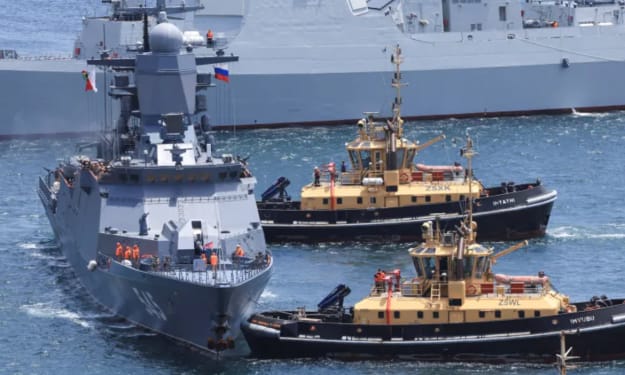
BRICS — the economic and political bloc comprising Brazil, Russia, India, China, and South Africa — has long been seen as a counterweight to Western-dominated global institutions. Over the years, it has expanded its influence in finance, trade, and diplomacy. Yet, in recent times, BRICS has begun exploring another domain that grabs headlines and sparks speculation: military cooperation, including large-scale wargames. These exercises are designed to simulate joint operations, test interoperability, and send a signal of strength. For members like Russia and China, wargames serve as both a show of force and a tool to deepen military collaboration within the bloc. However, India’s decision to opt out of recent BRICS wargames has raised questions: why does this matter, and why is India taking a different path from its BRICS partners? The Rise of BRICS Military Exercises Historically, BRICS has been portrayed as primarily economic, focused on initiatives like the New Development Bank (NDB) and trade agreements aimed at reducing Western dominance. But recent years have seen an evolution. Military drills among BRICS members are increasingly prominent, especially in the context of global tension and regional conflicts. These wargames are about more than just tactical drills. They serve multiple purposes: Strategic signaling: By conducting joint exercises, BRICS countries demonstrate unity and military capability to the rest of the world. Operational readiness: Countries test their ability to coordinate in complex scenarios, from humanitarian missions to potential combat operations. Diplomatic leverage: The exercises send subtle messages to other global powers, indicating that BRICS members can collaborate beyond economic forums. For nations like Russia, recently facing sanctions and international scrutiny, these exercises are particularly important. They showcase the ability to maintain partnerships and project power despite global isolation. For China, it is a way to cement strategic influence in Asia and beyond. Why BRICS Wargames Matter Globally The significance of these exercises extends beyond the bloc itself. Analysts note several key implications: Challenge to NATO and U.S. influence: BRICS wargames signal that alternative power centers exist outside Western-led military alliances. Regional security dynamics: Countries bordering BRICS members, particularly in South Asia, Africa, and Latin America, must monitor these developments carefully. Economic-military linkages: Military coordination among major emerging economies could shape security considerations in trade corridors, energy supply routes, and resource-rich regions. In essence, BRICS wargames are not just about soldiers and tanks, but about the broader geopolitical landscape: signaling, strategy, and shaping perceptions of influence. India’s Calculated Decision to Opt Out While Russia, China, Brazil, and South Africa have shown interest in participating actively, India has strategically chosen to abstain from the most recent wargames. This decision may appear surprising, given India’s economic and political stake in BRICS, but several factors explain it. Geopolitical balancing: India maintains complex relations with both China and Russia. While it has defense and historical ties with Russia, its relationship with China has grown tense due to border disputes and regional competition. Joining a wargame with China could be politically and militarily sensitive. Alignment with Western partnerships: India has strengthened ties with Western-led coalitions, including the Quad (U.S., Japan, Australia, India). Participating in BRICS military drills could conflict with these alliances, potentially sending mixed signals. Strategic autonomy: India has long emphasized a policy of strategic autonomy — making decisions based on national interest rather than bloc pressure. Opting out allows India to maintain flexibility in foreign policy and avoid entanglement in exercises that may not align with its regional objectives. Domestic perception: Indian public opinion and political narratives favor cautious engagement with China and Russia on military matters. Skipping the wargames minimizes domestic criticism of appearing too closely aligned with either of the more assertive BRICS powers. What India Gains by Sitting Out Choosing not to participate does not mean India is disengaged from BRICS. Economically and diplomatically, it remains a key player in the bloc. By skipping the wargames, India can: Maintain regional credibility in South Asia while avoiding the perception of aligning militarily with China. Signal strategic independence, reinforcing its image as a nation that prioritizes national security over bloc politics. Focus on bilateral and multilateral exercises elsewhere, such as those with the U.S., Japan, and Australia, which are more aligned with India’s current security priorities. In short, opting out allows India to navigate the delicate balance between its BRICS commitments and broader global strategic interests. Implications for BRICS and Global Security India’s abstention also reflects broader trends within BRICS: the bloc is not monolithic. While economic cooperation is often strong, military integration faces political and strategic limits. Differing national interests, historical rivalries, and regional tensions prevent uniform alignment. For global observers, this is crucial. It shows that while BRICS wargames are important, they are not necessarily indicative of a fully unified military bloc. The exercises are as much about optics as operations, and India’s absence underscores the challenges of aligning countries with divergent security priorities. Conclusion BRICS wargames matter because they are a window into the bloc’s evolving strategic ambitions. They signal power, test cooperation, and demonstrate emerging global influence. Yet India’s decision to opt out highlights that even within this growing coalition, national interests remain paramount. For India, the choice reflects a calculated approach: engage where it benefits national interest, avoid where risks outweigh gains, and maintain strategic flexibility. For the rest of the world, it is a reminder that BRICS, while increasingly important, is not a military monolith. Ultimately, BRICS wargames are as much about geopolitics and signaling as they are about military maneuvers — and India’s careful stance illustrates how emerging powers navigate this complex global chessboard.Start writing...
By Muhammad Hassan4 days ago in Earth
United States Plastic Market Size and Forecast 2025–2033
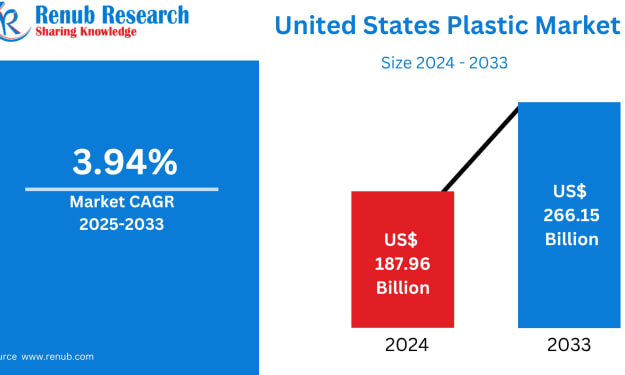
United States Plastic Market: Size and Forecast 2025–2033 The United States plastic market is projected to expand significantly, growing from US$ 187.96 billion in 2024 to US$ 266.15 billion by 2033, reflecting a steady Compound Annual Growth Rate (CAGR) of 3.94% during 2025–2033. This sustained growth is being fueled by rising demand across packaging, automotive, construction, healthcare, and consumer goods industries, alongside rapid innovations in recycling technologies and sustainable polymer development.
By Aaina Oberoi5 days ago in Earth
The Dryads are Calling
They say the forest by Phoenix River sings. Perhaps it is just the wind howling through the leaves, or a particular birdsong. But Percy Fisher knows better; he knows what lies in those woods, and he knows that the forest sings of his demise.
By Leigh Hooperabout 16 hours ago in Fiction


Comments
There are no comments for this story
Be the first to respond and start the conversation.