

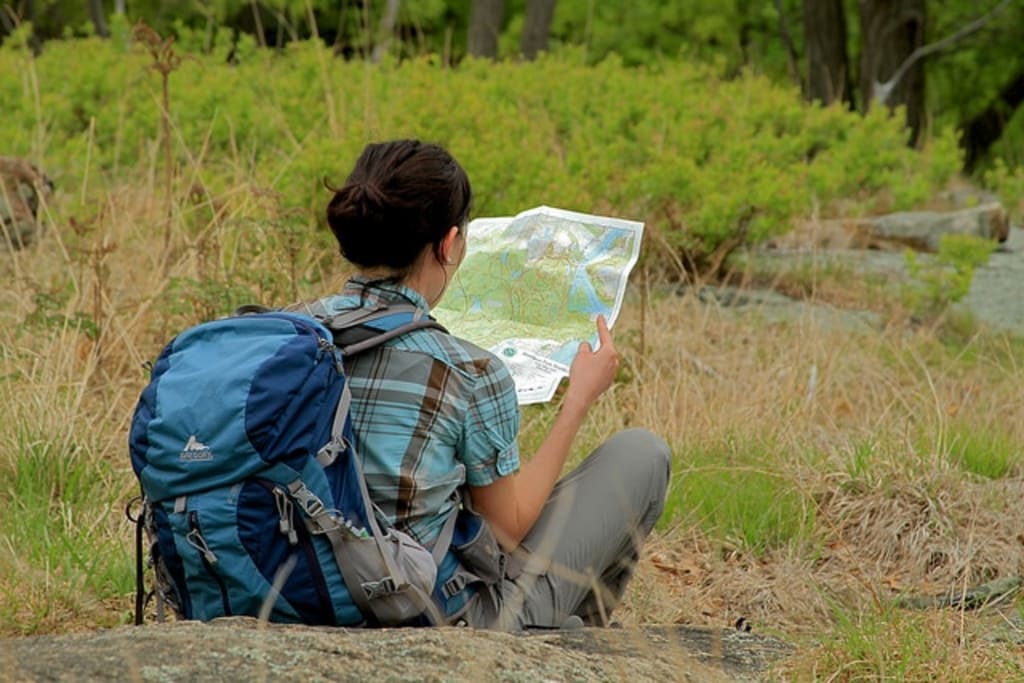
Every year, more than 600,000 people get lost in the woods while hiking, with most cases occurring in June through September in mid-afternoon. People can get lost for a variety of reasons, from wandering off the trail to get a selfie to running away, emotionally upset. Just because you’re lost doesn’t mean your situation is hopeless. Almost everyone lost is found within the first twenty-four hours. Here are some tips you’ll need to know to ensure your rescue happens as quickly as possible.
Calm Down

Getting lost can be a highly stressful situation. The first thing you need to do when you realize you are lost is to stop and take some deep breaths to relax. Panic is your greatest enemy and will probably cause you to become more lost than you were five minutes ago. Observe your surroundings, going over in your mind how you ended up there. You have a higher chance of being rescued quickly if you stay near the spot where you were last seen because this is where they’ll start their search.
Making An Itinerary

Before any outdoor adventure, you should draft an outline about where you are going and when you plan to be home from a trip. This outline is called an itinerary. Your itinerary should explain the routes you are taking when you’ll reach certain landmarks, etc... Leave a copy of it with someone who is not going on the trip like a trusted friend or nearby family member. This is the person who will alert authorities if something goes wrong on your trip.
Just In Case
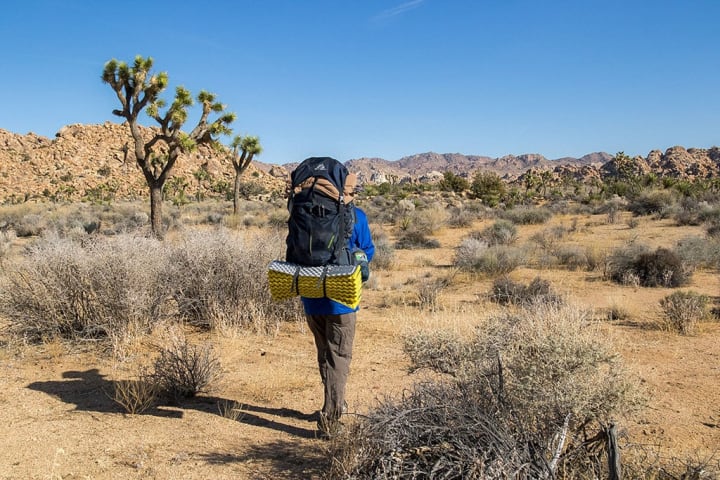
Nobody plans to get lost, but you should pack like you will be. See what the weather forecast on the trails is going to be to dress accordingly. Carry basic essentials like a water purifier, sunscreen, a flashlight, a first aid kit, a fire starter, and 72 hours’ worth of food. Park Rangers have trail maps available for free or a small fee to hikers visiting the park. Get one before heading into the woods, as GPS has a tendency to not work in spotty Wi-Fi zones.
Sounding The Alarm
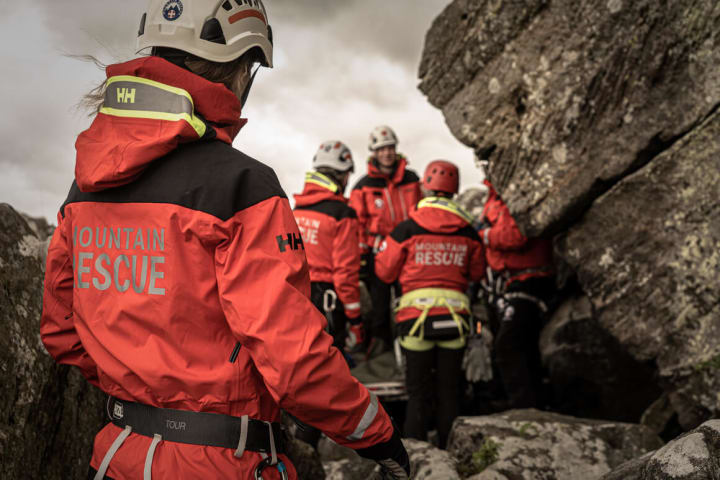
The search begins with a report made to 9-1-1. Rescuers will then put together a lost person profile by calling friends and family, visiting known addresses, and confirming where they were last seen. Once it is determined that you are lost, they’ll start a rough search of the area where you were last seen. This first phase will take 2-3 hours. After that, Search And Rescue (SAR) Members will set up an incident command center where they’ll use statistical data to create likely scenarios as to why you got lost in the first place to fan their search out.
All Alone
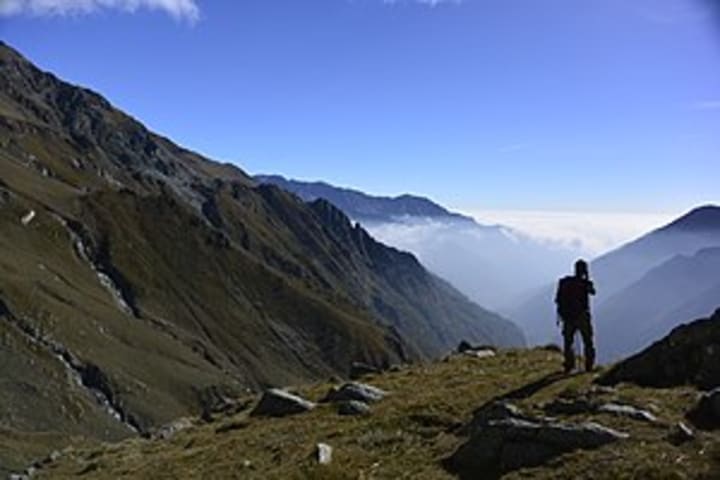
After careful consideration, and you are 100% sure you can try to find your way back by yourself, or self-rescue. 23% of lost people are found doing just that. If you do decide to do this, here is some advice for you. Stop and rest when you are feeling tired. You don’t want to injure yourself pushing your body beyond its limits. Also, rest for 30 minutes after eating. Stay hydrated by never rationing water. Fix minor problems before they become big ones.
Signaling For Help

If you hear rescue nearby, don’t start screaming. Your voice can carry and echo, sending them in multiple different directions. Instead, use a mirror to reflect sunlight into their eyes. Blow a whistle in three short bursts at a time. Add green plants to a fire to make heavy smoke. Go to a clearing and lay out a brightly colored tarp to let searching helicopters know where you are. If you do decide to self-rescue, consider leaving a trail behind so you can find your way back if things become too much. It’ll also give SAR Members a trail to follow to find you.
About the Creator
M.L. Lewis
Welcome to my little slice of pie. This blog will primarily focus on prepping and homesteading skills with a sprinkle of fiction every now and then.
Keep reading
More stories from M.L. Lewis and writers in Earth and other communities.
Surviving The Big Wave
A tsunami is a series of deadly ocean waves caused by an underwater earthquake, landslide, volcanic eruption, or meteor impact. Any event that displaces a large amount of water will result in a tsunami. On average, the world will experience at least two of them causing minor damage to the coastal areas they hit with a devastating ocean-wide one occurring every fifteen years. They can happen in any ocean with 80% of them occurring in the Pacific Ocean around the “Ring Of Fire” region. Tsunamis kill more than 50,000 people in these minor events every year, and in some cases millions, if it’s big enough. November 5th is Tsunami Awareness Day, so here are some survival tips you can use to survive these gigantic waves.
By M.L. Lewis2 years ago in Earth
The Eiffel Tower: Paris’s Iron Soul and the Story Behind Its Global Magic
The Eiffel Tower is more than a landmark rising above the Paris skyline. It is a symbol of human imagination, engineering courage, and the timeless romance of France. Millions visit it every year, yet few know the deeper story—how a controversial iron structure built for a temporary event became one of the most beloved monuments on Earth. Standing tall since 1889, the Eiffel Tower has witnessed revolutions, world wars, artistic movements, and generations of travelers who came to Paris searching for beauty, inspiration, or simply a moment they would never forget. 🌍 A Monument Born From a Global Celebration The Eiffel Tower was created for the 1889 Exposition Universelle, a world fair celebrating the 100th anniversary of the French Revolution. The French government held a competition for a monument that would represent modern engineering and national pride. Over 100 designs were submitted, but the winning proposal came from Gustave Eiffel, a renowned engineer whose company specialized in metal frameworks. Construction began on January 28, 1887, and was completed on March 31, 1889—an astonishing achievement in just over two years. When it opened, the tower served as the grand entrance to the exposition, welcoming millions of visitors from around the world. 🛠️ Engineering Genius: How the Tower Was Built The Eiffel Tower was a radical idea for its time. Paris was a city of stone, sculptures, and classical architecture. A 300‑meter iron tower seemed outrageous to many. Yet Gustave Eiffel and his team believed in the power of innovation. Key engineering facts - Height at completion: 300 meters (984 ft), making it the tallest structure in the world until 1930. - Current height: 330 meters (1,083 ft) including antennas. - Weight: About 10,100 tons. - Iron pieces: 18,038 individual components. - Stairs: 1,665 steps to the top. - Construction time: 2 years, 2 months, 5 days. The tower’s lattice design wasn’t just artistic—it was functional. The open iron framework allowed wind to pass through, giving the structure remarkable stability. Gustave Eiffel famously said the tower was “not only the art of the engineer, but also the art of the architect.” 🎨 From Controversy to Cultural Icon When the Eiffel Tower was unveiled, not everyone loved it. In fact, many Parisians hated it. Writers, artists, and intellectuals signed petitions calling it an eyesore. They said it looked like a “giant smokestack” and would ruin the beauty of Paris. But as time passed, the tower won hearts. - It became a symbol of modernity. - It became a symbol of Parisian pride. - It became a symbol of France itself. By the early 20th century, the Eiffel Tower had transformed from a temporary exhibition piece into a permanent global icon. 📡 A Tower That Saved Itself The Eiffel Tower was originally meant to stand for only 20 years. After the exposition, it was supposed to be dismantled. What saved it? Science. Gustave Eiffel allowed the tower to be used for radio experiments. Its height made it ideal for broadcasting signals. During World War I, the tower intercepted enemy communications, helping France in critical moments. Its usefulness ensured its survival. 💑 The Human Side: Why the Eiffel Tower Feels Magical People don’t fall in love with the Eiffel Tower because of its measurements or engineering. They fall in love with how it makes them feel. Standing beneath it, you feel small—but in a good way. Climbing it, you feel connected to history. Seeing Paris from the top, you feel like the world is bigger and more beautiful than you realized. The tower has become: - A symbol of love - A backdrop for proposals - A dream destination for travelers - A muse for artists and filmmakers It is the beating heart of Paris. 🌆 Visiting the Eiffel Tower: What to Expect A visit to the Eiffel Tower is a journey through levels of history, architecture, and breathtaking views. The Esplanade The ground level offers a close-up look at the tower’s massive iron legs and the engineering that holds it together. The First Floor - Transparent floors - Exhibits on the tower’s history - Restaurants and shops The Second Floor This level offers one of the best panoramic views of Paris—close enough to see details, high enough to feel the city’s scale. The Summit At 276 meters, the top floor gives a sweeping view of the entire Paris region. Gustave Eiffel’s private office has been recreated here. 🌙 The Eiffel Tower at Night Every evening, the Eiffel Tower lights up with a warm golden glow. And for five minutes at the start of each hour, it sparkles with 20,000 twinkling lights. This nightly ritual has become one of the most magical sights in the world. 📚 Fun and Surprising Facts - The Eiffel Tower was the tallest structure in the world until the Chrysler Building surpassed it in 1930. - It was originally painted red‑brown, then yellow, and now “Eiffel Tower Brown.” - Gustave Eiffel’s company also built the metal framework for the Statue of Liberty. - The tower sways slightly in strong winds—up to 9 cm. - It is the most visited paid monument in the world. 💬 Why the Eiffel Tower Still Matters The Eiffel Tower endures because it represents something universal: the human desire to create, to innovate, and to leave something beautiful behind. It is a reminder that even the most controversial ideas can become beloved. It is proof that art and engineering can coexist. It is a symbol of Paris, of France, and of the world’s shared cultural heritage. If this story brought the Eiffel Tower to life for you, share it with someone who dreams of visiting Paris. Leave a comment with your favorite Eiffel Tower moment—or the moment you hope to experience someday. And if you’d like to support more human‑centered, deeply researched stories like this, feel free to leave a tip. It helps bring more inspiring content to life.
By Haroon Pasha4 days ago in Earth




Comments
There are no comments for this story
Be the first to respond and start the conversation.