
When the Earth Roared: Russia’s Megaquake Sends Shockwaves Across the Globe
A rare 8.8 magnitude earthquake rocks Kamchatka, triggering tsunami alerts, evacuations, and a global reminder of nature’s untamed power.

July 30, 2025 – It began like any other day. Calm skies, still waters, and the quiet hum of life along Russia’s far eastern coastline. Then, without warning, the Earth roared.
At precisely 12:45 PM local time, a massive 8.8 magnitude earthquake struck near the Kamchatka Peninsula, sending shockwaves not just through the ground — but across the globe. In moments, the tranquil morning turned into panic, as people fled homes, alarms blared, and tsunami sirens echoed through coastal towns.
This wasn’t just a tremor. It was a seismic monster, one of the strongest earthquakes in modern Russian history — and one of the most dangerous in the world this year.
🌍 A Wake-Up Call from the Ring of Fire
The Kamchatka region sits on the edge of the Pacific Ring of Fire, a volatile zone known for its tectonic instability. Here, massive plates of the Earth’s crust are constantly shifting, grinding, and clashing — setting the stage for powerful geological events.
Today, that threat became reality.
The initial quake was followed by multiple powerful aftershocks, some exceeding magnitudes of 6.9 and 7.4, shaking buildings and terrifying residents already fleeing to safety.
🌊 Tsunami Fears Ignite Global Alerts
Almost immediately after the quake, the Pacific Tsunami Warning Center issued urgent alerts. Countries as far apart as Japan, the United States (Hawaii, California), Chile, Ecuador, and even New Zealand were warned of possible incoming waves.
In Severo-Kurilsk, a coastal town in Kamchatka, tsunami waves reaching 4 to 5 meters high slammed into piers and roads. Locals reported seeing walls of water surging through narrow streets. Emergency sirens continued for over an hour, urging mass evacuations from low-lying areas.
In Japan, waves reached Hokkaido’s coastline, prompting evacuations of nearly 9 million people. In Hawaii, residents were moved to higher ground after early wave activity was detected.
🏚️ Damage and Chaos on the Ground
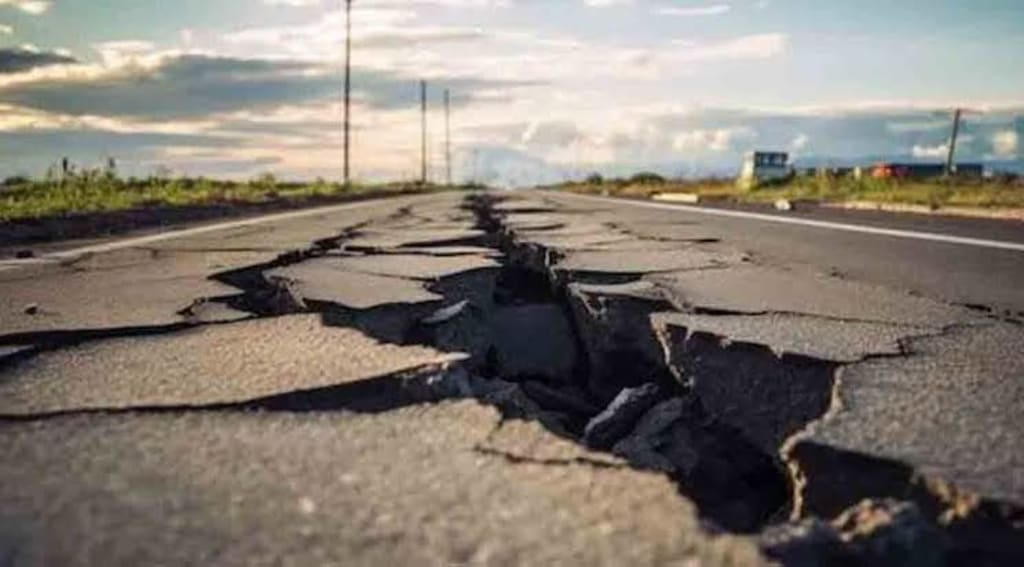
So far, no large-scale fatalities have been reported — a miracle considering the magnitude. However, significant infrastructure damage has occurred in several Russian towns. Cracks appeared in school buildings, roads split open, and power outages darkened entire neighborhoods.
Emergency responders rushed to assess damage, rescue stranded residents, and provide shelter to the displaced. The Russian government declared a state of emergency in affected areas and warned that aftershocks could continue for days.
📽️ Scenes of Shock and Survival
Social media quickly filled with harrowing videos: walls collapsing, cars floating in water, panicked crowds running for safety. One particularly gripping clip shows a father clutching his child, navigating waist-high waves in the middle of a flooded street — a chilling reminder of nature’s unpredictability.
In Japan, drone footage showed long lines of cars moving inland, as sirens echoed eerily over deserted beaches. In Hawaii, tourists on the beach were seen frantically fleeing as officials used loudspeakers to announce emergency instructions.
⚠️ What Caused the Quake?
This earthquake occurred at the junction of the Pacific and North American tectonic plates — a known subduction zone. These plates move past each other at a rate of several centimeters per year, building pressure deep beneath the Earth’s crust.
When that pressure is suddenly released, the result is devastating: violent shaking, ground rupture, and sometimes, massive ocean displacement — which leads to tsunamis.
According to geologists, today’s event was a megathrust earthquake, the most powerful type known to science.
🕊️ A Global Reminder
Events like this do more than shake the ground — they shake our assumptions of safety. They remind us that no matter how advanced we become, nature still writes its own rules.
For millions, today was a narrow escape. For some, it was a loss of homes, peace of mind, and certainty. And for the world, it’s another urgent call to invest in early warning systems, better infrastructure, and public awareness — especially in high-risk zones.
✅ What You Can Do Now
If you live near a coast or in a seismically active area:
Know your evacuation route.
Have an emergency kit with food, water, and medical supplies.
Stay updated via official channels and weather agencies.
And above all, stay calm. Awareness is your best defense.
Final Thought
In just a few minutes, the Earth reminded us of its power. An ordinary day turned into an extraordinary test of human resilience. And while buildings shook and waters rose, one thing stood firm — the spirit to survive, respond, and rebuild.
Nature doesn’t warn us — but it does teach us. The question is, are we listening?
About the Creator
Taimoor Khan
Hi, I’m Taimoor Khan. Writing is my way of capturing the quiet moments of life that often go unnoticed.
Keep reading
More stories from Taimoor Khan and writers in Earth and other communities.
COVID-19: A Global Tragedy
The COVID-19 pandemic changed the world in unimaginable ways. It brought devastating loss of life, economic turmoil, mental health challenges, and disruptions to almost every aspect of daily living. Entire countries shut down, healthcare systems collapsed, and millions were left jobless or grieving. Without question, the pandemic was one of the greatest global tragedies of the modern era.
By Taimoor Khan8 months ago in Earth
San Francisco Food Banks: How Community Support Fights Hunger
San Francisco is a city filled with innovation, opportunity, and diverse communities, yet thousands of residents still struggle to secure enough nutritious food for their families. Rising living costs, fluctuating wages, and ongoing economic pressures make food insecurity a daily reality for many households. Food banks serve as an essential lifeline by providing access to healthy groceries, community resources, and supportive programs.
By Jason Pruet8 days ago in Earth


Comments
There are no comments for this story
Be the first to respond and start the conversation.