
What Will Our Lives Look Like in 2050?
An Approaching Global Warming Catastrophe

The idyllic vacation of the Dubreuil family is under threat from global warming. For decades, scientists have issued warnings regarding the alarming condition of our planet, yet the public has largely remained indifferent. The dangers posed by global warming are no longer a distant concern; they have become an urgent reality with the potential for catastrophic outcomes. Rising temperatures are causing mountains to fracture, and the alarming rate of glacier melt is particularly concerning, with projections indicating that 80% of glaciers could vanish by 2050. The destabilization of permafrost due to global warming is contributing to the disintegration of mountain ranges. The impact of industrialization on global warming cannot be overlooked, as unchecked development reliant on fossil fuels and greenhouse gas emissions has resulted in the release of 740 billion tons of CO2 since the onset of the industrial era. The implications of global warming extend to the melting of polar ice and the consequent rise in sea levels. It is anticipated that global warming could induce a two to three-degree increase in atmospheric temperatures, leading to the melting of polar ice in both the Arctic and Antarctic regions, as well as mountain glaciers. Such temperature increases could result in rising sea levels, threatening to inundate low-lying coastal areas, including major cities like New York, Le Havre, Marseille, Nice, and London. The upheaval caused by climate change is affecting daily life, necessitating adaptations in living and working patterns. There is an urgent need for solutions to safeguard against heat and resource scarcity. Access to water is vital for survival, as deprivation can lead to acute kidney failure and death within a matter of days.
The issue of water scarcity is becoming increasingly pressing, exacerbated by persistent droughts and the depletion of groundwater resources. Yves Cochet, having embraced the role of a collapsologist, relocated to a village in Brittany to prepare for a potential global collapse. He abandoned his political career to foster a lifestyle in harmony with nature and biodiversity. Cochet advocates for resilience and collective action as essential for surviving the anticipated collapse by 2050, emphasizing the importance of ensuring water availability and sustainability. He proposes that puddle water can be rendered safe for consumption through boiling. His approach to resilience includes innovative water solutions that do not rely on electricity. Furthermore, urbanization has intensified the impacts of flooding, as the transition from agricultural land to urban development and impermeable surfaces alters flood dynamics. The destruction witnessed in the village of Villegailhenc exemplifies the severe consequences of flooding, which has led to tragic losses and widespread devastation. Rescue operations faced significant challenges due to the violent floodwaters, which obstructed access to the village. The aftermath included inundated homes, ruined infrastructure, and loss of life, underscoring the gravity of the situation. Additionally, the accelerated melting of ice caps in the Arctic region is contributing to a swift rise in sea levels. The melting ice in the North Pole and Greenland is resulting in the formation of large icebergs that, upon melting, release fresh water and further exacerbate sea level rise.
The phenomenon of rising sea levels, further intensified by the dynamics of Greenland and Antarctica in relation to global warming, presents a considerable danger to coastal areas, potentially resulting in extensive population displacements. The building known as Le Signal in France is currently under threat from the advancing ocean. Numerous other coastal regions globally face similar risks of displacement. Additionally, the proliferation of anthrax and chikungunya viruses represents significant health hazards. Anthrax can lead to severe illness and fatalities in both humans and animals. A future outbreak of the chikungunya virus could impact billions, resulting in respiratory failure and death. The invasion of the tiger mosquito in France and its implications is also concerning. This mosquito, which hails from warmer regions such as Brazil, has expanded into southern France over the past 10 to 15 years. It serves as a vector for serious diseases, including chikungunya and Zika, thereby posing health threats, particularly to pregnant women and children. Furthermore, wild boars present health risks and can transmit diseases. Interaction with wild boars may lead to illnesses such as leptospirosis, with individuals at heightened risk including hunters, veterinarians, and employees in slaughterhouses.
The impact of climate change has led to devastating wildfires in France, with 87 fatalities and 500 individuals reported missing in the Paradise fire, marking the deadliest incident in California's history. The risk of wildfires in northern France is anticipated to rise due to global warming, with projections indicating significant threats from forest fires by the year 2050. It is predicted that by 2050, electricity may become unavailable, necessitating the use of wood for energy production and heating. Yves Cochet asserts that urban living in the future will be both unhealthy and unsustainable. Humanity must act swiftly to decrease greenhouse gas emissions. Future challenges are expected to be more severe than those previously encountered, underscoring the need for immediate action. Adopting a more sustainable lifestyle through reduced consumption can contribute to lowering greenhouse gas emissions and alleviating the effects of climate change.
About the Creator
Isaac Ekow Anyidoho
A calm person with a cascading mind filled with ideas of my own and know that; I can make a difference with the support of people like you. Thank you.
Keep reading
More stories from Isaac Ekow Anyidoho and writers in Earth and other communities.
Exploiting the oceans Floor
A determined expedition is currently investigating the depths of the ocean in search of unexploited mineral resources; however, environmental advocacy groups express significant concern regarding the potential ecological harm. The oceans play a vital role in climate regulation, food supply, and oxygen production, yet they are increasingly threatened by overfishing, pollution, and climate change. Despite these challenges, the exploitation of oceanic resources persists. Deep sea mining presents both environmental hazards and a response to humanity's demand for minerals. This exploration aims to extract minerals from the deep sea, but environmental protection organizations are advocating against such activities due to the risk of damaging fragile underwater ecosystems. The oceans are currently facing issues related to overfishing, plastic pollution, and climate change. In response, the United Nations has declared an ocean decade to promote the protection and sustainable development of global marine environments. The mining IMPACT program is assessing the environmental consequences of a manganese nodule collector operating in the deep sea. Deep sea mining may offer a potential alternative to the destructive and detrimental mining practices occurring on land.
By Isaac Ekow Anyidoho2 years ago in Earth
UK must double down on renewables as wars drive up energy costs, experts say
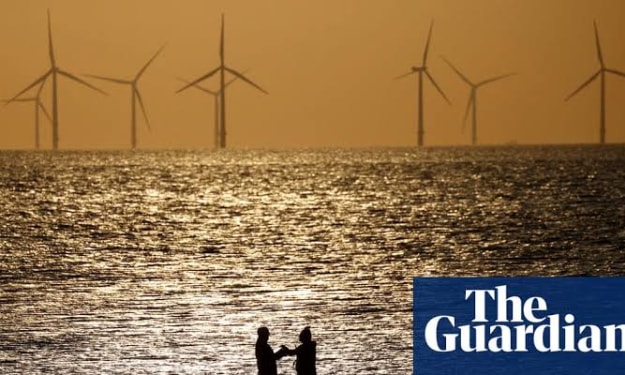
Britain must accelerate its transition toward renewable energy sources as geopolitical conflicts continue to drive global energy prices higher, according to leading energy analysts and climate policy experts. The warning comes as wars and political tensions across key energy-producing regions expose the vulnerability of countries still heavily reliant on imported fossil fuels. In recent years, the United Kingdom has made significant progress expanding renewable energy capacity, particularly in offshore wind and solar power. However, experts argue that the pace of the transition remains insufficient to shield the country from the volatility of international energy markets. Conflicts in the Middle East and Eastern Europe have demonstrated how quickly supply disruptions can translate into rising costs for households and businesses. Energy economists say the lesson from recent global crises is clear: the more dependent a country is on imported oil and gas, the more exposed it becomes to geopolitical shocks. Britain imports a substantial portion of its natural gas and refined fuel products, meaning instability in global supply chains can quickly affect domestic energy bills. During periods of international conflict, oil prices often spike due to fears that shipping routes or production facilities could be disrupted. Even rumors of attacks near key energy chokepoints — such as major pipelines or shipping lanes — can cause markets to react sharply. These fluctuations, analysts say, ultimately filter down to consumers through higher electricity and heating costs. Renewable energy sources offer a potential solution to this problem because they rely on domestic resources such as wind and sunlight rather than imported fuels. Once renewable infrastructure is built, operating costs remain relatively stable because there is no need to purchase fuel on global markets. The United Kingdom already operates some of the world’s largest offshore wind farms, and renewable energy now accounts for a significant share of the country’s electricity generation. Government data indicates that wind power alone has become one of the largest sources of electricity in Britain, particularly during periods of strong weather conditions. Despite this progress, energy specialists argue that further investment is essential. Expanding renewable generation capacity requires not only building more wind and solar farms but also upgrading the national electricity grid. A modernized grid would allow energy produced in remote offshore locations to be transmitted efficiently to cities and industrial centers. Energy storage is another critical piece of the puzzle. Because renewable sources like wind and solar are intermittent, large-scale battery systems or alternative storage technologies are needed to ensure a stable supply of electricity during periods when generation drops. Developing these systems will require both technological innovation and sustained financial investment. Some experts also emphasize the importance of diversifying the country’s renewable portfolio. While offshore wind remains a cornerstone of Britain’s energy strategy, solar power, tidal energy, and green hydrogen could also play important roles in the future energy mix. The government has already announced plans to increase renewable capacity dramatically over the next decade. Officials argue that reducing reliance on fossil fuels will not only strengthen national energy security but also help the country meet its climate targets. However, critics say policy uncertainty and slow planning approvals have sometimes delayed renewable projects. Industry leaders have urged authorities to streamline regulatory processes and provide clearer long-term incentives for investors. For many analysts, the link between energy security and climate policy has never been more obvious. Wars and geopolitical tensions have shown that fossil fuel dependence can create economic vulnerability, while domestically produced renewable energy offers greater stability. “The global energy system is changing,” said one energy policy researcher. “Countries that invest early in renewable infrastructure will be better protected from geopolitical shocks and price spikes.” As international conflicts continue to reshape global energy markets, the debate over Britain’s energy future is likely to intensify. For supporters of renewable power, the current moment represents both a warning and an opportunity — a chance to accelerate the transition toward a more secure and sustainable energy system.
By Fiaz Ahmed 3 days ago in Earth
Early March 2026: 4 Goals Accomplished
It's early March and I've now accomplished my 4th writing goal for the year of 2026. Before diving into the behind-the-scenes of it... why not tell you up front what that accomplishment was? I was published in a 2nd publication for this year. Published in Helix Literary Magazine out of Central Connecticut State University. You can read it for free right now!
By Stephen Kramer Avitabile3 days ago in Writers



Comments
There are no comments for this story
Be the first to respond and start the conversation.