
What is the Likelihood of a Supernova Ending the World Tomorrow?
What would be the impact on Earth if a supernova happened nearby?

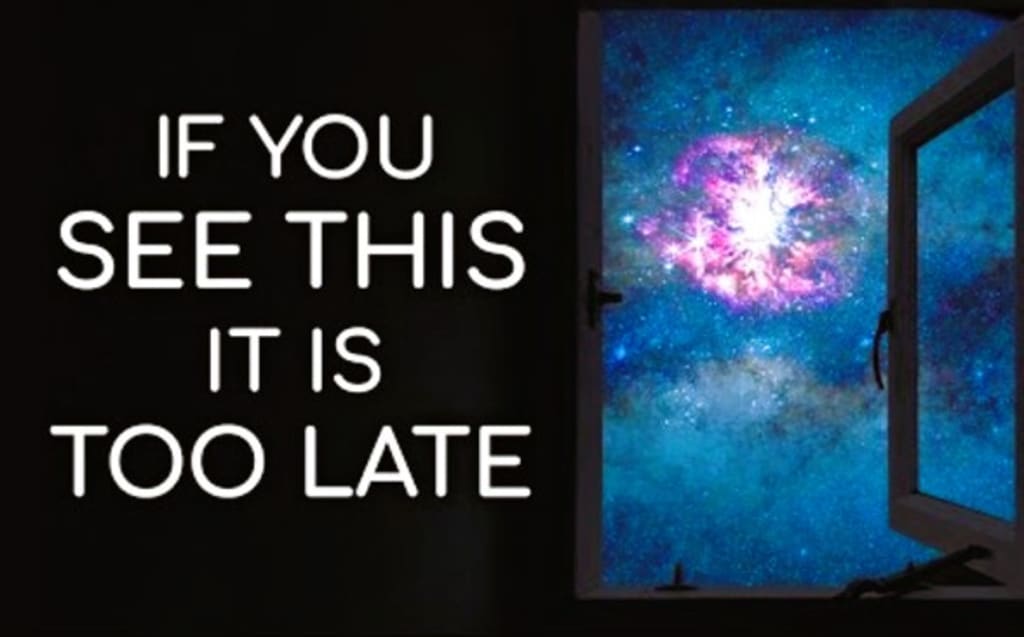
Imagine looking out your window and suddenly seeing a bright light in the sky as luminous as the full moon, if not brighter. This dazzling star is flooding the Earth's atmosphere with a catastrophic dose of gamma radiation and x-rays, stripping away our ozone layer and exposing us to the full fury of the sun's deadly radiation. On its way, a cataclysmic wave of stella mata and debris is hurdling towards our planet, venting billions of tons of burning masses, ready to sweep across our planet's surface in a tidal wave of fire. This is a supernova, and it could be an Armageddon in our lifetimes. But how likely is it for this to actually happen?
Supernovae are not that common in our galaxy, and we likely only see about two to three every century. While the odds of one going off tomorrow are not that high, they're not impossible either. According to archaeologists, the Earth has likely been hit by a supernova before in the course of its 4.5 billion years of existence. We exist in an area of space known as the local bubble, which is thought to have been carved out by a supernova detonation 10 to 20 million years ago. Scientists have found evidence of another detonation that happened two and a half million years ago due to a high concentration of iron 60 and manganese 53 in a particular layer of the geological record.
There are some scientists who believe that the extinction of woolly mammoths was caused by a massive piece of debris from a supernova crashing into the planet about 13,000 years ago. The impact site had magnetic spirals and radioactive potassium 40, a substance found in supernova ejecta. Even before that, mammoth tusks from 34,000 years ago were found containing tiny impact craters from grains of slightly radioactive iron that had been traveling at 10,000 kilometers per second.
Despite all this, life on Earth has largely been ticking along for billions of years. While supernovae can be catastrophic, they are not an immediate threat to life on Earth unless they occur very close by.
Supernovae are not common in our galaxy, with only two to three observed every century. However, Earth has experienced the impact of supernovae before, and we exist in a region of space called the local bubble, believed to have been carved out by a supernova detonation 10 to 20 million years ago. Scientists have found evidence of another supernova detonation that took place two and a half million years ago.
Supernovae are not an immediate threat to life on Earth unless they occur nearby. The impact of a supernova depends on its proximity to Earth. The universe has large coffee tables, and we need to understand the forces involved in these explosions to comprehend their scale.
There are two main paths that stars can take to reach their explosive grand finale. For a type 1A supernova, it usually requires a white dwarf in a binary system that is siphoning matter away from its neighboring star until it reaches a critical mass. In a binary system where the white dwarf is absorbing more and more matter from its neighboring star, eventually gravity overwhelms electron degeneracy pressure, and the whole system collapses at once. Carbon fusion begins, and within a few seconds, most of the star undergoes fusion, forming into heavier elements and releasing a lot of energy.
The second type of supernova, type 2, involves a massive star at least five times more massive than the sun at the end of its lifetime. This star has exhausted all its nuclear fuel and can no longer generate enough energy to counteract gravity. The core collapses suddenly, releasing enormous amounts of energy and creating a shockwave that blasts the outer layers of the star into space.
Supernovae are incredibly powerful events that have shaped our universe. While they are not an immediate threat to life on Earth, they serve as a reminder of the immense power of the cosmos and our place within it.
Supernovae are incredibly powerful events that can rip apart stars. If a planet is in the immediate vicinity of a supernova, it has no chance of survival. Even if a planet is outside the immediate danger zone, it may still face consequences such as being stripped of its atmosphere and suffering from high levels of radiation. Scientists estimate that the kill zone for a supernova is within 25 light years, but beyond that distance, the event would not cause mass extinctions.
Thankfully, there are no supernova candidates within 300 light years that we need to worry about. The two stars that are at risk of going supernova, Beetlejuice and Antares, are both more than 400 light years away. While white dwarfs are harder to spot, scientists have identified 13,000 white dwarf stars within 326 light years of us, but none of them are scheduled to explode anytime soon.
Even if Beetlejuice were to go supernova within our lifetimes, we would likely be safe thanks to the protective sheath of the sun's heliosphere. While supernovae are some of the largest explosions in the universe, our patch of the galaxy has nothing to fear from them.
Supernovae serve as a reminder of the immense power of the cosmos and our place within it. While there are plenty of cataclysms on Earth that can bring devastation to a community, we can probably cross planetary annihilation from supernovae off our list of worries.
About the Creator
Saomai2003
The universe is a vast and mysterious place that has fascinated humans for centuries. From the tiniest subatomic particles to the largest galaxies, the universe is full of wonders that challenge our understanding of the world around us.
Keep reading
More stories from Saomai2003 and writers in Earth and other communities.
How will Earth be affected by the Solar Maximum in 2025?
If I told you that the Sun's cycles could have an impact on your life, you might think I was talking about astrology rather than astronomy. While some people believe that the position of stars and planets can predict the future, that's not what we're discussing here. Instead, we're exploring the science behind the Sun's cycles and how they influence life on Earth.
By Saomai20032 years ago in Earth
The Star That Keeps Dimming for No Known Reason
In 2015, astronomers analyzing data from NASA's Kepler Space Telescope discovered a star designated KIC 8462852, located about 1,470 light-years from Earth in the constellation Cygnus, that was exhibiting brightness fluctuations unlike anything that had been observed in over 150,000 stars surveyed by the Kepler mission, and the pattern of dimming was so unusual and irregular that it could not be explained by any known natural phenomena including planets orbiting the star, stellar pulsations, or dust clouds, leading some scientists to seriously propose that the dimming might be caused by artificial structures built by an advanced alien civilization, specifically something like a Dyson swarm of solar collectors orbiting the star to harvest its energy, though this explanation while exciting was considered a hypothesis of last resort only to be entertained after all natural explanations had been exhaustively ruled out. The star, which became known informally as Tabby's Star after astronomer Tabetha Boyajian who led the research team studying it, showed dimming events where its brightness dropped by up to 22 percent, far more than could be explained by a planet passing in front of it, which typically causes dimming of only a fraction of a percent, and the dimming events were irregular and aperiodic, meaning they did not repeat on any predictable schedule, and different dimming events had different characteristics with some showing gradual dimming over days and others showing more sudden brightness drops.
By The Curious Writerabout 12 hours ago in Earth


Comments (1)
Great work! Fantastic job!