
How will Earth be affected by the Solar Maximum in 2025?
What affect does this solar cycle have on our own planet? Let's find out


If I told you that the Sun's cycles could have an impact on your life, you might think I was talking about astrology rather than astronomy. While some people believe that the position of stars and planets can predict the future, that's not what we're discussing here. Instead, we're exploring the science behind the Sun's cycles and how they influence life on Earth.
The Sun is not just a source of energy for our planet; it's also a dynamic and ever-changing entity. The Sun's surface is a boiling, shifting sea of plasma that frequently erupts into solar flares and coronal mass ejections. Sunspots, dark patches of the Sun's surface with intense magnetic fields, come and go in cycles.
These cycles are known as the Schwabe cycle, which lasts 11 years and alternates between periods of low activity (the solar minimum) and high activity (the solar maximum). During the solar maximum, sunspots, solar flares, and CMEs become more common. This cycle is part of a larger cycle known as the Hale cycle, which maps changes in the Sun's magnetic polarity.
So how do these cycles affect us? The Sun's activity can impact our health, technology, weather, and more. For example, during the solar maximum, we may experience warmer weather with fewer clouds. But understanding these cycles can also help us prepare for their effects and mitigate any potential damage.
Overall, studying the Sun's cycles is an important part of understanding our place in the universe. As we learn more about this dynamic star, we gain a deeper appreciation for the beauty and complexity of our solar system.
Every 11 years, the Sun's magnetic North and South poles swap places, which is known as the Schwabe cycle. This cycle is related to the magnetic processes that exist within the Sun itself, but we don't fully understand why it has a length of 11 years specifically. Some scientists have tried to connect it to the orbital length of Jupiter, but this hasn't been proven.
Despite this mystery, we do know that the Sun's cycles have a significant impact on Earth. One of the most notable effects is the occurrence of geomagnetic storms, which can cause radiation levels to rise and damage technology in space. However, scientists are able to predict these storms in advance, allowing astronauts to take shelter and satellites to power down.
Geomagnetic storms also have an impact on Earth's atmosphere, causing it to warm and expand. This can affect satellites in low Earth orbit, which need to be maneuvered more frequently to avoid falling out of orbit due to increased friction. In some cases, geomagnetic storms have even knocked satellites out of their old orbits.
Radiation from geomagnetic storms can also influence our ionosphere, which can reduce the accuracy of GPS systems by over 10 meters. Overall, the Sun's cycles are a fascinating and complex phenomenon that have a significant impact on life on Earth.
The Sun's cycles not only have an impact on technology and the environment but also on living organisms, including humans. During the solar minimum, when the Sun exerts less pressure through its solar winds, we get less protection from cosmic radiation. This extra radiation could create nucleation sites in the atmosphere that seed extra clouds, influencing our weather and impacting mating seasons of birds and other animals.
Furthermore, studies have shown that solar cycles may also have an impact on human health. For example, there is evidence that links increased solar activity with higher rates of hospital admissions for a variety of conditions, including heart attacks, strokes, and respiratory diseases. The exact mechanisms behind these correlations are not yet fully understood, but it is clear that the Sun's cycles have a profound influence on our planet and all its inhabitants.
As we continue to study the Sun's cycles and their effects, we gain a deeper understanding of our place in the universe and the interconnectedness of all things. Whether we're tracking solar flares or observing the behavior of birds and other animals, we are constantly learning more about the ways in which the Sun shapes life on Earth.
The Sun's cycles may have an impact on human health, including mental disorders. Studies have shown that people born during higher-energy chaotic cycles experienced an increased rate of mental disorders. Additionally, a study in Holland found a peak in cervical pathologies just after solar maximum, when the Sun's radiation was hitting hardest. While the science on this is still ongoing, it's clear that the Sun's cycles have a profound influence on our planet and all its inhabitants.
However, it's important to note that any health impacts caused by these cycles are extremely minor. Living through or being born in a solar maximum isn't all bad, as this radiation might also lead to a rise in creativity and adaptability. In fact, it's possible that a solar cycle 80 thousand years ago gave humans the mutation that gave us abstract thought and consciousness.
While the Sun may have given us the ability to think abstractly, learning and developing knowledge takes time and effort. Fortunately, there are free and easy ways to learn and develop your knowledge of space, physics, and other STEM subjects.
If you're interested in learning more about the cycles that affect Earth or any other STEM subject, I highly recommend checking out this list stories. Thanks for watching!
About the Creator
Saomai2003
The universe is a vast and mysterious place that has fascinated humans for centuries. From the tiniest subatomic particles to the largest galaxies, the universe is full of wonders that challenge our understanding of the world around us.
Keep reading
More stories from Saomai2003 and writers in Earth and other communities.
The Mystery Behind the Hum of the Universe
By using the right equipment, you can tune into the universe and hear it humming no matter where you look in the sky. However, this hum is not caused by sound, as it's not possible for sound to travel in the vacuum of space. Instead, we are talking about the hum of gravitational waves. A similar signal, the cosmic microwave background, was discovered decades ago and solidified the Big Bang's place as the leading theory of our universe's beginning. However, this signal was emitted almost 400 thousand years after the Big Bang, and if we want to go back earlier, we need a background signal made not of light but of the ripples of the fabric of spacetime.
By Saomai20032 years ago in Earth
Himalayas Bare and Rocky After Reduced Winter Snowfall, Scientists Warn
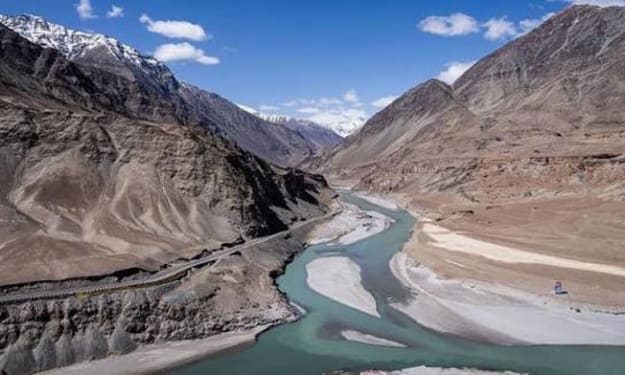
The Himalayas, often described as the world’s “Third Pole,” are facing a dramatic and worrying transformation. Scientists are warning that reduced winter snowfall is leaving vast stretches of the mountain range bare, rocky, and increasingly vulnerable to long-term environmental damage. Once known for their thick snow blankets and powerful glaciers, parts of the Himalayas are now showing exposed rock earlier than ever before—an alarming sign of climate stress in one of Earth’s most critical ecosystems. A Visible Change in the World’s Highest Mountains Winter snowfall plays a vital role in the Himalayan climate system. Snow acts as a protective layer, insulating glaciers and regulating the slow release of meltwater into rivers during warmer months. However, researchers monitoring satellite data and ground stations report that recent winters have brought significantly less snowfall across large areas of the range. As a result, snowlines are rising higher up the slopes, leaving lower and mid-altitude regions exposed. This has turned once-white mountain landscapes into expanses of dark rock, which absorb more heat from the sun, accelerating warming in a dangerous feedback loop. Why Reduced Snowfall Matters Snow is more than a scenic feature—it is essential to the health of Himalayan glaciers. When snowfall declines, glaciers lose their main source of replenishment. At the same time, exposed ice and rock melt faster under direct sunlight. Scientists warn that this imbalance is speeding up glacier retreat across the Himalayas. Many glaciers are now shrinking at rates not previously recorded, threatening the long-term stability of water systems that support nearly two billion people across South and Southeast Asia. Impact on Asia’s Major Rivers The Himalayas feed some of the world’s most important rivers, including the Indus, Ganges, Brahmaputra, Yangtze, and Mekong. These rivers depend on seasonal snow and ice melt to maintain consistent flow throughout the year. Reduced snowfall means less stored water for the dry season. In the short term, faster melting can cause floods and landslides. In the long term, however, shrinking glaciers could lead to water shortages, affecting agriculture, hydropower, and drinking supplies across multiple countries. A Growing Risk of Disasters Bare, rocky slopes are far more unstable than snow-covered ones. Snow helps bind loose material together, while exposed rock and soil increase the likelihood of landslides and avalanches. Scientists have already observed a rise in slope failures and glacial lake outburst floods in the region. As glaciers retreat, meltwater often accumulates in fragile lakes dammed by loose rock and ice. These lakes can burst suddenly, releasing destructive floods that threaten mountain communities and downstream infrastructure. Climate Change at the Core Researchers agree that climate change is the primary driver behind the declining snowfall. Rising global temperatures are altering weather patterns, causing more winter precipitation to fall as rain rather than snow. Even small temperature increases at high altitudes can drastically change how moisture behaves. Additionally, warming oceans and shifting atmospheric circulation are affecting the timing and intensity of winter storms that traditionally brought snow to the Himalayas. Effects on Local Communities and Wildlife Mountain communities that rely on predictable snowfall for farming, tourism, and water storage are already feeling the effects. Farmers report changes in planting cycles, while winter tourism has declined in some regions due to unreliable snow conditions. Wildlife is also under pressure. Species adapted to cold environments are losing habitat as snow cover shrinks. Plants that depend on snowmelt are struggling to survive in drier, warmer conditions, disrupting fragile alpine ecosystems. Scientists Call for Urgent Monitoring and Action Experts stress the importance of improved monitoring of snowfall, glacier health, and water flows across the Himalayan region. Better data can help governments plan for future water management challenges and disaster risks. At the same time, scientists emphasize that local adaptation alone is not enough. Reducing global greenhouse gas emissions remains critical to slowing temperature rise and preserving what remains of the Himalayan snow and ice. What the Future Holds If current trends continue, large parts of the Himalayas could see permanent changes within decades. Reduced snowfall and accelerating glacier loss may reshape landscapes, ecosystems, and human livelihoods on an unprecedented scale. The sight of bare, rocky Himalayan slopes is more than a visual change—it is a warning signal. The world’s highest mountains are responding rapidly to a warming planet, and the consequences will extend far beyond the peaks themselves.
By Fiazahmedbrohi about 15 hours ago in Earth
📢 Raise Your Voice Thread: 01/08/2026
Our “Raise Your Voice Threads” are hosted most alternating Thursdays at 12PM ET to offer creators more avenues to uncover exceptional stories on Vocal. As we are continuously searching for fresh creators and inspiring stories, this thread provides an opportunity to exchange and discuss the stories that have moved and motivated us on Vocal.
By Raise Your Voice by Vocal5 days ago in Resources



Comments (1)
Fascinating! Great job! Good work!