
What Is Hardiness? Understanding Your Zone and Plant Survival
You found the perfect plant. The tag showed a photograph of spectacular blooms, the description promised low maintenance, and the price was reasonable. You planted it with care, watered it faithfully, and watched it thrive through summer. Then winter came. Spring arrived, and your plant did not.

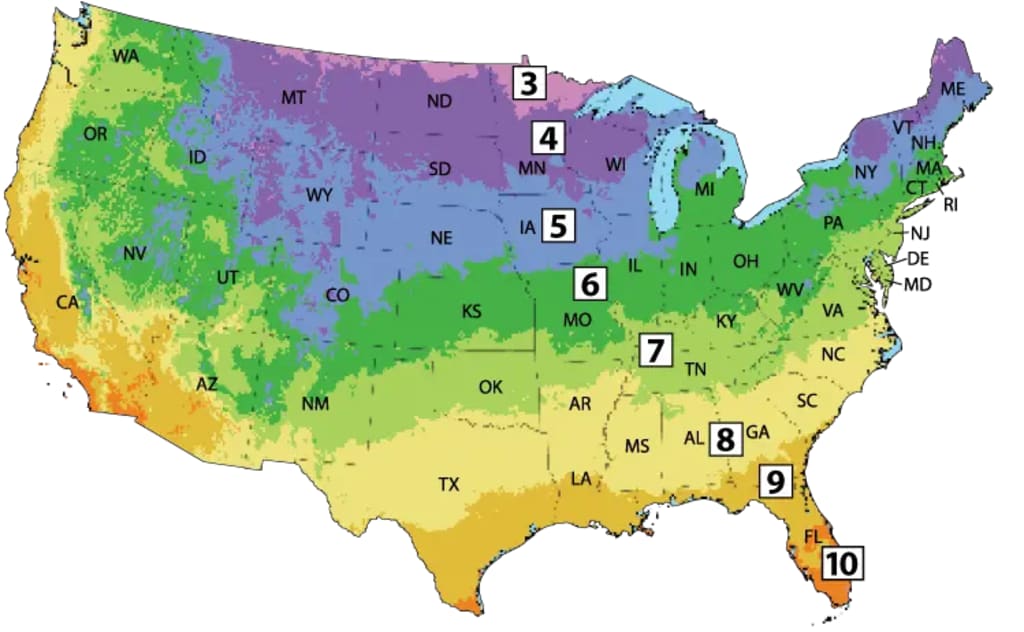
Hardiness is a plant's ability to survive adverse conditions, most critically cold temperatures. It is quantified through hardiness zones, a system that maps average minimum winter temperatures across regions. Learning to read and apply this system transforms you from a hopeful gambler into an informed gardener who selects plants destined to survive and thrive.
❄️ The Science of Survival: What Hardiness Actually Means
At its most basic level, hardiness describes a plant's tolerance to cold. When winter arrives, water inside plant cells can freeze. Ice crystals puncture cell walls, causing tissue damage that appears as blackened, mushy stems when spring thaw arrives. Some plants have evolved mechanisms to prevent this—adjusting cellular chemistry to lower the freezing point, or retreating entirely underground to await warmer days.
Winter hardiness is not a single, fixed trait. It is influenced by:
- Minimum temperature tolerance: The coldest temperature a plant can withstand without significant tissue damage.
- Duration of cold: A brief dip to 0°F is different from three weeks at 0°F.
- Timing: Plants gradually acclimate to cold in autumn and de-acclimate in spring. An early hard freeze or a late spring frost can kill plants that would survive a normal winter.
- Snow cover: Snow is an excellent insulator. Plants rated hardy to zone 5 may survive zone 4 winters if reliably snow-covered, then perish in a milder but snowless winter.
- Root hardiness: Roots are often less cold-tolerant than stems. Container plants, with roots exposed above ground, are significantly less hardy than the same plant in the ground.
Heat hardiness is increasingly important as summers intensify. Some plants, particularly those native to cool mountain habitats, cannot tolerate extended high temperatures regardless of winter cold tolerance. This is why your grandmother's delphiniums may struggle in a southern garden even if you're technically in the correct zone.
🧭 Finding Your Zone: Practical Steps
Step 1: Consult the Official Map
Visit the USDA Plant Hardiness Zone Map website. Enter your ZIP code for an instant zone determination. This is the most reliable method.
Step 2: Talk to Local Gardeners
ZIP code zones are averages. Your specific property may be warmer (urban heat island, south-facing slope) or colder (frost pocket, north-facing hillside) than the official designation. Local master gardeners, cooperative extension services, and successful neighborhood gardens are invaluable resources.
Step 3: Observe Your Own Garden
Pay attention to which plants reliably return each spring and which perish. Note where frost lingers and where snow melts first. This on-the-ground data is more precise than any map.
Step 4: Use Technology
When you encounter an unfamiliar plant—whether at a nursery, a friend's garden, or volunteering in your own border—a reliable plant identification app can instantly provide its hardiness zone rating. This allows you to make informed decisions before you buy or plant, saving money and preventing heartache.
🌡️ The Limits of Zones: What the Map Doesn't Tell You
Hardiness zones are indispensable, but they are not the complete picture. Several critical factors determine whether a plant will thrive, not merely survive.
☀️ Heat Tolerance and American Heat Zones
The USDA map addresses winter cold, not summer heat. The American Horticultural Society Heat Zone Map complements it, dividing the country into 12 zones based on the average number of days per year above 86°F (30°C)—the temperature at which many plants begin to suffer physiological stress.
A plant rated for heat zone 3-7 may thrive in Seattle but languish in Atlanta, despite both being in USDA zone 7b.
💧 Moisture and Precipitation
A zone 8 plant from the arid Southwest has different water needs than a zone 8 plant from the humid Southeast. Cactus and fern both survive your winter; they will not survive your summer together.
🌬️ Wind and Exposure
Exposed sites experience lower effective temperatures due to wind chill and increased transpiration. A plant hardy to zone 6 may perish on a windswept hill in zone 6.
🏙️ Microclimates: Your Garden Within the Zone
Every garden contains pockets warmer or colder than the official designation:
South-facing walls radiate stored heat, creating zone 7 conditions in a zone 6 garden.
Low-lying areas collect cold air, creating frost pockets that remain zone 5 when your official zone is 6.
Urban areas are often half a zone warmer than surrounding rural landscapes.
Paved patios absorb and release heat, extending growing seasons.
Master gardeners learn their microclimates. They place marginally hardy plants against south-facing walls and reserve frost pockets for reliably hardy specimens.
🧭 Putting It All Together: Your Hardiness Action Plan
I'll go through each step and summarize it concisely.
Know Your Zone: Look up USDA zone, memorize it like your address.
Know Your Microclimates: Walk property at different times, note frost, snow melt, etc., map pockets.
Read Plant Tags Thoroughly: Zone rating is most important, compare to your zone before buying.
Verify Before You Plant: Use AI Plant Finder to identify unknown plants and get hardiness rating quickly.
Keep Records: Note which plants survive winters, garden journal becomes valuable reference.
Experiment Wisely: Try marginally hardy plants in protected spots, accept failures, celebrate successes.
Share Your Knowledge: Tell friends, post observations, contribute to local gardening community.
About the Creator
Emma Wallace
Director of Research and Development at AI Plant Finder (Author)
Emma Wallace is an esteemed researcher and developer with a background in botany and data analytics.
Keep reading
More stories from Emma Wallace and writers in Earth and other communities.
Your Plant's Family Tree: Using AI to Understand Genera, Species, and Cultivars
You bought a plant labeled "Pink Princess." Months later, its leaves emerge solid green. A friend gives you a cutting of their "Monstera," but it looks nothing like the massive, fenestrated plant you saw on social media. You search for "lavender" at the nursery and face a wall of options—English, French, Spanish, Hidcote, Grosso—all different sizes, colors, and hardiness levels.
By Emma Wallacea day ago in Earth
A 7.1-magnitude earthquake strikes offshore, less than 100 km from the coast"
A powerful 7.1-magnitude earthquake struck offshore early today, less than 100 kilometers from the coastline, sending shockwaves through nearby coastal communities and prompting tsunami monitoring alerts, though no major wave threat was immediately confirmed by authorities. According to seismic monitoring agencies, the earthquake occurred at a shallow depth beneath the ocean floor, intensifying the shaking felt on land. Residents in several coastal cities reported strong tremors lasting up to 20 seconds, causing buildings to sway, household items to fall, and brief power outages in some districts. Emergency services were placed on high alert as authorities assessed the potential for damage and casualties. Local disaster management officials said the quake’s epicenter was located in a seismically active zone known for frequent tectonic movement. Initial reports suggested that while structural damage appeared limited, inspections were underway for bridges, ports, and coastal infrastructure, particularly in low-lying areas vulnerable to secondary hazards such as landslides or liquefaction. Hospitals in nearby regions activated emergency protocols, preparing for possible injuries. So far, only minor injuries have been reported, mostly due to people slipping or being struck by falling objects during the shaking. Officials urged residents to avoid unnecessary travel and to stay away from damaged buildings until safety inspections could be completed. Maritime authorities issued precautionary advisories to vessels operating near the epicenter, warning of possible strong underwater currents and aftershocks. Fishermen and small boat operators were advised to remain in port until conditions stabilized. Ports temporarily halted operations while engineers evaluated docks and cargo facilities for structural integrity. Seismologists explained that the earthquake resulted from the sudden release of stress along a fault line beneath the seabed. Because the quake occurred offshore, it raised concerns about a potential tsunami. However, early readings from ocean buoys and tide gauges indicated no significant sea-level changes. Monitoring agencies later downgraded the tsunami risk but emphasized that coastal populations should remain alert for updates. Government officials addressed the public in a brief televised statement, calling for calm and cooperation. “Our emergency response teams are fully deployed, and we are closely monitoring aftershocks,” the interior minister said. “At this time, there is no confirmed large-scale damage, but we urge citizens to follow safety instructions and avoid coastal areas until further notice.” Schools in several coastal districts were closed for the day as a precautionary measure. Public transportation systems operated with delays while safety checks were carried out on rail lines and stations. Utility companies reported scattered power interruptions but said most services were restored within hours. The quake comes amid heightened awareness of seismic risks in the region, where previous offshore earthquakes have caused destructive tsunamis and widespread damage. Experts warned that aftershocks could continue for days or even weeks, some of them potentially strong enough to be felt on land. International aid agencies and neighboring countries expressed readiness to assist if the situation worsened. Disaster response teams reviewed contingency plans, including evacuation routes and emergency shelters, should further tremors occur or conditions change unexpectedly. Residents described scenes of fear and confusion as the ground shook. “It felt like the whole building was moving,” said one coastal resident. “We ran outside with our children because we were afraid it might collapse.” Others reported hearing a low rumbling sound moments before the shaking began. Authorities stressed the importance of earthquake preparedness, reminding people to secure heavy furniture, keep emergency kits ready, and know safe evacuation routes. “This event is a reminder that we live in an earthquake-prone area,” a senior emergency official said. “Preparedness saves lives.” As of now, damage assessments are ongoing, and officials continue to monitor seismic activity closely. While the immediate danger appears to have passed, the situation remains under observation, with updates expected as more information becomes available from field teams and scientific agencies.
By Fiaz Ahmed about 15 hours ago in Earth



Comments
There are no comments for this story
Be the first to respond and start the conversation.