
What If World War III Broke Out
It may never come to pass, yet the anticipation of a Cold War redux looms large.

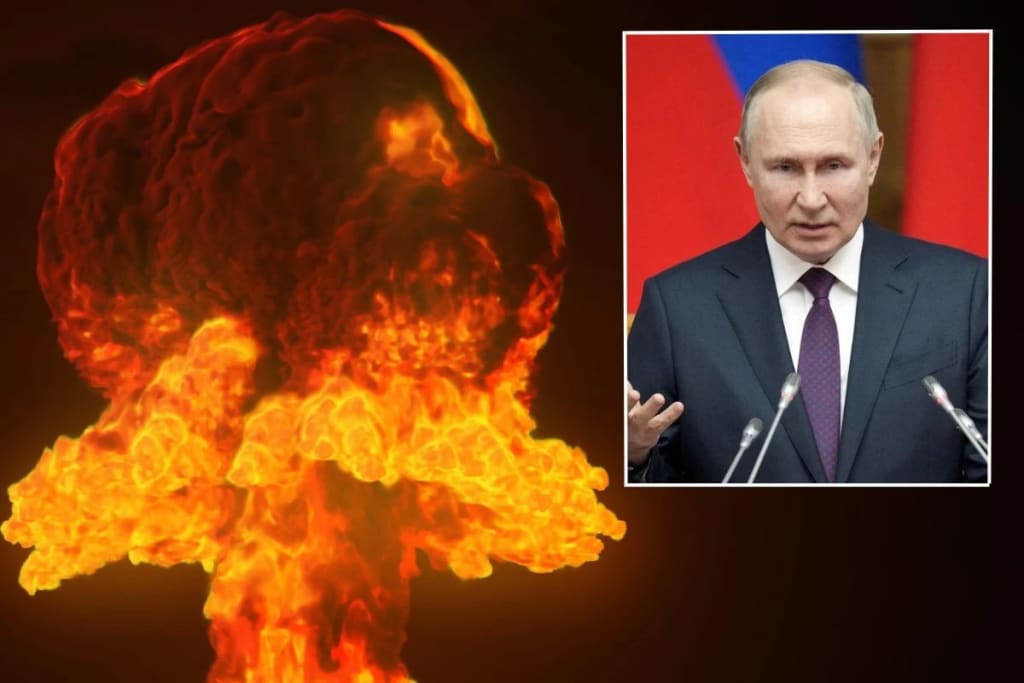
Consider the hypothetical: a potential clash between NATO and Russia. Before such a conflict, a group of officials stood beneath a brilliant blue sky, surrounded by fluttering flags of various hues. Awaiting the commencement of proceedings, a crowd gathered under a white canopy, while the flags reflected in the glass facade of NATO headquarters nearby. A momentous occasion indeed, as a band played and Jens Stoltenberg, NATO’s Norwegian Secretary-General, stood proudly, overseeing the hoisting of a new flag, bearing a distinctive dark blue cross against a white backdrop, symbolizing Finland’s entry into the alliance. Amid these events, tensions escalate in the East. Vladimir Putin, the Russian leader, broods in his office as news of NATO's reinforcement of the Finnish border reaches him. Frustration boils over, and Putin contemplates drastic actions. However, his advisor brings news of defections and internal dissent. A plan forms, albeit tenuous, as Putin decides to seize an opportunity, invoking the specter of war.
Weeks later, a swift Russian advance overwhelms NATO forces in Lithuania, pushing into the Suwalki Gap and creating a dire situation. NATO triggers Article 5, marking the onset of a full-scale war with Russia. The world watches in disbelief as events unfold. Analysts weigh in on various scenarios that could lead to this precipice, analyzing the fragile geopolitical landscape. The West grapples with its response, while Russia's actions trigger a chain of events. Cyberattacks, covert operations, and the specter of nuclear weapons enter the fray. As both sides engage in a deadly dance, the situation escalates further.
NATO's superior collective strength gradually tips the balance, leading to a turning point. Despite its tactical advantages, Russia finds itself outmatched and vulnerable. NATO's modern capabilities, unity, and support networks prove crucial. The conflict intensifies, with Putin's grip on power weakening. Ultimately, Russia's military capabilities wane, its forces exhausted and overstretched. Putin faces a stark choice – to concede, negotiate, or face complete defeat.
This hypothetical narrative underscores the complex dynamics and potential consequences of a NATO-Russia conflict, exploring the interplay of political strategies, military capabilities, and escalating tensions. It emphasizes the vital role of unity, technological superiority, and strategic alliances in shaping the course of such a conflict.
As the conflict rages on, the world witnesses a grim spectacle. Cities reduced to rubble, lives shattered, and a landscape scarred by the ravages of war. The global community, once divided by politics and alliances, now unites in horror at the human toll of the conflict. Diplomatic efforts to find a resolution gain momentum, driven by the growing realization that the cost of continuing hostilities is too great for all sides involved.
Amid the chaos, world leaders and diplomats engage in a flurry of negotiations, seeking a path to peace. International pressure mounts on both NATO and Russia to come to the table and find a way to end the bloodshed. The United Nations plays a pivotal role, convening emergency sessions and bringing together envoys from all sides to hammer out a ceasefire agreement.
After intense deliberations, a breakthrough is achieved. The warring parties agree to a comprehensive ceasefire, brokered by a coalition of neutral countries. The terms of the agreement outline a phased withdrawal of forces, the establishment of demilitarized zones, and the deployment of international peacekeeping troops to monitor compliance.
The aftermath of the conflict is a somber tableau. Cities once vibrant with life now bear the scars of battle, and the process of rebuilding and healing begins. Humanitarian aid pours in from around the world, as nations rally to support the war-torn regions and help the affected populations rebuild their lives.
As the years pass, the memories of the conflict linger, serving as a stark reminder of the dangers of unchecked aggression and the devastating consequences of war. The international community redoubles its efforts to strengthen diplomatic ties, promote dialogue, and prevent future conflicts. Lessons learned from this near-catastrophe prompt a renewed commitment to peace, stability, and cooperation among nations.
While the world moves forward, scars remain – not just physical scars on the landscape, but emotional scars in the hearts of those who endured the conflict. The NATO-Russia conflict, once a hypothetical scenario, is now etched into the annals of history as a cautionary tale, a reminder of the fragility of peace and the imperative of diplomacy in a world where the consequences of war are too dire to ignore.
About the Creator
Keep reading
More stories from writers in Earth and other communities.
Met Office Names All the UK Areas Facing Snow This Weekend
The Met Office has issued fresh forecasts warning that snow is set to affect large parts of the UK this weekend, with wintry conditions expected to develop from Saturday and persist into Sunday. As colder air moves south and meets bands of moisture, forecasters say a mix of snow, sleet, and freezing rain could disrupt travel and daily life across multiple regions.
By Aarif Lashari6 days ago in Earth
Met Office Names All the UK Areas Facing Snow on Saturday and Sunday
The Met Office has confirmed that snow is likely to affect multiple parts of the UK this weekend, with cold air sweeping southwards and increasing the risk of wintry conditions on both Saturday and Sunday. Forecasters say a combination of falling temperatures and incoming weather systems could bring snow, sleet, and icy conditions, particularly across northern and central regions.
By Aarif Lashari6 days ago in Earth
Self Help: Grifters' Gospel
On Self-Help, Snake Oil, and the Illusion of Change Psychology professionals and students can be imagined on two opposite sides of a line called self-help books: likely a larger group opposes pop-science and step-by-step manuals filled with talk of success, journaling, and not giving a f**k; others love them, but they aren’t many.
By Avocado Nunzella BSc (Psych) -- M.A.P 4 days ago in BookClub


Comments
There are no comments for this story
Be the first to respond and start the conversation.