
What if all the Clouds disappear!!
Effects of removal of Clouds from the World
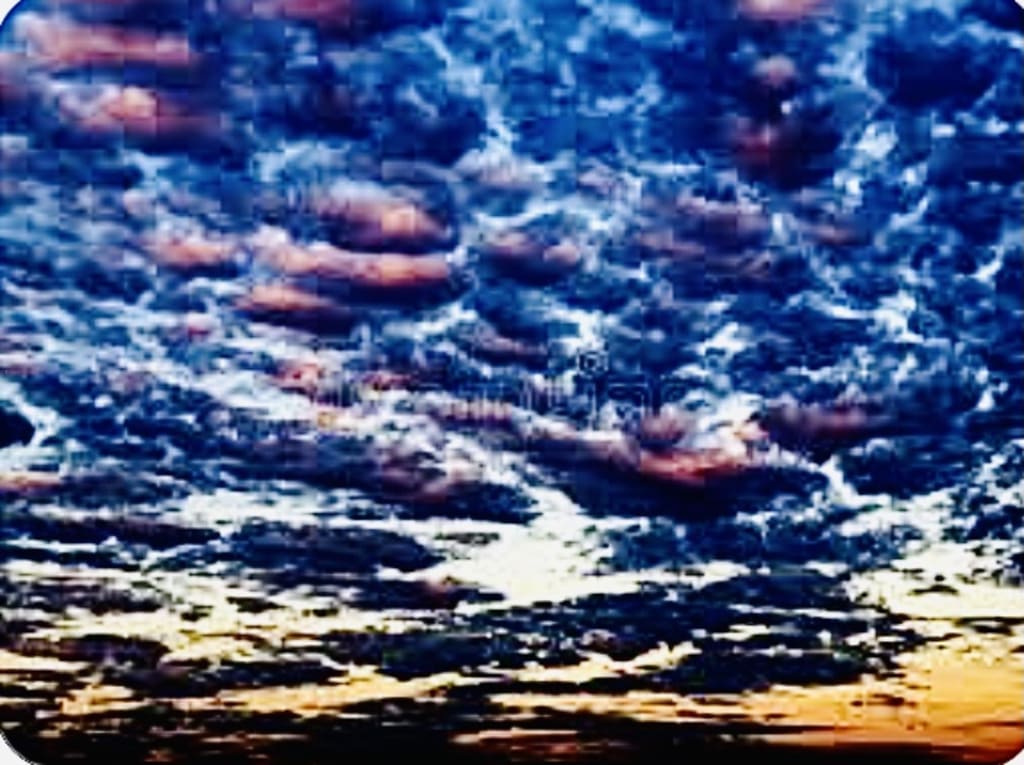
What if All the Clouds disappear !!
Clouds cover about 70% of the planet at any given moment. But if, in the next minute, they all disappeared, something would shock onlooking astronauts on the space station. But someone who is hiking in the desert wouldn't know right away that things were about to get really bad--it'll be even worse if you live by the coast! Normally, sunlight's heat evaporates water, mostly from oceans, and that water vapor condenses into clouds. But if clouds are cut out of the Earth's water cycle, that water just hangs around in the air, creating close to 100% humidity. %
If you board a plane, you can encounter greater turbulence than usual. Without clouds to reflect sunlight into space, the sun will heat the Earth even more, resulting in more rising, uneven hot air. However, a poor trip may be the least of our concerns because there will be no more rain, snow, or even a light mist, which means there will be no way to replenish the water sources we rely on, such as lakes, streams, rivers, springs, and aquifers. As a result, once the snow from last winter melts, we're stuck with whatever water we have on hand. The timer is ticking.
If the world continued to consume water at its current rate, we would deplete all freshwater lakes and rivers in around 23 years. Humanity will have to be strategic in order to conserve our freshwater supplies. The average American consumes 80 to 100 gallons of water every day. But rescuing ourselves will need more than missing long showers and laundry. The water we use at home and in public places accounts for only 21% of our total water use. The two most pressing needs are for thermoelectric power to generate energy and irrigation for farmers. Not only do power plants consume massive amounts of water, but those that employ nuclear fuel could face calamity if their water-cooling towers run dry.
The Fukushima nuclear tragedy, for example, was triggered by an earthquake that knocked out electricity to the reactor's water-cooling pumps. And crops will require significantly more water if rain does not fall. As the ground dries up, this permanent drought would destroy tonnes of wild vegetation and animals. Within a few years, crumbling soil may cause massive dust storms similar to the Dust Bowl of the 1930s. Meanwhile, without clouds, the Earth's climate will go haywire. It's difficult to predict when all of this will happen without pricey climate modelling, although cloud specialist Chris Fairall did offer some fast back-of-the-envelope calculations.
Average surface temperatures would soar by up to 22 degrees Celsius if clouds did not exist. This tremendous temperature increase would not only destroy most flora and fauna's habitats, killing out whatever survived the drought, but it would also melt the polar ice caps and create widespread floods of coastal cities. You could be one of the 40% of the world moved inland, and your new home could eventually be an endless desert as seawater seeps into our fresh and valuable groundwater. Although this seems frightening, there are certain benefits to a world without clouds.
There will be no more devastating storms and tornadoes, no more delayed flights due to bad weather, and no more gloomy skies to ruin your stargazing. Because of the water supply As our resources deplete, we'll have to make some difficult decisions, but hey, humans are innovative. We could develop methods to desalinate ocean water or gather all of the water vapour in the atmosphere. And the sooner we get started, the better, because we're already losing clouds. Unprecedented CO2 levels, as well as warming oceans and atmosphere, are all forcing clouds to thin. Despite the silver linings, it may be wiser to limit our greenhouse gas emissions and avoid this terrifying new world totally.
About the Creator
Keep reading
More stories from writers in Earth and other communities.
Why Fruit Shell Biomass Is Perfect for Charcoal Making: A Property Analysis
When it comes to sustainable charcoal production, not all biomass materials are created equal. Among the various options—from wood chips to agricultural residues—fruit shell biomass (such as walnut shells, coconut shells, peanut shells, and almond shells) stands out as an ideal candidate. Its unique physical and chemical properties not only make the charcoal making process more efficient but also result in high-quality charcoal with versatile applications. In this post, we’ll break down the key properties that make fruit shell biomass a top choice for charcoal production, and touch on how these properties interact with charcoal making equipment to optimize outcomes.
By Bestonpyrolysisabout 11 hours ago in Earth
Five-Year-Old Liam Ramos and His Father Released From Texas Detention Center
The release of five-year-old Liam Ramos and his father from a Texas detention center has sparked renewed discussion about immigration detention policies, family separations, and humanitarian treatment standards. The case has attracted attention from advocacy groups, legal experts, and community organizations, highlighting the complex balance between border enforcement and human rights considerations.
By Aarif Lashari3 days ago in Earth




Comments
There are no comments for this story
Be the first to respond and start the conversation.