
What happend after the Dinosaurs went extinct?
Is this going to happen to us too?
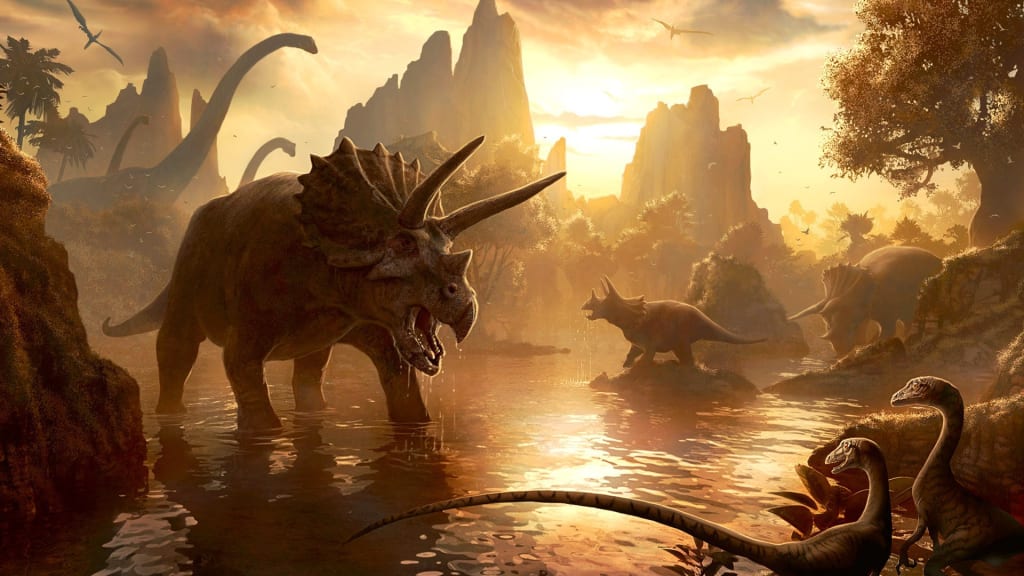
66 million years ago, an asteroid as large as Mount Everest hurtled towards Earth on a catastrophic collision course. The impact was so devastating that it led to the extinction of the most gigantic and deadly reptiles to ever roam our planet. However, the dinosaurs didn't perish instantly. Their demise was a slow, agonizing process.
What caused the largest tsunami Earth has ever seen? And what happened after these massive reptiles were gone? Hold on tight as we take you on the most epic and deadly journey of your life.
This dinosaur-ending asteroid was terrifying. Measuring about 10 kilometers in diameter, it traveled at an incredible speed of 10 to 30 kilometers per second. As it blazed through the atmosphere, the air in front of it compressed and heated to unimaginably high temperatures, possibly as hot as the surface of the Sun. In just a few seconds, this massive space rock reached Earth's surface, altering the course of life forever.
When the asteroid struck Earth off the coast of present-day Mexico, it sent huge amounts of debris into the air. The initial blast wave obliterated everything in its path, and the situation only worsened from there. Earth was experiencing a truly rough time. While we may not be facing a giant asteroid today, we are grappling with severe environmental crises. If you think it's time to fix our planet, stick around for an amazing video recommendation from our friends at Planet Wild—you don't want to miss it.
The powerful blast ejected fragments of Earth's surface into the atmosphere, and minutes later, scorching hot pieces of glass and rock rained down. Some of the debris reacted with the atmosphere, causing acid rain that lasted for years. The land was set ablaze, and fires spread across the continent, killing more life in their wake. Just when you thought the apocalyptic scenario couldn't get worse, it did.
The impact generated shock waves that traveled through the planet, releasing energy that triggered a mega tsunami. This wall of water, over 10 meters high, was thirty thousand times more powerful than any tsunami we see today. It ravaged the North Atlantic and South Pacific coastlines, destroying and reshaping them.
Surviving this apocalyptic destruction was impossible. Yet, some dinosaurs did manage to escape immediate obliteration. Those farther from Ground Zero avoided being incinerated by the infernos or swept away by the mega tsunami. However, their fate was sealed as the dust began to settle, marking the start of a "nuclear winter." Though not caused by nuclear weapons, the effect was similar. Debris blocked sunlight for months or even years, plunging Earth into a cold, dark state. Dinosaurs were ill-equipped for this drastic change.
Temperatures plummeted, and fires released enormous amounts of greenhouse gases, drastically altering the climate. Plants couldn't perform photosynthesis and began to die, disrupting the food chain and starving many surviving animals. Acid rain continued for several years, further devastating ecosystems. Oceans became too acidic for marine life, which didn't have time to adapt. This series of harsh conditions, combined with the initial blast, led to the extinction of about 75% of Earth's life.
Among the casualties was the terrifying T-Rex. As much as we might feel for this creature, it's a relief it isn't around today. When the last dinosaurs breathed their last, Earth became a cold, acidic, desolate place. So, when did things get back to normal? Well, they didn't—not to the dinosaur era normal, anyway. Earth didn't rebuild; it reinvented itself.
A thousand years later, the planet began recovering from the post-apocalyptic winter. It remained cold, and food was scarce, but life was ready to make a comeback. Ferns were among the first plants to reappear and thrive after the disaster. Fast forward 100,000 years, and Earth was becoming lively again, with creatures the size of raccoons repopulating the continents and oceans teeming with life. Ten million years later, Earth had restored its biodiversity, ushering in the age of mammals. Birds and flowering plants thrived alongside mammals, transforming the planet.
Earth never returned to its pre-impact state. After the dinosaurs' extinction, it took millions of years for the planet to bounce back in a new way. This new world, while still terrifying with beasts like Paraceratherium on land and Megalodon in the oceans, was different. Fortunately, most of these creatures are not around today.
Even without such monsters, today's Earth faces numerous environmental challenges. However, it's not game over for our planet yet. Check out Planet Wild, a YouTube channel featuring real-life Avengers who work to protect our planet. They tackle problems like deep-sea waste cleanup and forest restoration. Their inspiring journey shows that we can change the world.
A big shout out to Planet Wild for their amazing work and for encouraging all of us to do better. Let's save the planet and avoid the fate of the dinosaurs.
About the Creator
Keep reading
More stories from Shinzou Wo sasageyo and writers in Earth and other communities.
What if there was a nuclear war between the US and China
In recent years, China has significantly expanded its nuclear arsenal, raising concerns amidst rising US-China tensions. The possibility of nuclear conflict between these two great powers is becoming more likely. How would such a war unfold, and could there be a victor?
By Shinzou Wo sasageyo2 years ago in Earth
The Trump Doctrine 2026: Redefining Global Trade and Geopolitics
As of March 2026, the international community finds itself navigating a seismic shift in global governance. The return of Donald Trump to the White House has introduced a "Peace through Strength" doctrine and a radical "America First" economic agenda that has disrupted decades of established diplomatic norms. From sweeping trade barriers to aggressive geopolitical maneuvering, the "Trump Effect" is the defining narrative of the mid-2020s. 1. The Great Tariff Wall: A 15% Global Shift The cornerstone of the administration’s 2026 agenda is the implementation of a 15% universal baseline tariff on nearly all imported goods. This policy represents the most significant shift in American trade history since the early 20th century. The Objective: The administration argues that these tariffs are essential to "onshore" manufacturing, reduce reliance on foreign adversaries (particularly China), and generate massive federal revenue to potentially replace domestic income taxes. Market Volatility: Global markets have reacted with high sensitivity. While American industrial stocks have seen a localized surge, multinational corporations are grappling with supply chain disruptions. Retaliation Fears: Trading partners in the European Union and the BRICS bloc have threatened reciprocal measures, leading economists to warn of a synchronized global trade war that could redefine the cost of consumer goods worldwide. 2. Geopolitics: Maximum Pressure 2.0 In the Middle East, the Trump administration has doubled down on its "Maximum Pressure" campaign against Iran. Following the recent reports of the death of Iran's Supreme Leader and the subsequent power vacuum, the U.S. has taken a definitive stance. Stifling the Oil Flow: By tightening sanctions to unprecedented levels, the U.S. aims to decouple Iran from the global energy market, seeking to neutralize its regional influence. The Abraham Accords Expansion: Simultaneously, the White House is pushing for a historic normalization deal between Israel and Saudi Arabia. This "Grand Bargain" is intended to create a unified security and economic bloc to stabilize the region without direct U.S. military entanglements. 3. Cultural Diplomacy and the Indo-Pacific Axis A surprising trend this March was the President’s widespread Holi outreach. By celebrating the Indian "Festival of Colors" and framing it as a victory of "good over evil," the administration has signaled a strategic deepening of the U.S.-India partnership. This is more than just cultural politeness; it is a calculated geopolitical move. By aligning closely with New Delhi, the U.S. seeks to create a formidable democratic counter-balance to China’s influence in the Indo-Pacific region, securing vital shipping lanes and technology partnerships. 4. Domestic Efficiency: The DOGE Initiative Internally, the Department of Government Efficiency (DOGE), led by high-profile figures like Elon Musk, continues to dominate the headlines. The mission to "slash the bureaucracy" has led to: Massive Deregulation: A rapid dismantling of federal oversight in the energy and tech sectors. The "Drill, Baby, Drill" Revival: By greenlighting massive domestic oil and gas projects, the U.S. has become the world’s leading energy exporter, lowering domestic prices but drawing sharp criticism from climate advocates. 5. The Future of Global Alliances The Trump Doctrine of 2026 has forced both allies and rivals to rethink their positions. Organizations like NATO and the UN are being pressured to reform or face decreased U.S. funding. The world is moving toward a bi-polar or multi-polar system, where bilateral deals are prioritized over multilateral treaties. Conclusion The Trump administration’s policies in 2026 are characterized by a rejection of the globalist status quo. Whether through the 15% tariff or "Maximum Pressure" diplomacy, the goal is a total re-centering of the global order with American interests as the sole North Star. As the year progresses, the success of this doctrine will depend on whether the global economy can absorb these shocks or if the friction will lead to a broader international crisis.
By Arafat Rahman5 days ago in Earth



Comments