
What if there was a nuclear war between the US and China
US & China
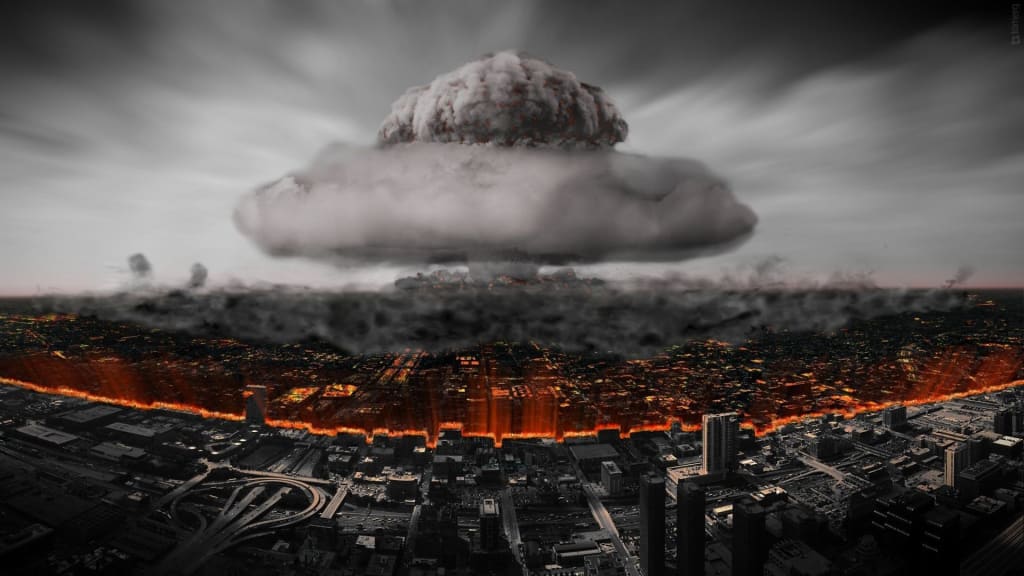
In recent years, China has significantly expanded its nuclear arsenal, raising concerns amidst rising US-China tensions. The possibility of nuclear conflict between these two great powers is becoming more likely. How would such a war unfold, and could there be a victor?
To analyze a potential nuclear war between the US and China, we must first understand the context. Although the US and China have multiple areas of conflict, Taiwan remains the primary flashpoint. This island democracy, just off the mainland, has long resisted Chinese ambitions of reunification by force. The Taiwan Strait, a challenging barrier to invasion, offers only two short windows annually for favorable tides. Taiwan's geography further complicates invasion, with limited landing sites heavily booby-trapped to incinerate Chinese troops upon landing.
Taiwan has trained to quickly reinforce its coastal defenses and can anticipate an invasion months in advance due to China's force buildup. Anti-ship missiles from mobile launchers can target Chinese ships crossing the strait. If Chinese troops land, they would face combat in densely urbanized terrain with natural defensive chokepoints created by mountains.
While the US is not treaty-bound to defend Taiwan, it is likely to do so, given Taiwan's strategic importance in the first island chain containment strategy, a Cold War-era defense line against communist powers. Losing Taiwan would allow China greater access to the Pacific, jeopardizing US naval dominance and global trade. Additionally, Taiwan's microchip factories are crucial to the global economy; their loss would lead to severe shortages, giving China control over a significant portion of the world's supply and the ability to exert economic pressure globally.
Would a regional conflict over Taiwan lead to nuclear war between the US and China? It's more plausible than it seems. The US is expected to win in most scenarios, barring Japan and the Philippines denying US military use of their territories, which is highly unlikely given their interests in countering China. The US would aim to decisively defeat China, preventing future aggression and destroying the Chinese navy and air force.
However, if the Chinese Communist Party (CCP) faces existential threats from a military defeat in Taiwan, it may consider nuclear options. A crushing defeat could spell the end for the CCP, motivating them to escalate to nuclear conflict.
China has enough long-range firepower to temporarily shut down American bases in Japan and Guam. However, its missile supply is finite, and repeated attacks would deplete its arsenal. The use of weapons of mass destruction, particularly enhanced radiation weapons or 'salted bombs,' could render key US bases like Guam unusable for extended periods, severely hampering US military response.
China, aware of the US's global responsibilities, might gamble on a proportional US response to a nuclear strike. However, the US would likely retaliate with overwhelming force to deter further nuclear use. This dynamic could lead to significant miscalculations, making nuclear doomsday more possible.
China's no-first-use policy might be disregarded in an existential crisis. With an estimated 500+ nuclear weapons and more under construction, China could be aiming to match the US's arsenal, which includes 3,700 active nuclear weapons. In a nuclear exchange, both nations would retain a strategic reserve for post-war deterrence, but the resulting fallout, climate disruption, and global supply chain collapse would have catastrophic consequences.
Corruption within China's military, particularly the People's Liberation Rocket Army Force (PLARF), further complicates its nuclear capabilities. Recent scandals have revealed issues with missile silos and construction quality, undermining China's deterrent.
US missile defenses, including Ground-Based Interceptors (GBIs) and Aegis Ballistic Missile Defense (BMD) systems, provide some protection but are limited. GBIs have had mixed success in tests, while Aegis BMD's effectiveness depends on the availability and positioning of US Navy vessels.
In a nuclear war, both nations would target each other's missile fields, nuclear depots, strategic bomber bases, command and control centers, and major logistics nodes. Civilian targets, including major cities and infrastructure, would also be struck. The resulting destruction and irradiation of food-producing regions would lead to devastating famines, killing hundreds of millions.
Despite the horrors of nuclear war, the US is in a relatively better position to emerge less damaged than China. However, the human and environmental toll would be unimaginable.
In conclusion, while nuclear war is unwinnable for anyone, understanding these dynamics is crucial. For further insights, consider exploring how one might survive a nuclear conflict.
About the Creator
Keep reading
More stories from Shinzou Wo sasageyo and writers in Earth and other communities.
What If a Massive Asteroid Was Headed Towards Earth
Day One: June 15, 2028 NASA has to face a harsh reality: it was wrong. In 2004, astronomers David Tholen, Fabrizio Bernardi, and Roy Tucker discovered an asteroid named Apophis at Kitt Peak National Observatory in Tucson, Arizona. Named after the Egyptian demon serpent that wreaks havoc, Apophis initially seemed to threaten Earth, with predictions setting its potential impact date for 2029. Over time, further observations led NASA’s Planetary Defense Office to confidently announce that Apophis would miss Earth, passing just 19,800 miles above – the closest approach in over 7,500 years.
By Shinzou Wo sasageyo2 years ago in Earth
The Fiery Circle: Understanding the Pacific Ring of Fire
The **Pacific Ring of Fire** is not a literal ring of flames, but it is undoubtedly the most geologically volatile region on Earth. Stretching approximately 40,000 kilometers (25,000 miles) in a massive horseshoe shape, it traces the coasts of the Pacific Ocean—from the southern tip of South America, up along the coast of North America, across the Bering Strait, down through Japan, and into Southeast Asia and New Zealand.
By Irshad Abbasi 6 days ago in Earth


Comments