
What El Niño Will do to Earth in 2024?
The consequences.

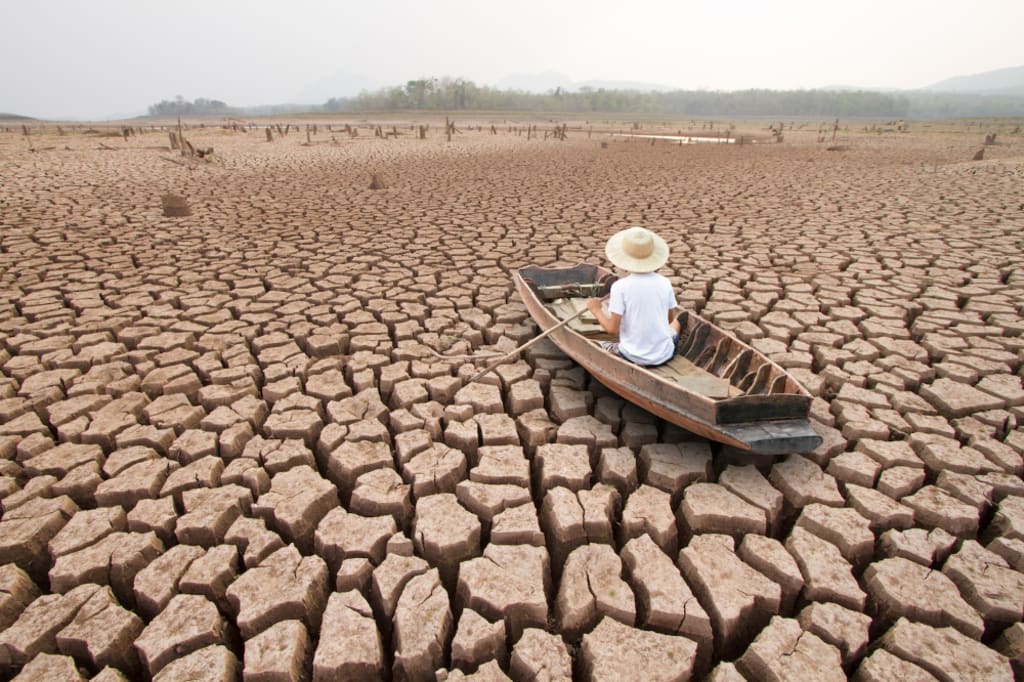
Life on Earth indeed exhibits various cyclical variations, ranging from short-term cycles like day and night to longer-term cycles such as the changing of seasons and the ebb and flow of tides. While some of these cycles can be predicted with precision, others pose more challenges in terms of forecasting. Let's take a closer look at some of these cycles:
1. Day and Night: Earth's rotation on its axis causes the alternation between day and night. This cycle repeats approximately every 24 hours, providing a predictable pattern that has significant impacts on the behavior and physiology of living organisms.
2. Seasons: The Earth's axial tilt and its orbit around the Sun result in the changing of seasons. These cycles occur over longer periods, typically lasting for about three months each. The seasons impact climate, weather patterns, plant growth, and animal behavior.
3. Lunar Cycles: The Moon's orbit around the Earth causes various lunar cycles, most notably the monthly cycle of the phases of the Moon. These phases, such as the full moon and new moon, have cultural, religious, and ecological significance. The lunar cycle also affects tides.
4. Tides: The gravitational pull of the Moon and the Sun, along with the rotation of the Earth, cause the ebb and flow of tides. The tidal cycle generally occurs over a 24-hour and 50-minute period. Tides play a crucial role in coastal ecosystems and impact activities like fishing, navigation, and recreation.
5. Climate Cycles: Earth experiences long-term climate cycles that can span decades to centuries. These include phenomena like El Niño and La Niña, which occur in the equatorial Pacific Ocean and have global climate implications. Additionally, there are longer-term climate variations, such as the Milankovitch cycles, which influence Earth's climate over thousands of years.
While some of these cycles can be forecasted with relative accuracy based on scientific models and historical data, others are subject to more uncertainties and are challenging to predict precisely. Factors like complex interactions between various systems, chaotic behavior, and external influences contribute to the difficulty in forecasting these cycles accurately.
Scientists continue to study these cycles and develop models to improve our understanding and prediction capabilities. Advances in technology, data collection, and computational power contribute to ongoing research and our ability to forecast these cyclical variations more effectively.
Under normal conditions in the Pacific Ocean, the trade winds blow from east to west along the equator due to the Coriolis Effect, which is caused by the Earth's rotation. These trade winds push warm surface water towards the western Pacific, resulting in a deep layer of warm water near Indonesia and the Philippines. As the warm surface water moves westward, cold water from the depths of the ocean rises to replace it in a process known as upwelling along the eastern coast of South America.
El Niño and La Niña are two phases of the El Niño Southern Oscillation (ENSO), which is a climate cycle in the Pacific Ocean. El Niño refers to a period of warmer-than-average sea surface temperatures in the central and eastern tropical Pacific, disrupting the normal patterns of atmospheric and oceanic circulation. During El Niño, the trade winds weaken or even reverse, causing a decline in upwelling along the eastern coast of South America. As a result, the warm surface water that was previously concentrated in the western Pacific now spreads eastward across the Pacific Ocean.
La Niña, on the other hand, represents a period of cooler-than-average sea surface temperatures in the central and eastern tropical Pacific. During La Niña, the trade winds strengthen, leading to enhanced upwelling along the eastern coast of South America. This results in colder surface water in the eastern Pacific, while warm water remains concentrated in the western Pacific.
El Niño and La Niña are interconnected phenomena within the ENSO cycle. When El Niño occurs, it disrupts the normal climate patterns, affecting weather systems and oceanic conditions worldwide. La Niña is considered the opposite phase of El Niño, characterized by its cooler sea surface temperatures. These two phases of ENSO can have significant impacts on global weather patterns, including temperature and precipitation anomalies, and they can influence various regions differently.
The global impacts of El Niño and La Niña can be far-reaching. Some of the effects associated with these phenomena include:
Atmospheric Changes: El Niño and La Niña can lead to alterations in atmospheric circulation patterns, affecting the distribution of rainfall and temperature around the world. This can result in droughts, floods, heatwaves, and cold spells in different regions.
Precipitation Patterns: The ENSO cycle can influence rainfall patterns on a global scale. For example, during El Niño, there may be increased rainfall in the southern United States, droughts in Australia, and reduced rainfall in parts of Southeast Asia.
Tropical Cyclones: El Niño and La Niña can influence the formation and intensity of tropical cyclones (hurricanes, typhoons) in different ocean basins. El Niño tends to suppress tropical cyclone activity in the Atlantic but enhances it in the Pacific, while La Niña often has the opposite effect.
Agricultural Impacts: The altered rainfall patterns associated with El Niño and La Niña can have significant consequences for agriculture. Droughts or floods caused by these events can affect crop yields, livestock, and food production in different parts of the world.
Ecosystem Effects: El Niño and La Niña can disrupt marine ecosystems, affecting fish populations, coral reefs, and other marine organisms. The warming associated with El Niño events, for example, can trigger coral bleaching events that can lead to the death of corals.
Understanding and monitoring the ENSO cycle is crucial for climate scientists, meteorologists, and policymakers to anticipate and respond to the impacts of El Niño and La Niña events. Continuous research and monitoring efforts help improve our understanding of these phenomena and enhance our ability to predict and mitigate their effects on a global scale.
The circulation of air from the poles to the equator, which would occur if the Earth didn't rotate, is an interesting concept. However, due to the Earth's rotation, a phenomenon known as the Coriolis Effect comes into play, causing the deflection of air as it moves towards the equator. This deflection gives rise to the trade winds, which are important for various aspects of Earth's climate and ecosystems.
In the Pacific Ocean, the trade winds blow westerly across the surface, dragging warm water from coastal South America towards Asia. As this warm water moves westward, it creates a phenomenon called upwelling, where colder water rises to replace the warm surface water. This upwelling brings nutrient-rich cold water from the depths of the ocean to the surface, creating favorable conditions for the growth of phytoplankton.
Phytoplankton are microscopic plants that form the basis of marine food chains. They provide essential nutrients and energy to support entire ecosystems of fish, marine mammals, and other organisms. The trade winds and the associated upwelling play a crucial role in maintaining the productivity and biodiversity of these marine ecosystems.
During El Niño, there is a disruption of the normal trade wind patterns. The trade winds weaken, leading to a slowdown in the usual flow of warm water towards Asia. Instead, the warm water builds up near the coastal Americas, resulting in reduced upwelling of cold, nutrient-rich water. This disturbance in the normal oceanic conditions creates a zone of warm air and water further east in the Pacific.
The impact of El Niño on the Pacific Ocean ecosystem is significant. With reduced upwelling, the availability of nutrients decreases, which affects the growth of phytoplankton. Consequently, the fish and other organisms that rely on phytoplankton as a food source may face challenges. Changes in ocean temperatures and currents during El Niño can also affect the distribution and migration patterns of marine species.
Understanding the dynamics of the trade winds and their role in the Pacific Ocean ecosystem is essential for studying and predicting El Niño events. Scientists and researchers closely monitor these patterns and the associated impacts to better understand the complex interactions between the atmosphere and oceans and their effects on marine life and global climate patterns.
El Niño events can have far-reaching consequences on weather patterns around the world, leading to both positive and negative impacts depending on the region.
During El Niño, the Pacific Jet Stream, which typically moves across North America, tends to shift southward from its normal position. This southward shift can result in warmer and drier conditions in the northern United States and Canada. Conversely, the Gulf Coast and large parts of Coastal South America experience increased rainfall during El Niño, particularly from April to October. In severe El Niño years, the increased rainfall in regions like Peru and Ecuador can lead to devastating floods, causing significant damage to infrastructure and displacing populations.
Outside the Americas, El Niño triggers a chain of effects that alter weather patterns worldwide. The increased rainfall in South America often coincides with drought conditions in regions like South Asia and Australia. In India, severe famines have been recorded during El Niño years, while a delay in Australia's monsoon season can increase the risk of massively destructive bushfires. Australia's vast grasslands make it particularly susceptible to bushfires, and the combination of warming trends and the looming presence of El Niño increases concerns among local officials.
It's important to note that not all El Niño events are severe, and their impacts can vary. Some El Niño events can be relatively mild in their effects. The average duration of an El Niño is between 9 to 12 months, but there have been rare instances where El Niño events have persisted for years.
Understanding the complexity of the world's climate system and its response to various inputs is crucial when interpreting the effects of El Niño. Each El Niño event should be understood in relation to the baseline climate conditions, as no two El Niño years are exactly alike. This variability emphasizes the need for ongoing monitoring, research, and preparedness to address the impacts of El Niño and its counterpart, La Niña.
Overall, El Niño and La Niña are significant climate phenomena that can have profound effects on global weather patterns and ecosystems. Monitoring and understanding these events are vital for mitigating risks, adapting to changing conditions, and safeguarding vulnerable regions and populations.
La Niña is indeed the opposite side of the El Niño Southern Oscillation, representing a cool phase with its own set of effects on weather patterns globally.
During La Niña, the trade winds become even stronger, resulting in the blowing of more warm water from Coastal South America towards Asia. This intensifies the upwelling of cold, nutrient-rich water near the Americas, creating favorable conditions for fisheries. Cold-water species, such as salmon, may venture into warmer waters where they wouldn't normally survive, leading to potential changes in fish distribution.
In terms of weather patterns, the influx of warm equatorial water during La Niña produces wetter conditions in Asia, contrasting with the drought experienced during El Niño. The shift in the Pacific Jet Stream pushes it further north, leading to drought conditions in the southwestern United States and increased rainfall in the Pacific Northwest. In 2022, La Niña exacerbated the megadrought in the Southwest, making it the worst in 1,200 years, as evidenced by the significant decline in water levels in Lake Mead.
The effects of La Niña on hurricane seasons vary depending on the region. In the Atlantic, the South Atlantic experiences greater atmospheric instability during La Niña, leading to a more severe hurricane season. In contrast, the Pacific Basin tends to see fewer hurricanes during La Niña. These regional effects highlight the distinct nature of the impacts associated with different phases of the ENSO cycle.
In Pacific Coastal South America, the usual warm Christmastime waters associated with El Niño are absent during La Niña. The weather in Peru and Chile turns colder and drier, often resulting in periods of severe drought. However, Brazil's North experiences increased precipitation during the months from December to February, and the lowlands of Bolivia can even face catastrophic flooding.
Regarding the current state of the ENSO cycle, the National Oceanic and Atmospheric Administration (NOAA) has declared an end to a lengthy La Niña phase. Surface atmospheric pressure measurements in the Western and Eastern Pacific, known as the Equatorial Southern Oscillation Index (EQSOI), indicate that conditions have returned close to normal. However, indications suggest that an El Niño event may occur later in 2023, with the NOAA forecasting a 60% chance of it setting in by autumn. This potential El Niño could have significant ramifications, including the possibility of drought conditions in India.
Studying climate cycles like the ENSO provides valuable insights into Earth's complex climate systems. Understanding these interconnections is crucial not only for managing the impacts of El Niño and La Niña but also for addressing climate challenges on Earth and potentially on other planets in the future.
About the Creator
Nature’s Hidden Gems: Discovering the Rarest Flowers on Earth
Introduction: When Beauty Meets Rarity Nature is filled with wonders, but few are as captivating—and as elusive—as the rarest flowers on Earth. From enormous parasitic blooms to delicate orchids that appear only under precise conditions, these plants challenge our understanding of survival, evolution, and beauty.
By Ahmed aldeabella3 days ago in Earth
Verizon Outage Today
A sudden Verizon outage can feel unsettling, especially when your phone switches to “SOS” or “emergency calls only” without warning. Across social media and outage-tracking platforms, users often rush to ask the same questions: Is Verizon down right now? Why is my phone in SOS mode? What happened to Verizon today, and when will Verizon be back up? While outages are never convenient, they are not uncommon for large national carriers like Verizon Wireless. Understanding what a Verizon service outage means—and how to respond—can help reduce confusion during moments when connectivity disappears. Is Verizon Down? Understanding Service Outages A Verizon wireless outage occurs when part of Verizon’s cellular or data network becomes unavailable. This can affect voice calls, text messages, mobile data, or all services at once. Some outages are isolated to specific cities, such as Verizon outage NYC, Atlanta, Houston, or New Jersey, while others expand into a broader Verizon nationwide outage. When service is disrupted, users commonly report: Verizon down today Verizon network down Verizon not working Is Verizon down in my area? Verizon service outage These reports often surface within minutes, especially on outage-monitoring platforms. Why Does My Phone Say SOS? One of the most alarming signs during a Verizon outage today is seeing SOS, SOS only, or emergency calls only at the top of an iPhone. This leads many to ask, “Why is my phone in SOS mode Verizon?” SOS mode does not mean your phone is broken. It indicates that your device cannot connect to the Verizon network but can still place emergency calls using any available carrier signal. Common searches during outages include: Why does my phone say SOS only? iPhone stuck in SOS mode Why is my phone on SOS Verizon? What does SOS mean on iPhone? How to get phone out of SOS mode In most cases, the issue resolves automatically once Verizon restores network connectivity. What Caused the Verizon Outage Today? When connectivity drops, users naturally want immediate answers to what caused the Verizon outage today. Verizon does not always publish technical details right away, but outages are typically linked to: Network maintenance or system upgrades Fiber or backend routing failures Power outages affecting Verizon towers Severe weather or environmental damage Unexpected network congestion Despite online speculation, most Verizon outages are not related to cyberattacks. Searches like “Verizon cyber attack today” often trend during disruptions, but confirmed causes are usually infrastructure-related and temporary. How to Check Verizon Outage Status in Real Time If you’re wondering “Is Verizon still down?”, there are several reliable ways to check. Downdetector Verizon Platforms like Downdetector and Down Detector Verizon track real-time user reports. A spike in complaints usually confirms a Verizon outage before official statements are released. Verizon Outage Map Verizon provides a Verizon wireless outage map, sometimes including outage views by ZIP code. This helps answer questions like: Is there a Verizon outage near me? Is Verizon down in my area? My Verizon App and Network Status Pages The My Verizon app and Verizon’s official network status tools may display service alerts and updates during larger outages. Verizon Customer Service During an Outage During a widespread Verizon service outage, many users attempt to call Verizon customer service or search for the Verizon customer service number. While support teams remain active, wait times often increase significantly during major disruptions. Important things to keep in mind: Customer service representatives usually cannot provide exact repair timelines Rebooting your phone repeatedly during an outage rarely helps Network restoration often happens region by region Monitoring Verizon outage updates is typically more effective than calling support during peak outage periods. When Will Verizon Be Back Up? The most pressing question remains: When will Verizon service be restored? The answer depends on: Whether the outage is local or nationwide The cause of the disruption Whether physical repairs are required Minor outages may resolve within minutes or hours. Larger incidents—such as a Verizon cellular outage affecting multiple states—can take longer. Verizon generally prioritizes emergency communications before restoring full voice and data services. Search trends during outages often include: When will Verizon be fixed? How long will Verizon be down? When is Verizon going to be back up? While exact times are rarely guaranteed, service usually returns gradually rather than all at once. Verizon, Competition, and Broader Impact High-profile outages often spark comparisons with competitors like AT&T and T-Mobile. Searches for AT&T outage or T-Mobile outage frequently rise at the same time, as users explore alternative networks. Although outages generate headlines and social media frustration, they rarely have lasting effects on Verizon stock unless disruptions become frequent or prolonged. What to Do If Your Phone Is in SOS Mode If your phone shows SOS only during a Verizon outage: Enable Wi-Fi calling if available Avoid changing SIM or resetting network settings mid-outage Keep your device charged and updated Check Verizon outage updates periodically Once Verizon’s network stabilizes, most phones exit SOS mode automatically. Final Thoughts A Verizon outage can be disruptive, especially when communication suddenly feels out of reach. However, seeing SOS mode does not mean your phone is damaged—it simply reflects a temporary network issue. Staying informed through trusted sources like Downdetector, Verizon’s outage maps, and official Verizon updates can help users navigate these moments with clarity. While outages are frustrating, they are typically temporary, and service restoration is usually a matter of time rather than cause for alarm.
By Saboor Brohi 3 days ago in Earth
Silver Screen Magic with Mae West
American actress and singer Mae West became a popular film actress during the Great Depression. She started entertaining in vaudeville, then performed on Broadway, and finally went to Hollywood. She signed up with Paramount Pictures and made her debut in the 1932 film “Night After Night.” She also starred in musicals, comedies, and crime dramas. The American Film Institute named her one of the best classic Hollywood actresses.
By Rasma Raisters5 days ago in Geeks


Comments
There are no comments for this story
Be the first to respond and start the conversation.