
What a Tragedy — Koalas Extinct Within Thirty Years?
How Much Can a Koala Bear?


Koalas are a unique Australian asset. Their restricted lifestyle in trees, dependence on specific Eucalyptus leaves, and complementary digestive processes not seen in any other animal reinforce their value to the animal kingdom as a biological anomaly.
I spent four years studying digestion in koalas, so they have a special place in my heart. Like many Australian native animals, they are facing a grim future.
In 2022, koalas were officially listed as an endangered species.
They will likely become extinct within thirty years without intervention and greater understanding.
A Long but Sad History:
Koala populations have been on a decline in recent years. Land clearing and urbanization are destroying their natural habitat, and the devastation of disease and bushfires is a constant threat to their existence.
Early in the twentieth century, thousands of animals were hunted and slaughtered for their fur, almost sending the species to extinction at that point.
It is estimated that 8 million koalas were killed for their fur in forty years between 1888 and 1927.
In one year alone, 400,000 pelts were shipped to the USA.
Thankfully, koala hunting was banned around 1927 when the US Secretary of Commerce (Herbert Hoover, who later became President) banned the import of koala skins.
At this stage, their numbers were reduced to only a few hundred in all but one Australian state. Even that didn’t last. In a single month, 800,000 koalas were hunted and killed from the last stronghold, Queensland.
Crippling Disease — A Vicious Circle
A bacterial infection in koalas — chlamydia, like the sexually transmitted disease in humans — has plagued koala populations for decades and is now one of the major causes of mortality. In some situations, it can infect 100% of the population.
It leads to blindness, severe bladder inflammation, infertility, and death. Researchers have recently discovered that antibiotic treatment may create further problems, upsetting the gut microbes they depend on to digest their staple diet of Eucalyptus leaves.
Surveys from treatment facilities have found that chlamydia causes more deaths in koalas, except for injury from cars and dog attacks*.
[*Koalas are so adapted to tree life that they seldom go to the ground. When they do, their clumsiness makes them easy targets for cars and trucks as they cross over roads or prey for dogs as they try to get to new vegetation.]
Chlamydia can also be directly transferred to the young when they consume pap during the weaning process (see the story highlighted above).
It is now thought that a specific koala virus — Koala Retrovirus type B (like human HIV) increases the infection rate.
Devastating Bushfires
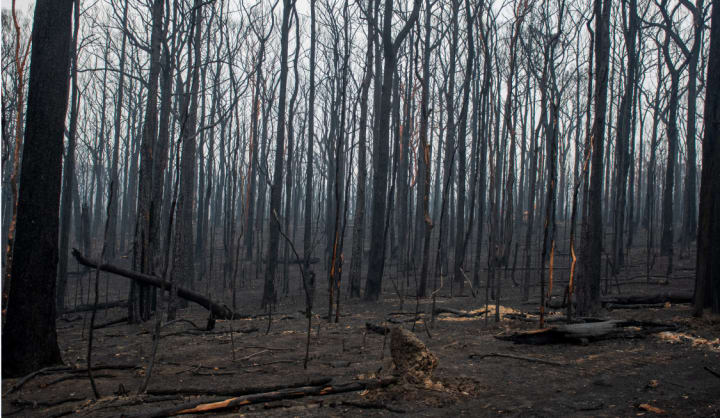
Bushfires have always been a characteristic of life in Australia and another challenge for koalas. However, a recent change in the weather pattern has led to more intense and frequent bushfires.
During bushfires, instinct tells koalas to climb higher in the tree, usually with disastrous consequences.
Following the 1850s and 1930s bushfires, koalas were declared extinct in several Australian states. In the following year, the Black Summer fires along the east coast of Australia are reported to have killed over 60,000 koalas.
In 2021 fires in one of the healthiest populations on Kangaroo Island reduced the population by 70%.
If it is not bushfires, it is floods. Devastating floods along the east coast of Australia in the last two years have destroyed whole towns, destroyed even more koala habitats, and separated young joeys from their mothers.
Habitat destruction — Nowhere to Run
The relocation of koalas to islands off the coast of Victoria and South Australia in the 1920s dramatically increased their numbers, saving the species.
One might think this is a viable solution to saving the species, but even this is not straightforward. Koalas in one region become so adapted and dependent on a particular type of Eucalypt foliage that they do not cope with being moved.
In other situations, relocation from the thriving island populations is not viable because their inbreeding and low genetic adaptability make them extremely susceptible to disease, infertility, and deformities.
Deforestation and clearing to make way for agriculture and urbanization are also devastating koala numbers.
Protocols demand that areas of Eucalyptus Forest be left for koalas. Even when this does happen, it is of limited value. Leaving koalas with a limited number of trees to feed on and removing their ability to transition to other trees freely when these become depleted makes them more susceptible to cars and dogs.
An Unsympathetic Government
One would think governments would be keen to protect one of their icons, symbolizing Australia’s unique fauna, but even this is against the koala.
Much of the koala’s natural habitat is on private land. Governments attempting to pacify rural landowners pass bills that make it easier for them to destroy koala habitats.
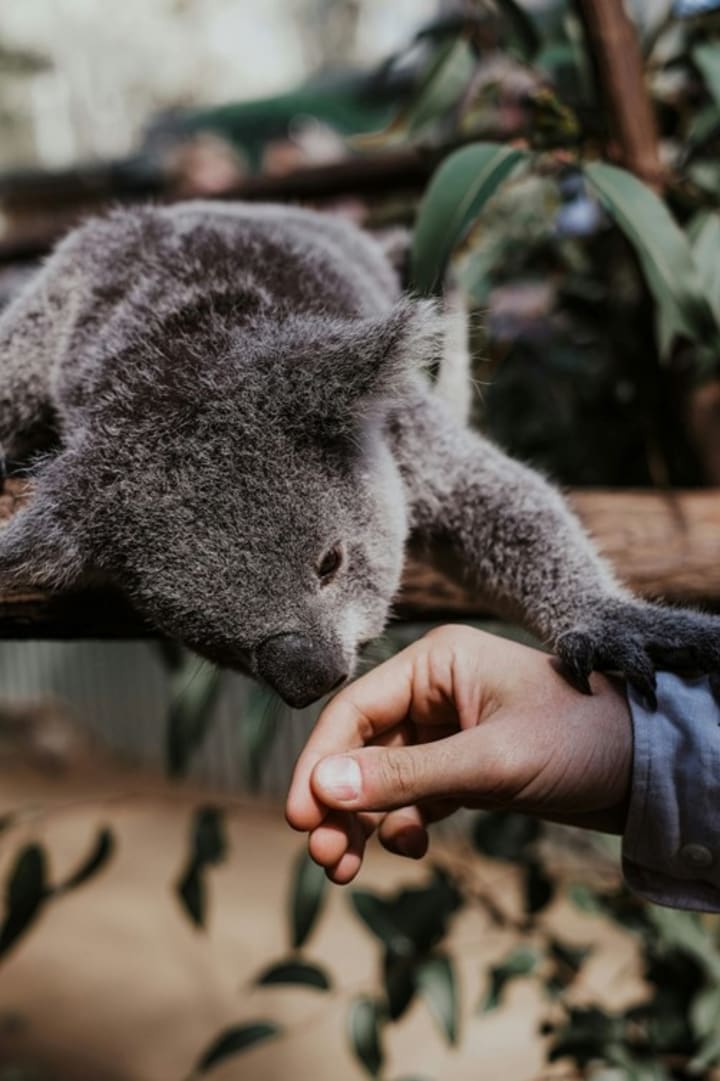
History has shown that koalas have a strong survival instinct despite their nuances. With some help and support, one would hope they can maintain a presence in what little natural environment they have left.
They are not aggressive animals and have been seen to cohabitate happily with humans in suburban parks and reserves.
Is it asking too much that we give some time and investment back to them — an Australian icon?
A lifetime of struggle, abuse, and neglect, and there is still so much that we do not know about how koalas function and what they need.
How much can a koala bear? — Only time will tell if we have left it too late.
Till next time,
Calvin
[Modified from the original publication in Simply Wild. All rights reserved Calvin London 2024]
About the Creator
Calvin London
I write fiction, non-fiction and poetry about all things weird and wonderful, past and present. Life is full of different things to spark your imagination. All you have to do is embrace it - join me on my journey.
Keep reading
More stories from Calvin London and writers in Earth and other communities.
Himalayas Bare and Rocky After Reduced Winter Snowfall, Scientists Warn
The Himalayas, often described as the world’s “Third Pole,” are facing a dramatic and worrying transformation. Scientists are warning that reduced winter snowfall is leaving vast stretches of the mountain range bare, rocky, and increasingly vulnerable to long-term environmental damage. Once known for their thick snow blankets and powerful glaciers, parts of the Himalayas are now showing exposed rock earlier than ever before—an alarming sign of climate stress in one of Earth’s most critical ecosystems. A Visible Change in the World’s Highest Mountains Winter snowfall plays a vital role in the Himalayan climate system. Snow acts as a protective layer, insulating glaciers and regulating the slow release of meltwater into rivers during warmer months. However, researchers monitoring satellite data and ground stations report that recent winters have brought significantly less snowfall across large areas of the range. As a result, snowlines are rising higher up the slopes, leaving lower and mid-altitude regions exposed. This has turned once-white mountain landscapes into expanses of dark rock, which absorb more heat from the sun, accelerating warming in a dangerous feedback loop. Why Reduced Snowfall Matters Snow is more than a scenic feature—it is essential to the health of Himalayan glaciers. When snowfall declines, glaciers lose their main source of replenishment. At the same time, exposed ice and rock melt faster under direct sunlight. Scientists warn that this imbalance is speeding up glacier retreat across the Himalayas. Many glaciers are now shrinking at rates not previously recorded, threatening the long-term stability of water systems that support nearly two billion people across South and Southeast Asia. Impact on Asia’s Major Rivers The Himalayas feed some of the world’s most important rivers, including the Indus, Ganges, Brahmaputra, Yangtze, and Mekong. These rivers depend on seasonal snow and ice melt to maintain consistent flow throughout the year. Reduced snowfall means less stored water for the dry season. In the short term, faster melting can cause floods and landslides. In the long term, however, shrinking glaciers could lead to water shortages, affecting agriculture, hydropower, and drinking supplies across multiple countries. A Growing Risk of Disasters Bare, rocky slopes are far more unstable than snow-covered ones. Snow helps bind loose material together, while exposed rock and soil increase the likelihood of landslides and avalanches. Scientists have already observed a rise in slope failures and glacial lake outburst floods in the region. As glaciers retreat, meltwater often accumulates in fragile lakes dammed by loose rock and ice. These lakes can burst suddenly, releasing destructive floods that threaten mountain communities and downstream infrastructure. Climate Change at the Core Researchers agree that climate change is the primary driver behind the declining snowfall. Rising global temperatures are altering weather patterns, causing more winter precipitation to fall as rain rather than snow. Even small temperature increases at high altitudes can drastically change how moisture behaves. Additionally, warming oceans and shifting atmospheric circulation are affecting the timing and intensity of winter storms that traditionally brought snow to the Himalayas. Effects on Local Communities and Wildlife Mountain communities that rely on predictable snowfall for farming, tourism, and water storage are already feeling the effects. Farmers report changes in planting cycles, while winter tourism has declined in some regions due to unreliable snow conditions. Wildlife is also under pressure. Species adapted to cold environments are losing habitat as snow cover shrinks. Plants that depend on snowmelt are struggling to survive in drier, warmer conditions, disrupting fragile alpine ecosystems. Scientists Call for Urgent Monitoring and Action Experts stress the importance of improved monitoring of snowfall, glacier health, and water flows across the Himalayan region. Better data can help governments plan for future water management challenges and disaster risks. At the same time, scientists emphasize that local adaptation alone is not enough. Reducing global greenhouse gas emissions remains critical to slowing temperature rise and preserving what remains of the Himalayan snow and ice. What the Future Holds If current trends continue, large parts of the Himalayas could see permanent changes within decades. Reduced snowfall and accelerating glacier loss may reshape landscapes, ecosystems, and human livelihoods on an unprecedented scale. The sight of bare, rocky Himalayan slopes is more than a visual change—it is a warning signal. The world’s highest mountains are responding rapidly to a warming planet, and the consequences will extend far beyond the peaks themselves.
By Fiazahmedbrohi about 14 hours ago in Earth
📢 Raise Your Voice Thread: 01/08/2026
Our “Raise Your Voice Threads” are hosted most alternating Thursdays at 12PM ET to offer creators more avenues to uncover exceptional stories on Vocal. As we are continuously searching for fresh creators and inspiring stories, this thread provides an opportunity to exchange and discuss the stories that have moved and motivated us on Vocal.
By Raise Your Voice by Vocal5 days ago in Resources



Comments (2)
Koala bears are so gentle too. It is too bad to see this essential part of the ecosystem being destroyed. How will the extinction of Koalas impact other species or plants in the ecosystem?
So sad