
Weather Radar Picks Up Over 1 Million Migrating Birds Across the Sky
Mass Bird Migration Detected by Weather Radar Highlights the Beauty and Fragility of Nature’s Aerial Highway

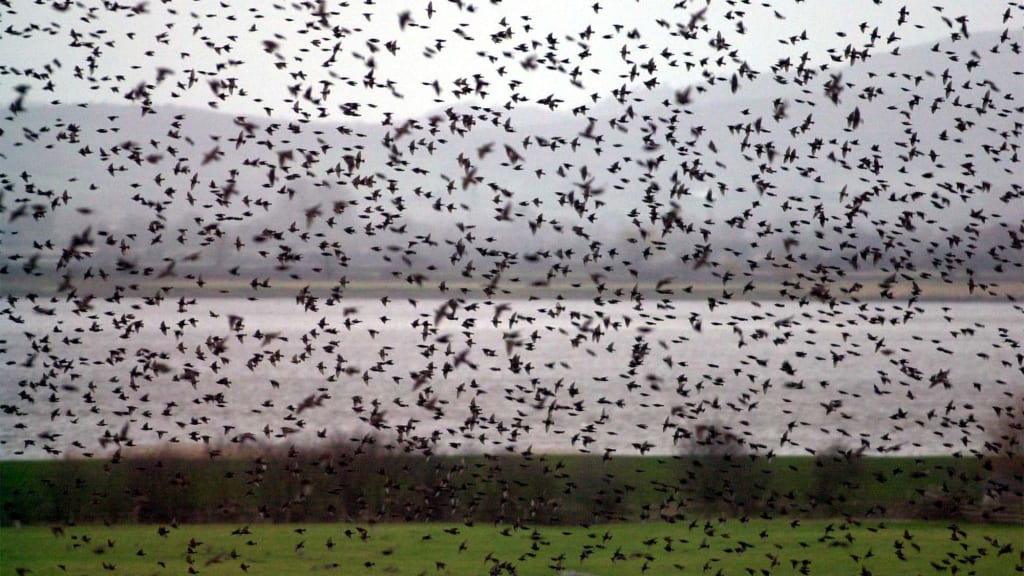
Weather Radar Picks Up Over 1 Million Migrating Birds Across the Sky
In a breathtaking display of nature's rhythm and resilience, weather radar systems across the United States recently picked up over one million migrating birds in a single night, astonishing both ornithologists and casual bird enthusiasts alike. This extraordinary event, visible on radar as a massive cloud of life stretching across hundreds of miles, marks one of the peak moments of the spring bird migration season.
A Sky Full of Wings
Every spring and fall, billions of birds take flight across the Americas in one of the largest and most perilous migrations on Earth. These journeys often span thousands of miles, with birds navigating by stars, Earth's magnetic field, and environmental cues. While their movements are usually invisible to the naked eye—especially at night—advancements in weather radar technology have given scientists a new way to observe and understand these seasonal phenomena.
On a recent spring evening, radar stations detected what appeared to be massive weather systems across the Midwest and Northeast. But these weren’t storms. These were birds. According to BirdCast, a project developed by the Cornell Lab of Ornithology, Colorado State University, and the University of Massachusetts Amherst, an estimated 1.2 million birds were in flight across major flyways in the U.S. This “bird bloom” was captured clearly by Doppler radar, which picks up flying objects based on movement and density, regardless of whether they're raindrops or birds.
The Science Behind the Sighting
Weather radar systems, especially Doppler radar, are primarily used to track precipitation and weather systems. However, because they detect objects in the atmosphere based on motion and reflectivity, they can also detect birds, bats, and even insects.
During peak migration times, particularly just after sunset, radar imagery can show massive flocks of birds taking off almost simultaneously—a behavior called "mass ascent." Scientists can interpret the speed, direction, and altitude of these movements to estimate how many birds are in the air and where they’re going.
This year’s spring migration was particularly intense, as favorable weather patterns—mild temperatures and south winds—helped encourage more birds to take flight over a shorter period. The data collected is vital for conservation efforts and helps researchers track population trends, migratory timing, and the impacts of climate change.
A Delicate Dance with Nature
Bird migration is more than just a natural marvel; it’s a critical part of many ecosystems. Migrating birds play a key role in pollination, seed dispersal, and insect control. However, these journeys are also extremely dangerous. Birds face numerous threats, including habitat loss, window collisions, predators, and climate change.
In the United States alone, it’s estimated that up to one billion birds die each year from collisions with man-made structures. City lights can disorient birds, especially during night flights, causing them to crash into buildings or become exhausted from flying off course.
To help mitigate these dangers, several cities, such as Chicago and New York, have adopted “Lights Out” programs, which encourage building owners to dim or turn off unnecessary lights during peak migration nights. Events like the recent radar-detected mass migration further emphasize the importance of such initiatives.
Citizen Science and Public Involvement
The rise of bird-tracking tools and apps like eBird, Merlin, and BirdCast means that everyday people can now get involved in monitoring migration. BirdCast even offers nightly migration forecasts, similar to weather reports, showing how many birds are expected to pass over different areas. On the night of the 1.2 million bird migration, thousands of users across the country reported increased bird activity, including rare sightings and unexpected flyovers.
Birders were quick to take to social media, sharing video clips and nighttime audio recordings of chirps and flight calls echoing overhead. In some places, the sky was so full of birds that their calls created a soft, persistent hum that could be heard by anyone who stopped to listen.
Why It Matters
Understanding bird migration is essential not only for science but also for our environmental health. Birds serve as indicators of ecological well-being. When bird populations decline, it's often a sign that something larger is going wrong in the environment—be it pollution, habitat destruction, or climate disruption.
This latest radar-detected migration event is a stark reminder of the scale and importance of these ancient journeys. As scientists continue to study bird movements using high-tech tools and real-time data, the public is invited to play a role by keeping lights off, recording bird calls, and creating bird-friendly environments at home.
Final Thoughts
The sky may seem quiet to us most nights, but above our heads, entire populations of birds are embarking on life-or-death journeys spanning continents. The recent sighting of over 1 million birds on weather radar is not just a scientific marvel—it’s a call to pay closer attention to the wonders and fragilities of the natural world.
By blending modern technology with ancient migration routes, we gain a better understanding of how birds navigate, survive, and thrive—and what we must do to ensure their survival for generations to come.
About the Creator
Adnan Rasheed
Author & Creator | Writing News , Science Fiction, and Worldwide Update| Digital Product Designer | Sharing life-changing strategies for success.
Keep reading
More stories from Adnan Rasheed and writers in Earth and other communities.
Giant Viruses Found in Yellowstone's Hot Springs May Be Near the Root of All Life on Earth
Giant Viruses Found in Yellowstone's Hot Springs May Be Near the Root of All Life on Earth Recent discoveries from the steaming, otherworldly landscapes of Yellowstone National Park have scientists buzzing with excitement. Researchers have uncovered giant viruses hidden deep within the park’s scalding hot springs — and these ancient microorganisms may hold clues about the very origins of life on Earth.
By Adnan Rasheed8 months ago in Earth
Microbiota, microbiome or microflora: how to speak correctly and why it is for health.
You've probably heard the phrase, "We are what we eat." But modern science says more precisely: we are also those who live in us. Until 2016, it was believed that there are many times more bacteria in our body than our own cells. The latest calculations by mathematicians show that we divide the body with our microorganisms by about 50/50: about 30 trillion of our cells versus 38 trillion bacterial ones.
By Yaroslav Gorohov3 days ago in Earth
Chinese EVs Closing In on America After Canadian Tariffs Deal
The electric vehicle race is no longer just about climate goals or consumer choice — it has become a geopolitical contest. And in early 2026, a subtle but powerful move by Canada may have tilted the board. By agreeing to sharply reduce tariffs on Chinese electric vehicles, Canada has opened a door that the United States has worked hard to keep shut. While Chinese EVs are still largely barred from the American market, they are now edging closer than ever — not by crossing the border directly, but by entering through Canada. This development raises a pressing question: Are Chinese EVs closing in on America, and what does that mean for the future of North American auto markets? The Deal That Changed the Game Canada’s new agreement with China allows up to 49,000 Chinese-made electric vehicles per year to enter the Canadian market at a tariff rate of just over 6%, a dramatic drop from the previous 100% tariff that effectively blocked them. On paper, the quota seems small. In reality, it carries enormous symbolic and strategic weight. For years, both Canada and the United States aligned closely on keeping Chinese EVs out, citing concerns over unfair subsidies, national security, and the protection of domestic auto industries. This new deal marks a clear shift — and a divergence from U.S. policy. Canada didn’t make the decision in isolation. The EV tariff reduction was part of a broader trade reset with China, tied to agricultural exports such as canola and efforts to stabilize a strained economic relationship. Why Chinese EVs Matter So Much China is the undisputed leader of the global electric vehicle industry. Its manufacturers produce EVs at scale, often at prices Western automakers struggle to match. Brands like BYD, Nio, and Xpeng have already expanded aggressively into Europe, Southeast Asia, and parts of the Middle East. North America has remained one of the final fortified markets — until now. Chinese EVs are appealing not just because they’re cheaper, but because they’ve rapidly improved in quality, range, and technology. For consumers priced out of North American and European EV models, Chinese vehicles offer something rare: affordability without sacrificing features. Canada’s decision gives Chinese automakers their first legitimate foothold in North America — and footholds tend to grow. Why the U.S. Is Nervous The United States still enforces a 100% tariff on Chinese EV imports, making them effectively unsellable in the American market. But Canada’s move has triggered concern in Washington. U.S. officials argue that Chinese EVs entering Canada could indirectly pressure American markets, influence supply chains, and weaken Washington’s leverage in future trade negotiations. There’s also a political dimension. Both major U.S. parties have framed Chinese dominance in EVs as a strategic threat — not just to auto jobs, but to technological leadership. Modern EVs collect vast amounts of data, and lawmakers have raised concerns about cybersecurity and foreign data access. While Chinese EVs aren’t rolling onto American roads yet, their presence just across the border changes the conversation. Canada’s Risk — and Opportunity Inside Canada, the reaction has been mixed. Automotive hubs like Ontario worry that opening the market could undermine domestic manufacturing and strain relations with the U.S., Canada’s largest trading partner. Some leaders have called the deal “lopsided,” warning it could cost jobs if American retaliation follows. Others see opportunity. A more competitive EV market could lower prices for Canadian consumers and accelerate EV adoption. It may also attract Chinese investment into Canada itself — including factories, battery plants, and supply chain partnerships. If Chinese automakers choose to build in Canada rather than simply export to it, the country could position itself as a bridge between Chinese EV innovation and North American demand. That balancing act — between economic opportunity and political risk — defines Canada’s strategy. Are Chinese EVs Really ‘Closing In’ on America? For now, the answer is: not directly — but strategically, yes. Chinese EVs sold in Canada won’t automatically flood the U.S. market. Regulations, trade rules, and tariffs still stand in the way. But proximity matters. Supply chains overlap. Consumer awareness spreads. Manufacturing footprints expand. There’s also the possibility of a workaround: Chinese companies could eventually build EVs in North America to bypass tariffs altogether. This idea has already been floated — but it faces fierce resistance from U.S. lawmakers and unions. Still, history shows that once a global industry leader gains regional access, momentum often follows. What This Means for Consumers For Canadian buyers, the impact could be immediate: more choice and lower prices in an EV market that has long been criticized for being expensive and limited. For American consumers, the effect will be indirect — at least at first. But increased competition could eventually pressure U.S. automakers to reduce prices, improve features, and accelerate innovation. The larger question is whether North America wants competition or insulation — and how long insulation can realistically last in a globalized EV economy. The Bigger Picture: A Global EV Power Shift Canada’s tariff deal reflects a broader reality: China’s dominance in electric vehicles is reshaping global trade, whether governments like it or not. Europe is already grappling with an influx of Chinese EVs. Emerging markets are embracing them. And now, North America has its first real crack in the wall. This isn’t just about cars. It’s about who controls the future of clean transportation, supply chains, and industrial policy. Final Thoughts Chinese EVs aren’t driving down American highways yet — but after Canada’s tariff deal, they’re closer than ever. This move doesn’t spell immediate disruption, but it does signal a shift. One country has decided that economic pragmatism outweighs political alignment. And in doing so, Canada may have opened the door to a new phase of EV competition in North America. Whether that door swings wider — or slams shut — will depend on how the U.S., automakers, and consumers respond. One thing is certain: the EV race just entered a new chapter.
By Muhammad Hassanabout 20 hours ago in Earth




Comments
There are no comments for this story
Be the first to respond and start the conversation.