
Giant Viruses Found in Yellowstone's Hot Springs May Be Near the Root of All Life on Earth
Ancient giant viruses discovered in Yellowstone’s extreme hot springs environments may hold vital clues to the origins of life on Earth and challenge the very definition of what it means to be alive.

Giant Viruses Found in Yellowstone's Hot Springs May Be Near the Root of All Life on Earth
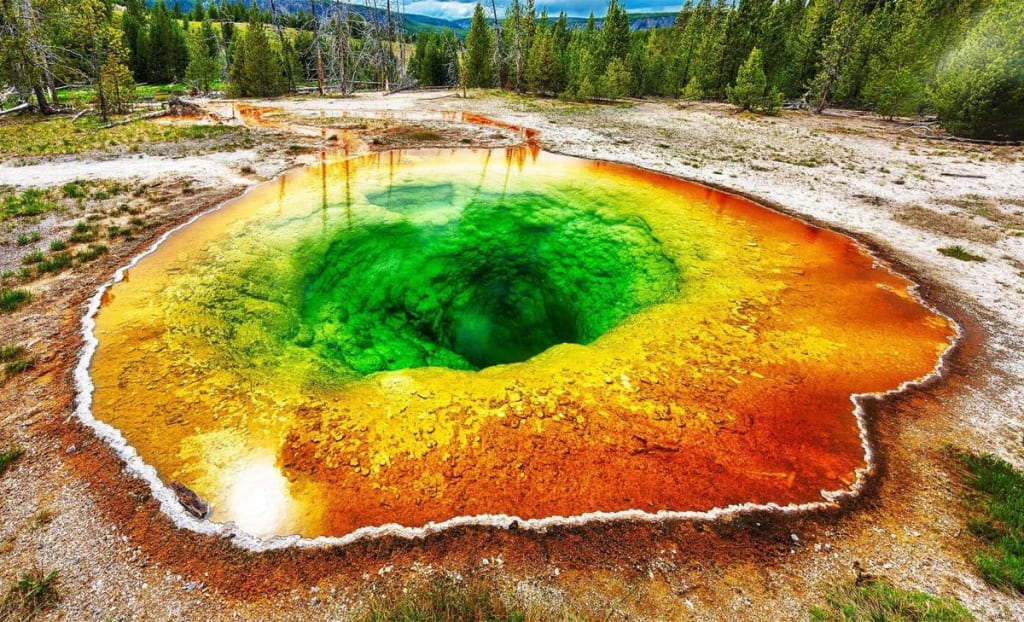
Recent discoveries from the steaming, otherworldly landscapes of Yellowstone National Park have scientists buzzing with excitement. Researchers have uncovered giant viruses hidden deep within the park’s scalding hot springs — and these ancient microorganisms may hold clues about the very origins of life on Earth.
Yellowstone is famous for its geysers and hot springs, which host some of the most extreme environments on the planet. These environments, characterized by high temperatures and acidic conditions, were long thought to be inhospitable to life. Yet, recent scientific investigations have revealed that life not only exists in these extreme settings — it thrives.
What’s truly astounding, however, is that these newly discovered viruses are not just ordinary viruses. They belong to a group known as “giant viruses,” named for their massive size and genetic complexity. Unlike typical viruses that rely almost entirely on host organisms for reproduction, giant viruses possess extensive genomes and show traits usually found in cellular organisms. Some scientists believe that these viruses may be relics from a primordial world and could even represent an evolutionary link between viruses and cellular life.
What Are Giant Viruses?
Giant viruses, first discovered in the early 2000s, challenge the traditional definition of viruses. While most viruses are microscopic and carry only a few genes, giant viruses are as large as some bacteria and can carry thousands of genes. They include well-known examples like Mimivirus and Pandoravirus, but the ones discovered in Yellowstone represent a new and distinct lineage.
These Yellowstone viruses were found in biofilms and microbial mats living in the park’s hot acidic springs. What sets them apart is not just their size, but the unique genetic material they contain. Some of the genes found in these viruses have never been seen before in any organism — viral, bacterial, or otherwise — and could date back billions of years.
A Glimpse Into the Distant Past
According to scientists, these viruses might have originated during the earliest days of life on Earth. The fact that they thrive in such extreme conditions suggests they may have evolved in a similarly harsh environment — possibly resembling the early Earth, which was dominated by volcanism, acidic oceans, and high radiation.
One of the leading researchers on the project, Dr. Karen Whitley, explained, “These viruses could be remnants of a time when life was just beginning to diversify. Their genetic makeup hints at a complex evolutionary history, possibly even before the rise of true cells. If that’s the case, they could help us understand how simple molecules evolved into the complex web of life we see today.”
This discovery reignites an ongoing debate in biology: Are viruses alive? While many scientists argue that viruses aren’t truly alive because they can't reproduce without a host, giant viruses blur that line. Their size, complexity, and autonomy hint at a past where the distinction between living and non-living was less clear.
The Tree of Life May Need Rethinking
The current tree of life — the classification system used to map the relationships between all living organisms — includes three major domains: Bacteria, Archaea, and Eukarya (which includes plants, animals, and fungi). However, the discovery of these ancient giant viruses may challenge this model.
Some evolutionary biologists argue that giant viruses deserve a branch of their own, perhaps as a "fourth domain" of life. The Yellowstone viruses, with their unique and ancient genetic sequences, provide compelling evidence for this theory. They could represent a form of life that evolved alongside the earliest ancestors of modern cells, rather than from them.
“If these viruses are truly that old,” said Dr. Whitley, “then they’re not just parasites that evolved later — they were there at the beginning. That means viruses may have played a critical role in the evolution of all life, possibly even helping to shape the first true cells.”
Implications for the Search for Extraterrestrial Life
These findings also have broader implications beyond Earth. If giant viruses can exist in the boiling, acidic pools of Yellowstone, they might also survive in similar environments on other planets or moons. Worlds like Mars or the icy moons of Jupiter and Saturn — which host subsurface oceans and geothermal activity — could harbor lifeforms similar to these extremophile viruses.
Conclusion
The discovery of giant viruses in Yellowstone’s hot springs offers a new window into the deep history of life on Earth. Far from being simple pathogens, these ancient giants may hold the secrets to life’s origin and evolution. As research continues, they could reshape our understanding of biology, evolution, and our place in the universe.
About the Creator
Adnan Rasheed
Author & Creator | Writing News , Science Fiction, and Worldwide Update| Digital Product Designer | Sharing life-changing strategies for success.
Keep reading
More stories from Adnan Rasheed and writers in Earth and other communities.
North America's 'Broken Heart': The Billion-Year-Old Scar from When the Continent Nearly Ripped Apart
North America's 'Broken Heart': The Billion-Year-Old Scar from When the Continent Nearly Ripped Apart Deep beneath the surface of North America lies a hidden geological wound—an ancient scar etched into the very foundation of the continent. Known as the Midcontinent Rift, this billion-year-old feature is a reminder of a dramatic episode in Earth’s history when North America almost split into two separate landmasses. Often called the "broken heart" of the continent, this rift tells a story of powerful tectonic forces, volcanic upheaval, and a near miss that could have rewritten the map of the world as we know it.
By Adnan Rasheed8 months ago in Earth
US Lawmakers Arrive in Copenhagen to Counter Trump’s Greenland Threats
In a high-stakes diplomatic maneuver, a delegation of U.S. lawmakers recently arrived in Copenhagen to discuss Greenland’s future, aiming to counteract the aggressive rhetoric and territorial ambitions expressed by former President Donald Trump. The visit comes amid rising concerns over Greenland’s strategic importance in the Arctic and the implications of any unilateral moves by the United States. For Denmark, Greenland’s autonomous territory, the presence of U.S. lawmakers underscores both Washington’s interest in Arctic security and the need to maintain strong transatlantic ties. For the United States, the visit signals a delicate recalibration of policy following Trump’s controversial proposals regarding Greenland, including his infamous attempt to buy the island outright during his presidency. Why Greenland Matters Geopolitically Greenland is more than a frozen expanse of ice; it is a geopolitical prize. Strategically located between North America and Europe, Greenland is key to: Arctic shipping routes that are becoming increasingly navigable due to melting ice Natural resources, including rare earth minerals, oil, and gas reserves Military and surveillance installations, notably the Thule Air Base, which is critical to U.S. missile warning systems and space surveillance The Arctic region is warming faster than any other part of the planet, making Greenland both a resource hub and a potential flashpoint for international competition. Trump’s proposals had alarmed Denmark and other NATO allies, raising questions about the United States’ long-term commitment to respecting international norms and allied sovereignty. The Lawmakers’ Mission The delegation, composed of senators and representatives from both political parties, is tasked with: Reassuring Denmark that the U.S. government respects Greenland’s autonomy Discussing security cooperation, particularly regarding Arctic defense and NATO commitments Exploring economic partnerships that benefit Greenland while maintaining regional stability Officials emphasize that this visit is not about reversing Trump’s statements retroactively, but about ensuring that future U.S. policy reflects diplomatic consensus rather than unilateral ambition. Denmark’s Response Denmark has maintained a firm stance on Greenland’s sovereignty, consistently stating that the island is not for sale. Danish leaders have welcomed the U.S. delegation as a positive step toward strengthening trust and clarifying intentions. Copenhagen also hopes to use the opportunity to reinforce cooperative approaches to Arctic security, particularly in light of growing Russian and Chinese interest in the region. For Denmark, maintaining strong relations with the United States — while safeguarding Greenland’s autonomy — is a balancing act that requires careful diplomacy. Greenland’s Perspective Greenlanders themselves are increasingly vocal in the debate over their future. Many support greater economic independence and political autonomy, and local leaders insist that Greenlanders should have the final say over any decisions affecting their land and resources. The U.S. delegation’s visit highlights the need to consult Greenlandic authorities directly, rather than negotiating solely with Denmark. This approach is seen as a step toward more inclusive, respectful diplomacy, which acknowledges Greenland’s status as more than just a strategic asset. The Role of NATO and Transatlantic Relations Trump’s proposals regarding Greenland strained transatlantic relations, raising concerns among NATO members about the reliability of U.S. commitments. The arrival of bipartisan lawmakers in Copenhagen aims to reaffirm NATO solidarity and demonstrate that U.S. policy is consistent with alliance obligations. By engaging Denmark directly, Congress seeks to prevent miscommunication and maintain stability in a region that is increasingly vital for global security. Analysts note that Greenland’s location provides the United States with a critical vantage point for Arctic monitoring and missile defense, making cooperative relations essential. Global Implications The Greenland issue has broader consequences for international geopolitics and Arctic governance. Key points include: Resource security: Greenland’s rare earth minerals are essential for electronics, renewable energy, and defense technologies, making control and access highly strategic. Climate change and navigation: Melting ice is opening new shipping lanes, which could shift global trade patterns and increase competition for influence. Power dynamics in the Arctic: Russia and China have also shown growing interest in the Arctic, prompting the United States and Europe to strengthen alliances and prevent unilateral exploitation. The lawmakers’ visit signals to the international community that the U.S. is committed to diplomatic solutions rather than transactional or coercive strategies. Challenges Ahead Despite the visit’s diplomatic intent, challenges remain: Political polarization in the U.S.: Future administrations may have different approaches to Greenland, raising uncertainty about long-term commitments. Geopolitical competition: Russia and China continue to advance their presence in the Arctic, complicating cooperative efforts. Local autonomy: Greenlandic voices must be prioritized, or any policy may face resistance at the local level. Successfully navigating these challenges will require transparent dialogue, careful planning, and sustained international cooperation. The Path Forward The visit of U.S. lawmakers to Copenhagen is a cautionary and corrective measure. It signals that while Greenland is strategically important, it is not a bargaining chip. Future cooperation will likely focus on: Strengthening Arctic security frameworks Promoting economic development for Greenlanders Maintaining stability in U.S.-European relations Ensuring that Greenlandic voices remain central to decision-making This proactive approach reflects a broader understanding that diplomacy, not unilateral action, is essential in regions of high strategic value. Final Thoughts Greenland has moved from the margins of global attention to the forefront of geopolitical strategy and climate concern. The arrival of U.S. lawmakers in Copenhagen underscores the importance of measured, inclusive diplomacy in the Arctic, contrasting sharply with the impulsive rhetoric that characterized Trump’s Greenland proposals. As nations navigate the Arctic’s emerging opportunities and challenges, Greenland’s sovereignty and the voices of its people will remain central to regional stability, global security, and international cooperation. The lawmakers’ visit represents a step toward rebuilding trust, reinforcing alliances, and charting a sustainable path forward for one of the planet’s most strategically vital territories.
By Muhammad Hassan4 days ago in Earth




Comments
There are no comments for this story
Be the first to respond and start the conversation.