
Weather and Climate Understanding the Forces That Shape Our Daily Lives
Weather and Climate

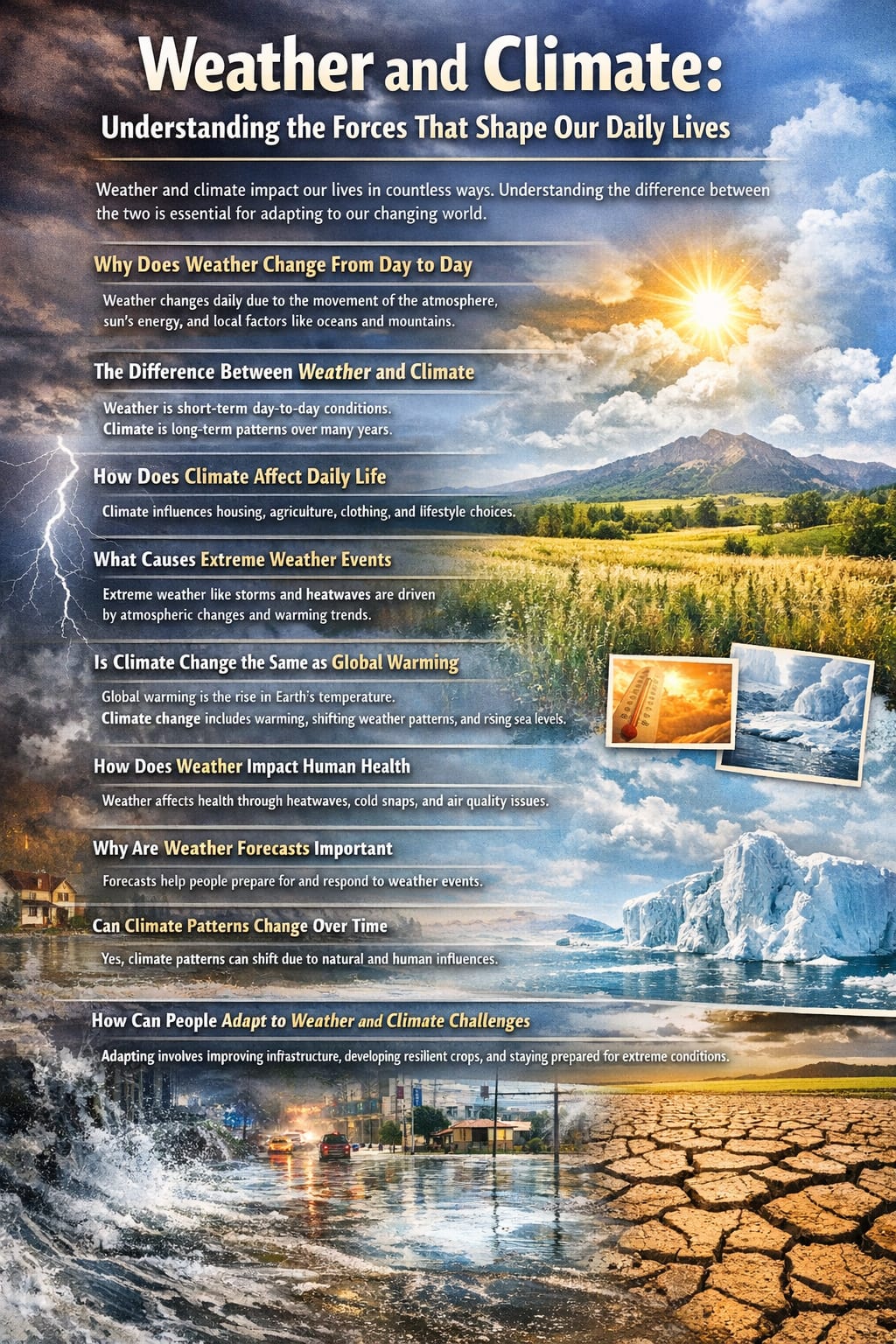
Weather and Climate Understanding the Forces That Shape Our Daily Lives
Weather and climate play a central role in how people live work travel and plan for the future. From daily temperature changes to long term climate patterns these natural systems influence agriculture health economies and even global stability. Understanding the difference between weather and climate and knowing how they affect human life has become more important than ever especially as the world experiences more extreme conditions.
Weather refers to the short term conditions of the atmosphere such as temperature rain wind humidity and storms. Climate on the other hand describes the average weather patterns in a specific region over long periods of time usually decades or longer. While weather can change within hours climate changes slowly but its effects are deeper and longer lasting.
WHY DOES WEATHER CHANGE FROM DAY TO DAY
Daily weather changes occur because the atmosphere is constantly moving and reacting to energy from the sun. As the sun heats the Earth unevenly warm air rises and cooler air moves in to replace it. This movement creates wind clouds and storms. Ocean currents air pressure systems and geographical features such as mountains and seas also influence how weather behaves in different regions. This is why one city may experience heavy rain while another nearby area remains dry.
WHAT IS THE REAL DIFFERENCE BETWEEN WEATHER AND CLIMATE
The main difference lies in time scale. Weather describes what is happening now or in the near future such as a hot day or a rainy week. Climate represents long term trends such as a region being generally hot dry cold or humid. For example a single cold winter does not mean the climate is changing but a consistent pattern of colder or warmer winters over many years indicates a climate trend.
HOW DOES CLIMATE AFFECT DAILY LIFE
Climate shapes how people build homes grow crops dress and even structure their daily routines. In hot climates buildings are designed to stay cool while in cold regions insulation and heating are essential. Farmers rely on climate patterns to decide what crops to grow and when to plant them. Tourism transportation and energy use are also closely linked to climate conditions.
WHAT CAUSES EXTREME WEATHER EVENTS
Extreme weather events such as heatwaves floods hurricanes and snowstorms are caused by a combination of natural atmospheric processes and changing climate patterns. Warmer air holds more moisture which can lead to heavier rainfall and flooding. Rising ocean temperatures can strengthen storms making them more destructive. Changes in jet streams and pressure systems can also cause weather to become more intense and unpredictable.
IS CLIMATE CHANGE THE SAME AS GLOBAL WARMING
Global warming refers specifically to the increase in average global temperatures mainly due to greenhouse gases in the atmosphere. Climate change is a broader term that includes global warming as well as changes in rainfall patterns sea levels ice melt and the frequency of extreme weather events. In other words global warming is one major part of climate change but climate change affects many aspects of the Earth system.
HOW DOES WEATHER IMPACT HUMAN HEALTH
Weather conditions have a direct effect on health. Extreme heat can cause heat exhaustion and heatstroke while extreme cold increases the risk of hypothermia. Poor air quality during hot stagnant conditions can worsen respiratory problems. Changes in rainfall and temperature can also affect the spread of diseases by influencing insects such as mosquitoes.
WHY ARE WEATHER FORECASTS IMPORTANT
Weather forecasts help individuals communities and governments prepare for upcoming conditions. Accurate forecasts allow farmers to protect crops travelers to plan safely and emergency services to respond to storms floods or heatwaves. Even simple daily forecasts help people decide what to wear how to commute and how to manage energy use.
CAN CLIMATE PATTERNS CHANGE OVER TIME
Yes climate patterns have always changed due to natural factors such as volcanic activity solar variation and shifts in Earth’s orbit. However in recent decades changes have been occurring faster than before. Many regions are experiencing hotter summers milder winters changing rainfall patterns and more frequent extreme events. These shifts affect ecosystems water supplies and food production.
HOW CAN PEOPLE ADAPT TO WEATHER AND CLIMATE CHALLENGES
Adaptation involves adjusting lifestyles infrastructure and planning to reduce harm from weather and climate impacts. This can include building flood defenses improving early warning systems developing heat resistant crops and designing cities that handle extreme temperatures better. On a personal level people can stay informed follow weather alerts and take precautions during extreme conditions.
Weather and climate are powerful forces that influence nearly every aspect of life on Earth. By understanding how they work and how they affect the world people can make better decisions protect themselves and adapt to a changing environment. As weather patterns become more complex and climate challenges grow awareness and preparedness remain key to a safer and more resilient future.
About the Creator
America today
Breaking news, political insights, real-time analysis, U.S. politics, global politics, elections, government policies, international relations, diplomacy, political debates, trending political stories, expert commentary, factual reporting,.
Keep reading
More stories from America today and writers in Earth and other communities.
Temperatures Tomorrow Thursday Drop to Minus 15 Below Zero
Temperatures Tomorrow Thursday Drop to Minus 15 Below Zero Extreme winter conditions are expected tomorrow, Thursday, as temperatures fall to minus 15 below zero. This level of cold is considered severe and can disrupt daily life, transportation, and personal safety. When temperatures reach this extreme, preparation becomes essential, not optional. Understanding the impact of such cold weather helps people make better decisions and stay safe.
By America today 3 days ago in Earth
China Sets a New Benchmark: 22.13-Kilometer Highway Tunnel Breaks World Record
China has once again captured global attention by pushing the limits of civil engineering with the completion of a 22.13-kilometer highway tunnel. This extraordinary feat has not only set a new world record but also highlights China’s relentless drive to expand and modernize its transportation network. The tunnel, which threads through challenging mountainous terrain, promises to revolutionize travel efficiency, boost regional connectivity, and further cement China’s reputation as a global leader in mega infrastructure projects.
By Muhammad Hassan3 days ago in Earth
Japan Flexible Packaging Market Size and Forecast 2025–2033
Japan Flexible Packaging Market Overview The Japan Flexible Packaging Market is undergoing a significant transformation as the country adapts to evolving consumer lifestyles, sustainability regulations, and technological advancements in material science. According to Renub Research, the market is expected to grow from US$ 6.56 billion in 2024 to US$ 9.15 billion by 2033, registering a CAGR of 3.77% during 2025–2033.
By Sushant. Renub Researcha day ago in Earth


Comments (1)
Snow and Ice here. Birds are confused. BLESSINGS to them.