
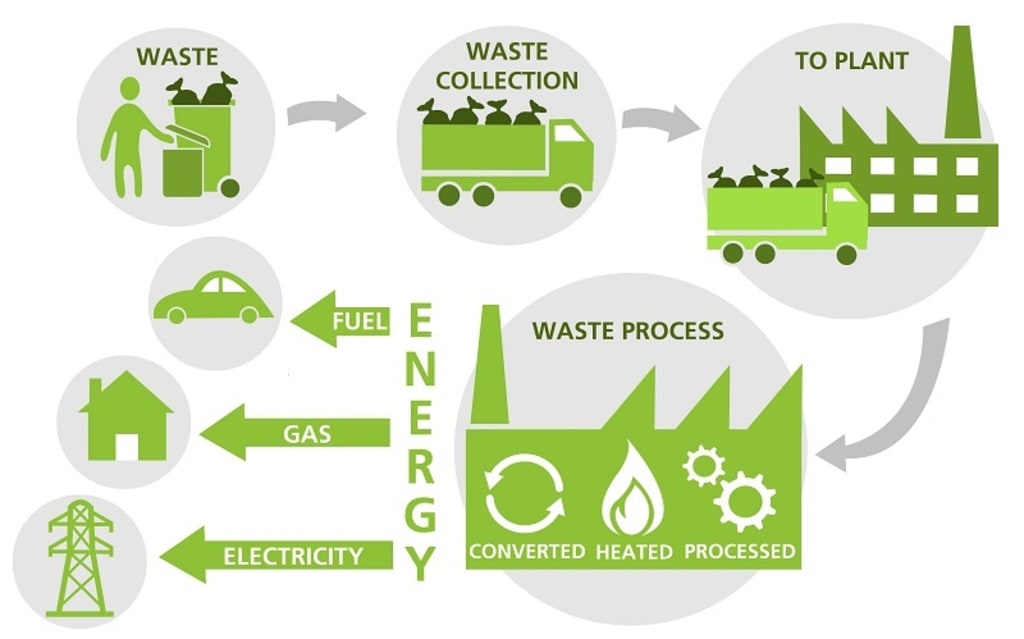
The development of technology that convert trash into energy has become a significant part of waste management methods. These technologies offer a way to remove non-recyclable waste materials from landfills and turn them into useful energy resources. Incineration and anaerobic digestion are two methods that are frequently used to convert waste into energy. Both of these methods have their own distinct processes as well as advantages.
The controlled combustion of waste materials at high temperatures is what is involved in the incineration process. The heat that is produced by this procedure can be captured and used to generate electricity, or it can be utilised straight for heating purposes. The generation of energy from materials that would otherwise be discarded as garbage is one of the many benefits that may be gained through the process of incineration, in addition to the reduction in the overall volume of waste. In addition, contemporary incineration plants are outfitted with cutting-edge emission control technology, which contribute to the reduction of air pollutants.
On the other hand, anaerobic digestion is a biological process that occurs when oxygen is not present and it breaks down organic matter. The process involves the breakdown of organic waste by microbes, which results in the production of biogas as a byproduct. Because it is predominately made up of methane and carbon dioxide, biogas has the potential to be utilised not only as a source of renewable energy for the creation of electricity but also as a fuel for heating and transportation. Anaerobic digestion is a process that, in addition to producing energy, helps with the management of organic waste by turning it into a resource that can be put to productive use. This waste might include food scraps and residues from agricultural production.
The implementation of waste-to-energy systems provides a number of benefits, both environmentally and economically. In the first place, these technologies assist in lessening the dependency on fossil fuels by making use of trash as a source of renewable energy. This helps to reduce emissions of greenhouse gases, which in turn contributes to the mitigation of climate change. Second, facilities that convert trash into energy can greatly cut the amount of garbage that is taken to landfills, which in turn can lengthen the amount of time that landfills are used for and lessen the requirement for new landfill locations. In addition, the production of electricity or heat from waste can be used as a substitute for the usage of traditional sources of energy, which can result in savings of energy as well as potential financial benefits.
Nevertheless, it is of the utmost importance to make certain that waste-to-energy technologies are appropriately regulated and managed in order to minimise the potential adverse effects on both the environment and human health. If proper control measures are not put into place, the emissions that result from the incineration of garbage, including dioxins, particulate matter, and heavy metals, can have a negative impact on both the quality of the air we breathe and the health of the population. It is absolutely necessary to have stringent emission limits, monitoring systems, and pollution control technologies in order to reduce these dangers, safeguard the environment, and look out for public health.
Likewise, facilities that use anaerobic digestion are required to follow stringent rules in order to prevent the release of dangerous compounds into the environment. To guarantee that the digestion process is carried out using only the appropriate types of organic waste, it is required to properly sort and process the waste first. In addition, the management of digestate, which is the remaining material after digestion, is essential to the prevention of potential water pollution.
Participation and education on the part of the general public are also absolutely necessary for the effective application of waste-to-energy technology. It is vital to educate the public on the benefits of these technologies, dispel any misconceptions or concerns, and involve stakeholders in the process of decision making. It is possible to increase acceptance and support for waste-to-energy initiatives through transparent communication and community involvement.
In conclusion, waste-to-energy technologies, which include incineration and anaerobic digestion, offer valuable solutions for waste management by turning non-recyclable waste materials into energy resources. These technologies include waste-to-energy technologies such as incineration. These technologies assist lower the total amount of waste that is delivered to landfills, recover energy from waste, and contribute to the development of sustainable practises. On the other hand, it is absolutely necessary to establish appropriate rules, monitoring systems, and pollution controls in order to lessen the likelihood of adverse effects on both the environment and human health. It is possible for communities to make progress towards a waste management system that is more environmentally friendly and resource-effective if they use waste-to-energy technologies in a responsible manner.
About the Creator
IN Seyha
I am the one who love to learn news things and love reading. I want to share what I have read with you too.
When Two Young Stars Collided: A Cosmic Catastrophe from 500 Years Ago
About 500 years ago, a dramatic event unfolded in our galaxy when two young stars violently collided and destroyed each other. Although it happened centuries ago, astronomers have only recently been able to piece together the evidence of this cosmic catastrophe. The discovery has provided scientists with rare insights into how stars interact, evolve, and sometimes meet explosive ends.
By Irshad Abbasi 3 days ago in Earth



Comments
There are no comments for this story
Be the first to respond and start the conversation.