

Villas and castles are both types of large, impressive residences that have been popular throughout history. While they share many similarities, they also have distinct differences in terms of their architecture, function, and historical significance.
Villas are typically large, luxurious houses that are built for the enjoyment of the wealthy. They are often set in beautiful, scenic locations, such as by the sea, in the countryside, or in the mountains. Villas are designed to provide a luxurious, comfortable lifestyle, with plenty of space for entertaining guests and enjoying the outdoors.
The architecture of villas varies widely, depending on their location and the era in which they were built. Many villas are designed in a Mediterranean style, with white stucco walls, red tile roofs, and plenty of outdoor living spaces, such as courtyards and terraces. Others are built in a more classical style, with columns, arches, and intricate ornamentation.
One of the most famous villas in the world is the Villa d'Este in Tivoli, Italy. Built in the 16th century, this villa is famous for its elaborate gardens, which feature hundreds of fountains, cascades, and pools. Another notable villa is the Villa Medici in Florence, which was built in the 16th century for the powerful Medici family. Today, it serves as the home of the French Academy in Rome.
Castles, on the other hand, are typically much larger and more imposing than villas. They are fortified structures that were built for defense, typically in a strategic location such as a hilltop or near a river. Castles were designed to protect their occupants from enemy attacks, with thick walls, towers, and other defensive features.
The architecture of castles also varies widely, depending on the time period and location in which they were built. Many medieval castles are characterized by their heavy stone walls, narrow windows, and small rooms. Later castles, built during the Renaissance and Baroque periods, often featured more elaborate ornamentation and decorative details.
One of the most famous castles in the world is the Château de Versailles in France. Built in the 17th century, this enormous palace was the residence of the French monarchs until the French Revolution. Another notable castle is the Tower of London, which was built in the 11th century and served as a royal palace, prison, and fortress.
Despite their differences, villas and castles share some common features. Both are often located in beautiful, scenic locations and were designed to impress and awe their visitors. They both often feature luxurious living spaces, such as grand reception rooms and lavish bedrooms.
However, there are also some important differences between villas and castles. Villas are typically designed for comfort and leisure, while castles are designed for defense and security. Castles are also typically much larger and more imposing than villas, with more elaborate defensive features and a greater sense of grandeur.
In terms of their historical significance, villas and castles played very different roles in society. Villas were typically owned by the wealthy and served as symbols of their wealth and power. They were often used for entertaining guests and enjoying a life of luxury. Castles, on the other hand, played a much more important role in the defense of the realm. They were often built by rulers to protect their territories from enemy attacks and to exert their authority over their subjects.
In conclusion, villas and castles are both impressive structures that have played important roles throughout history. While they share many similarities, they also have distinct differences in terms of their architecture, function, and historical significance. Villas are typically luxurious houses designed for comfort and leisure, while castles are fortified structures built for defense and security. Despite their differences, both types
About the Creator
Keep reading
More stories from writers in Earth and other communities.
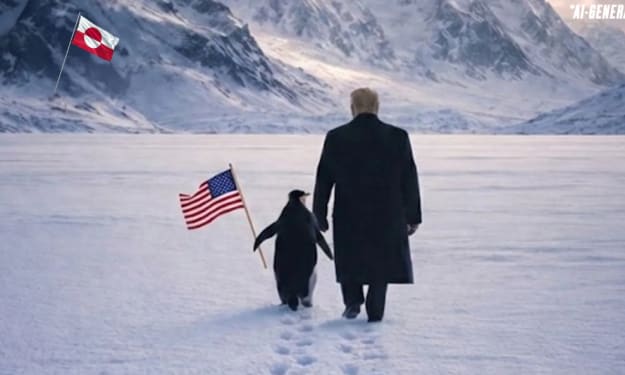
Trump, 79, Revives Greenland Fantasy With Absurd AI Post
In early 2026, a seemingly strange social media post reignited a discussion that many had hoped was behind us: Donald Trump, now 79, posted an AI-generated image referencing Greenland. The image went viral, sparking laughter, criticism, and a flurry of international commentary. While the post appeared absurd on the surface, it also highlighted deeper issues about political messaging, digital media, and the ongoing fascination some U.S. leaders have with Greenland. The AI-generated post showed Trump marching toward Greenland, holding an American flag, accompanied by a penguin — an animal that, scientifically speaking, has no connection to Greenland. The bizarre imagery immediately caught the public’s attention. Many observers viewed the penguin as a humorous metaphor for the mismatch between the symbolic post and geopolitical reality. Critics questioned whether the post was a serious attempt at commentary, an intentional meme, or a sign of how AI is being used in modern political communication. The Social Media Storm The post, captioned “Embrace the penguin”, appeared on the official White House X account. Within hours, it became the subject of viral memes, news reports, and expert analyses. Internet users were quick to point out the geographic error — penguins live in the Southern Hemisphere, nowhere near Greenland. While the comedic aspect dominated social media, analysts noted that the post reflected a long-standing pattern of Trump using bold or unconventional messaging to capture public attention. The use of AI-generated imagery represents a new layer in this strategy, blending political content with internet culture. Many critics argued that this approach, while attention-grabbing, risks confusing the public and undermining the credibility of official communication. Trump and Greenland: A Longstanding Obsession Trump’s fascination with Greenland is not new. In 2019, he proposed that the United States could purchase Greenland from Denmark, an idea that was widely ridiculed and rejected by Danish leaders. Despite the public backlash, the notion persisted in Trump’s rhetoric and continued to appear in informal discussions about U.S. strategic priorities. Greenland holds significant geopolitical value: it is rich in minerals, occupies a strategic Arctic location, and is home to vast natural resources. For Trump, the island has long symbolized a geopolitical prize — a potential point of influence for the U.S. in the Arctic region. The AI post, absurd as it was, reignited global attention to these strategic questions, reminding the world that some leaders still see Greenland as a focal point of American ambition. AI and Politics: A Strange Combination The viral AI image is part of a broader trend of using artificial intelligence to create content for political messaging. AI allows leaders and communicators to produce highly visual, shareable content at scale. However, it also introduces challenges: Accuracy: AI can generate visually striking content that may be factually incorrect, as with the penguin in Greenland. Interpretation: Viewers may misinterpret AI-generated imagery, assuming it represents reality or policy intent. Credibility: Official use of memes and AI art can blur the line between serious communication and entertainment, potentially undermining authority. In Trump’s case, the AI post highlighted both the power and pitfalls of digital media in politics. It reached millions of people worldwide, but the absurdity of the imagery also drew ridicule and raised questions about the seriousness of the message. The International Response European leaders and diplomats responded cautiously, recognizing the post as part humorous, part symbolic. Danish officials, who oversee Greenland’s defense and foreign policy, reiterated that the island is not for sale. Some analysts suggested that while Trump’s AI post is unlikely to affect formal negotiations, it does shape public perception and keeps Greenland in the spotlight as a topic of U.S. interest. The global reaction underscores the influence of social media on diplomacy. In an era where viral content spreads instantly, even symbolic or absurd posts can have real-world implications, influencing discussions, media coverage, and public opinion. Why the Penguins Matter While the image of Trump marching alongside a penguin seems nonsensical, many commentators see it as a metaphor for the disconnect between digital imagery and practical geopolitics. Penguins, being out of place in Greenland, symbolize the absurdity of claiming influence over a sovereign region through symbolic gestures. The penguin also illustrates how modern politics blends serious issues with entertainment and internet culture. Leaders are increasingly aware of the viral potential of online content, and AI-generated visuals provide a new way to capture attention — for better or worse. The Role of AI in Political Communication Trump’s AI post demonstrates both the potential and limits of artificial intelligence in politics: Engagement: AI-generated visuals can capture attention and create shareable moments. Creativity: AI allows for imaginative ways to communicate ideas, blending humor and symbolism. Risk: Misrepresentation or absurdity can undermine credibility and invite international criticism. As AI tools become more common in politics, officials will need to carefully weigh creativity against clarity, ensuring that symbolic content does not overshadow substantive policy discussions. What This Means for the Future The Greenland AI post is more than a viral meme; it reflects trends in modern political messaging: Leaders increasingly use AI and digital media to communicate directly with the public. Absurd or humorous content can attract attention, but may blur the line between entertainment and diplomacy. Symbolic posts can reignite interest in longstanding geopolitical debates, even when they seem playful. For observers, the post offers a lens into how social media, AI, and politics intersect — a mix of strategy, humor, and unintended consequences that will likely shape political communication for years to come. Final Thoughts Donald Trump’s AI-generated Greenland post is absurd, humorous, and viral — but it also underscores the enduring fascination some political figures have with strategic regions like Greenland. Beyond the comedy, it illustrates the power of AI in shaping political narratives, the challenges of modern digital diplomacy, and the importance of understanding how viral content influences public perception. Whether one laughs at the penguin or ponders the implications, the post reminds the world that politics today is as much about perception and digital storytelling as it is about policy. In Trump’s case, a single AI-generated image can revive decades-old geopolitical fantasies, spark global discussion, and turn a playful meme into a moment of serious reflection.
By Muhammad Hassan4 days ago in Earth
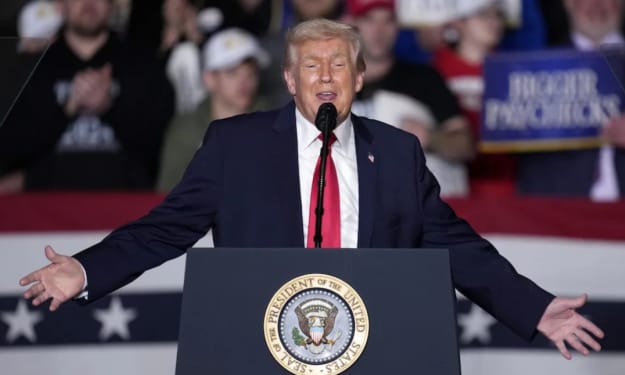
Dollar Falls to Four-Year Low as Trump Insists US Currency Is ‘Doing Great’
The US dollar has fallen to its lowest level in four years, rattling global currency markets and reigniting debate over the strength of the world’s dominant reserve currency. The decline comes amid mounting economic uncertainty, shifting interest rate expectations, and renewed political rhetoric—most notably from former President Donald Trump, who has insisted that the US currency is “doing great.”
By Aarif Lashariabout 5 hours ago in Earth
Whiskey At Dusk
Guess the whiskey was more important to you in the end, wasn’t it? It was more than the well-being of your friends; more vital than showing up to the places you promised you would and could come to; more critical of a matter than fulfilling your damn responsibilities and getting the press off your back.
By Snarky Lisa4 days ago in Humans


Comments
There are no comments for this story
Be the first to respond and start the conversation.