
Dollar Falls to Four-Year Low as Trump Insists US Currency Is ‘Doing Great’
Markets Signal Concern While Political Messaging Paints a Different Picture
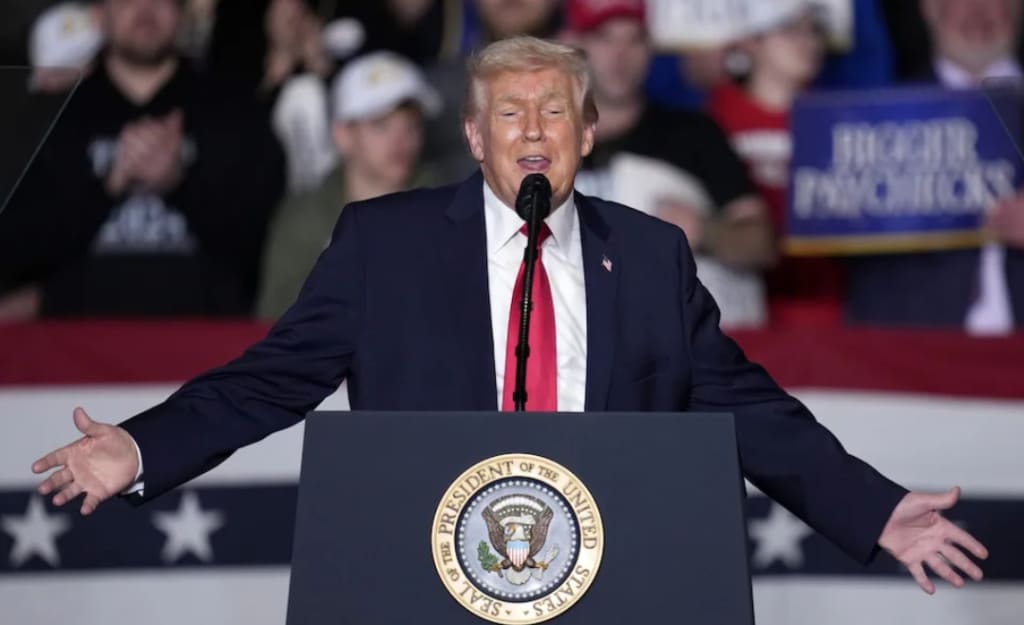
The US dollar has fallen to its lowest level in four years, rattling global currency markets and reigniting debate over the strength of the world’s dominant reserve currency. The decline comes amid mounting economic uncertainty, shifting interest rate expectations, and renewed political rhetoric—most notably from former President Donald Trump, who has insisted that the US currency is “doing great.”
The contrast between market behavior and political messaging has highlighted growing unease among investors, raising questions about the dollar’s near-term trajectory and its long-term global standing.
A Four-Year Low: What the Numbers Show
The dollar’s recent slide has pushed it to levels not seen since early 2021, with broad-based weakness against major currencies such as the euro, yen, and pound. Currency indexes tracking the dollar’s performance against a basket of peers show sustained downward pressure rather than a brief correction.
Analysts attribute the fall to a combination of factors, including:
Expectations of interest rate cuts
Slowing US economic indicators
Rising fiscal deficits
Stronger performance in rival currencies
While currency markets are inherently volatile, the duration and depth of the dollar’s decline suggest deeper structural concerns rather than short-term speculation.
Trump’s Optimism vs Market Reality
Despite the dollar’s slide, Donald Trump has dismissed concerns, asserting that the US currency remains strong and that markets are misreading the situation. His remarks echo past statements made during his presidency, when he often framed market movements through a political lens.
Supporters argue that a weaker dollar can benefit US exports by making American goods more competitive abroad. However, economists caution that sharp or prolonged depreciation can undermine confidence, increase import costs, and fuel inflationary pressures.
The disconnect between political optimism and market behavior has become a focal point for analysts assessing whether rhetoric can influence economic perception—or whether markets ultimately tell the truer story.
Interest Rates and Federal Reserve Expectations
One of the primary drivers behind the dollar’s decline is shifting expectations around US interest rates. Investors increasingly believe that the Federal Reserve may pivot toward easing monetary policy as economic growth shows signs of cooling.
Lower interest rates typically reduce the appeal of holding a currency, as returns on dollar-denominated assets decline relative to alternatives. In contrast, central banks in other regions have signaled a more cautious or delayed approach to rate cuts, boosting their currencies at the dollar’s expense.
Market pricing suggests that rate expectations, rather than political statements, are currently the dominant force shaping currency trends.
Fiscal Deficits and Debt Concerns
Beyond monetary policy, long-term concerns about US fiscal health have weighed on the dollar. Persistent budget deficits, rising national debt, and political gridlock over spending and taxation have raised questions about sustainability.
While the US has historically benefited from its status as a safe haven, some investors are beginning to reassess how much risk they are willing to tolerate. Even modest shifts in sentiment can have outsized effects in currency markets.
Economists warn that repeated confrontations over debt ceilings and government shutdowns erode confidence, particularly when paired with a weakening currency.
Global Context: A Changing Currency Landscape
The dollar’s decline must also be viewed in a global context. Other economies have shown signs of resilience, with improving trade balances and stabilizing inflation. As a result, currencies that were previously under pressure have staged recoveries.
At the same time, some countries are actively seeking to reduce reliance on the dollar in trade and reserves. While the dollar remains dominant, diversification trends—however gradual—add to downward pressure during periods of US-specific weakness.
Gold and alternative assets have also benefited from dollar softness, signaling a broader shift in risk management strategies.
Impact on Markets and Consumers
A weaker dollar has mixed implications. For US exporters and multinational companies, it can boost overseas revenues when converted back into dollars. For consumers, however, the effects can be less positive.
Imports become more expensive, potentially driving up prices for fuel, electronics, and consumer goods. If inflation resurfaces as a result, the Federal Reserve may face renewed pressure to adjust policy—creating a feedback loop that further unsettles markets.
Global investors, meanwhile, are recalibrating portfolios to hedge against currency risk, contributing to increased volatility.
Is the Dollar Really “Doing Great”?
The question at the heart of the debate is whether the dollar’s weakness represents a temporary adjustment or a warning sign. Supporters of Trump’s view argue that the US economy remains resilient, innovation-driven, and fundamentally strong.
Critics counter that currency markets reflect collective judgment across millions of transactions, making them harder to dismiss. They argue that confidence cannot be declared—it must be earned through policy consistency and economic performance.
Most analysts take a middle view: the dollar is not in crisis, but its current trajectory reflects legitimate concerns that policymakers cannot ignore.
What Comes Next for the Dollar?
Looking ahead, the dollar’s path will depend on several key factors:
Federal Reserve policy decisions
Inflation and employment data
Fiscal discipline and political stability
Global economic performance
Any signs of stronger growth or delayed rate cuts could stabilize the currency. Conversely, renewed political uncertainty or weaker data may extend the decline.
Markets will continue to watch not just what leaders say, but what economic indicators reveal.
Conclusion: Markets Speak Louder Than Words
The dollar’s fall to a four-year low underscores the growing gap between political messaging and market sentiment. While Trump insists the US currency is “doing great,” investors appear less convinced, responding instead to data, policy expectations, and global trends.
Whether the dollar rebounds or continues to slide, its current weakness serves as a reminder that confidence in a currency is built over time—and tested during moments of uncertainty. For now, the markets are delivering a message that words alone cannot override.
About the Creator
Keep reading
More stories from Aarif Lashari and writers in Earth and other communities.
‘A Militia That Kills’: Uproar in Italy Over ICE Security Role at the Winter Olympics
Italy’s preparations for the upcoming Winter Olympics were meant to showcase unity, excellence, and international cooperation. Instead, they have ignited a heated controversy. The source of the uproar is the reported involvement of ICE, a private security entity described by critics as “a militia that kills,” in providing security-related services for the Olympic Games.
By Aarif Lashariabout 10 hours ago in Earth
How AI Is Becoming the Next Geopolitical Frontier
Why This Matters Right Now The world is changing faster than ever. Wars, trade, jobs, and even daily life are being reshaped—not only by soldiers and weapons, but by artificial intelligence (AI). Right now, countries are racing to control AI. The reason is simple: whoever leads in AI will likely lead in power, money, and influence. This race is already affecting global politics—and it is quietly touching the lives of ordinary people everywhere. AI is no longer just a technology. It is becoming the next geopolitical frontier.
By LegacyWords7 days ago in Earth
Philippines Orphan Drugs Market: Rare Disease Treatment, Access & Healthcare Policy
Philippines Orphan Drugs Market Overview The Philippines orphan drugs market is developing gradually as the country strengthens its healthcare infrastructure and improves access to treatment for rare diseases. The Philippines orphan drugs market size reached USD 1.07 Billion in 2024. Looking forward, the market is expected to reach USD 2.36 Billion by 2033, exhibiting a growth rate (CAGR) of 8.26% during 2025-2033. Although relatively small in absolute size, the market plays an important role in addressing unmet medical needs and supporting long-term healthcare sustainability.
By Manisha Dixit6 days ago in Earth



Comments
There are no comments for this story
Be the first to respond and start the conversation.