
Vanishing Freshwater: A Hidden Driver of Sea Level Rise
How Soil Moisture Loss and Groundwater Depletion Are Tilting Earth’s Balance

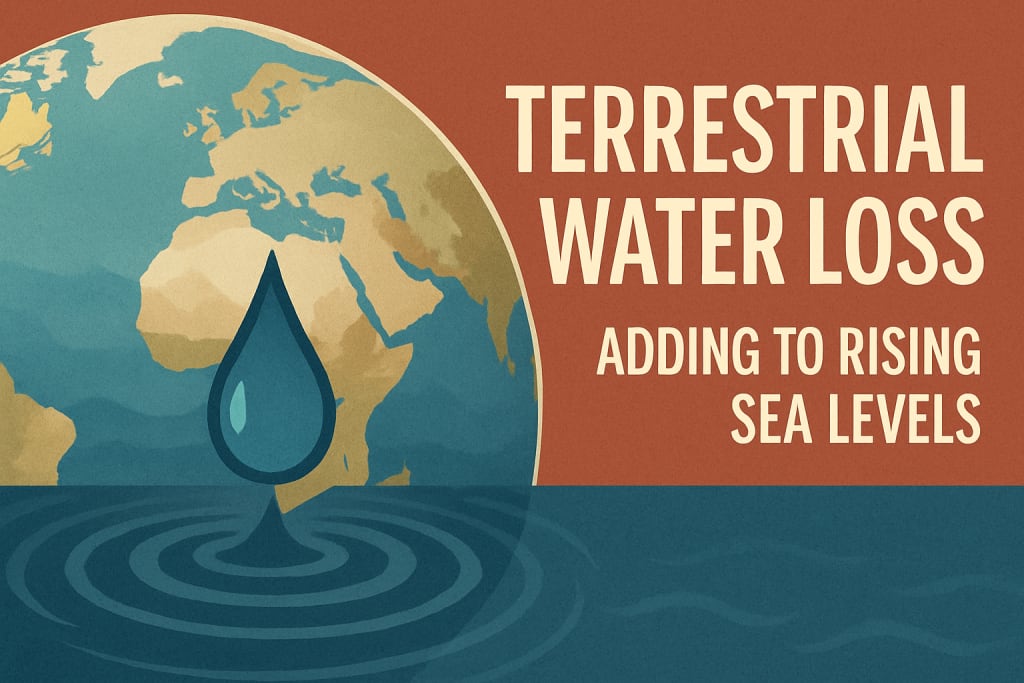
Earth's landmasses are losing a lot more water than they used to, and this is happening not just because ice sheets are melting. Terrestrial water storage, which includes water in underground aquifers, lakes, rivers and the tiny pore spaces within soil, declined by trillions of metric tons in the early 21st century, researchers report in the March 28 Science.
Rising temperatures on land and in the oceans are to blame for this dramatic reduction in freshwater reserves, which is linked to an increase in the prevalence of drought around the world. According to geophysicist Ki-Weon Seo of Seoul National University and colleagues, this trend is also unlikely to change in the near future given the planet's anticipated warming. The team used several independent methods to assess terrestrial water loss from 2000 to 2020. Satellite assessments of soil moisture, measurements of global sea level rise, and observations of variations in Earth's rotation due to changes in mass distribution around the planet were among these methods, which each covered slightly different time spans during this period. Earth's pole has drifted approximately 45 centimeters as water has moved from land to sea. Altogether, the researchers say, the data agree on a fundamental point: Water storage on land has dropped off sharply in the early 21st century. From 2005 to 2015, the period during which these assessments overlap, terrestrial water storage decreased by nearly 1.3 trillion metric tons. The team discovered that this amounts to a 3.5 millimeter rise in global sea level. The team claims that soil moisture loss was particularly severe and troubling due to its connection to drought. Satellite data show that water stored in soils dropped especially steeply from 2000 to 2002, shrinking by about 1.6 trillion tons. In the end, that water was a contributing factor in raising sea levels by nearly two millimeters in each of those years. In contrast, Greenland’s melting ice sheets contributed about 900 billion tons, or about 0.8 millimeters a year — less than half as much — to sea level rise from 2002 to 2006. In the past, it was thought that Greenland contributed the most annually to rising sea levels. During the time period covered by these data, the decrease in soil moisture continued, albeit at a slower rate. In addition, soils lost approximately 1 trillion tons of water between 2003 and 2016. The primary culprits behind the water loss are rising temperatures, in both the atmosphere and the ocean. The increase in Earth’s average temperature over the last few decades has changed precipitation patterns while intensifying evaporation and transpiration — the process by which water vapor is released into the atmosphere from plants.
More water vapor from evaporation and transpiration can cause brief spells of intense rainfall, but most of that water doesn't end up in the soil and flows as runoff overland to the ocean. And, as Earth’s temperatures rise, “the areas of the globe that are drying due to higher temperatures and changes in precipitation are getting larger than the areas that are getting wetter” from any increases in precipitation, says environmental scientist Katharine Jacobs of the University of Arizona in Tucson.
Meanwhile, there’s also increasing demand for groundwater, Jacobs adds. “It is fair to say that most people who work on water issues are unaware of the connections between groundwater pumping and sea level rise, and if they do know that there is a connection they probably do not understand that the changes are measurable and that they are affecting the tilting of the Earth’s axis as well.”
According to her, making use of these various data sets is crucial because, without them, "the majority of researchers might miss the connections." The overall picture, according to the researchers, is that since the turn of the century, the total amount of water in Earth's soils has been decreasing. And given future projections for the planet’s temperatures, that water isn’t likely to replenish.
It’s a worrisome finding, says climate modeler Benjamin Cook of the NASA Goddard Institute for Space Studies in New York City. "Water is needed by everything. If you don’t have enough, you’re in trouble.”
WRITTED BY ME
About the Creator
Mahafuj Alam
🗞️ Mahafuj Alam | News Curator & Independent Media Voice
delivering news quickly, accurately, and bravely, including headline breaking stories and untold local stories. Stay informed. Keep your power.
Keep reading
More stories from Mahafuj Alam and writers in Earth and other communities.
Edge of No Return: Earth's Climate Tipping Points
The climate keeps changing, despite the Trump administration's attempt to silence the entire phenomenon. If policies continue on their current course, the world is on track to trigger several climate "tipping points," according to a new study released on April 23. These points of no return are specific moments when the planet has warmed so much that certain effects become irreversible.
By Mahafuj Alam9 months ago in Earth
Ukrainian President Zelenskyy Invites Putin to Kyiv for Talks
Ukrainian President Volodymyr Zelenskyy has publicly invited Russian President Vladimir Putin to Kyiv for direct talks, marking one of the most striking diplomatic gestures since the outbreak of the war between Russia and Ukraine. The invitation, unprecedented in both symbolism and political risk, immediately drew global attention and sparked intense debate among diplomats, analysts, and citizens alike.
By Aarif Lashari2 days ago in Earth
Off the Book
It ended like every other stupid idea. Badly, and alone. I’m researching digital confession ethics, he said. A tech ethicist. He gestured at floating data I couldn’t see then pulled out a physical notebook. Actual paper, fountain pen. He held it up like he was showing me scripture.
By Nicky Frankly3 days ago in Fiction


Comments
There are no comments for this story
Be the first to respond and start the conversation.