
Urbanization and megacities
Urbanization and the Rise of Megacities

Urbanization refers to the increasing population concentration in urban areas, leading to the expansion of cities. Over the past few centuries, this process has accelerated due to various factors, including technological advancements, improved living standards, and the movement of people from rural areas seeking better job opportunities and improved infrastructure. A significant result of urbanization is the emergence of megacities – cities with populations exceeding 10 million. These megacities represent a new global phenomenon and raise both opportunities and challenges for societies around the world.
The Drivers of Urbanization
Several factors contribute to urbanization, with economic opportunities being one of the main drivers. In developing countries, industrialization, which typically occurs in cities, encourages people to move from rural areas where agriculture may not be as financially rewarding. Cities, with their developed infrastructures, better healthcare systems, and education opportunities, attract migrants searching for a higher quality of life. As a result, the flow of people from rural to urban areas has increased significantly.
Technological advancements also play a significant role. Innovations in transportation, communication, and agriculture have allowed for increased connectivity between rural and urban areas, making it easier for people to live in cities. These advancements not only improve living conditions but also enable the growth of industries that are based in urban environments, reinforcing the trend toward urbanization.Government policies in many countries have also facilitated urban growth by investing in infrastructure, healthcare, and education in urban areas. With the promise of better living conditions and economic prospects, cities have become the focal point for economic and social development.
The Emergence of Megacities
The rapid urbanization process has given rise to megacities, many of which are located in Asia, Africa, and Latin America. Cities such as Tokyo, New York, Mexico City, and Mumbai are just a few examples of megacities that have grown significantly over the past few decades. These cities serve as major hubs for finance, culture, technology, and politics, and their influence reaches far beyond national borders.
One of the most defining characteristics of megacities is their sheer size and the concentration of people living within them. These cities often experience rapid growth due to both natural population increase (more births than deaths) and migration from rural areas. For example, the population of Delhi, India, has surged from around 9 million in 1990 to over 30 million today, making it one of the largest cities globally.
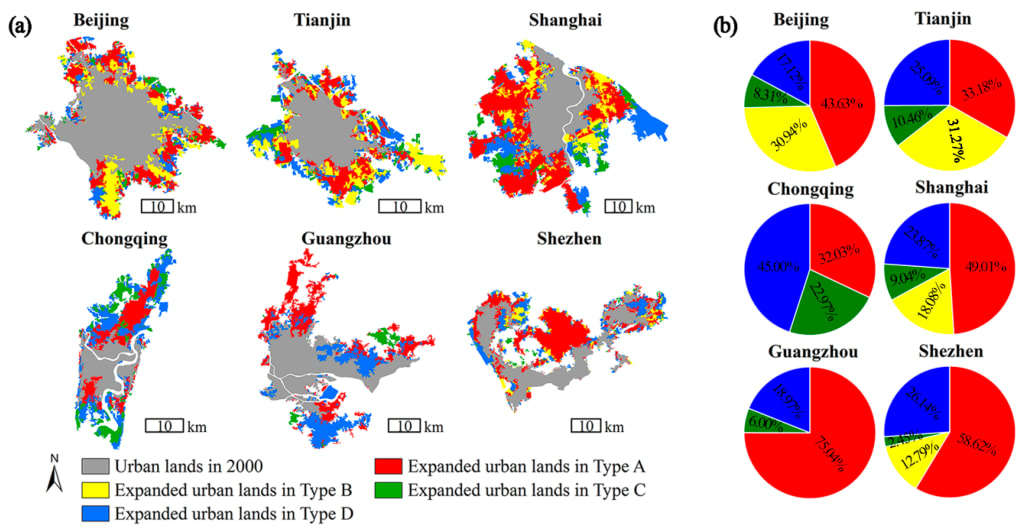
The rapid growth of megacities also leads to the expansion of urban boundaries, with new districts, towns, and even entire regions becoming urbanized. However, this rapid expansion often leads to unplanned growth, where informal settlements and slums are developed on the fringes of the city, lacking adequate infrastructure and basic services like water and sanitation.
Challenges of Megacities
The rise of megacities comes with numerous challenges. One of the most pressing issues is urban sprawl, which refers to the uncontrolled spread of urban development into surrounding rural areas. This leads to the destruction of natural habitats, loss of agricultural land, and increased pressure on existing resources. The expansion of urban areas also means that infrastructure, such as transportation networks, utilities, and public services, struggles to keep up with the growing demand.
Traffic congestion is another issue faced by megacities. With millions of people living in a confined area, the transportation system becomes overwhelmed, leading to long commutes, pollution, and inefficiency. For example, cities like São Paulo and Jakarta are notorious for their traffic jams, which not only affect the daily lives of residents but also contribute to increased carbon emissions.
Furthermore, inequality and poverty are common issues in megacities. While some areas of these cities thrive with luxurious housing and modern infrastructure, other areas remain underdeveloped, with large numbers of residents living in slums and informal settlements. These disparities lead to social tensions and inequality, making it difficult to ensure that all citizens benefit equally from urbanization.
Another significant concern is environmental sustainability. Megacities are often major contributors to pollution, including air and water contamination, and have a high carbon footprint due to the concentration of industrial activities and energy consumption. Ensuring that these cities are sustainable in the long term is a major challenge for city planners, requiring innovations in green technologies and energy-efficient infrastructure.
Opportunities and the Future of Megacities
Despite these challenges, megacities also offer several opportunities. They serve as engines of economic growth, contributing significantly to global GDP. By housing large numbers of people and businesses, megacities create opportunities for innovation, technological advancement, and cultural exchange. In many ways, they are testing grounds for the future of urban living, with cities such as Singapore and Copenhagen implementing smart city technologies that aim to improve sustainability, efficiency, and quality of life.
As the world continues to urbanize, it is likely that the number of megacities will increase. According to projections, nearly 70% of the global population will live in urban areas by 2050, and the number of megacities could rise to more than 40. This will require innovative solutions in urban planning, transportation, housing, and social services to ensure that megacities remain livable, equitable, and sustainable.
The future of megacities will depend on the ability of governments, urban planners, and citizens to work together to address the challenges they face. By leveraging technology, improving infrastructure, and promoting inclusive growth, it may be possible to create urban environments that offer a high quality of life for all residents while minimizing their negative impact on the planet.
IN THE END
Urbanization and the rise of megacities represent one of the most significant demographic shifts of the 21st century. As more people move to cities, the challenges posed by rapid urban growth will require thoughtful and innovative solutions. While megacities offer opportunities for economic growth, cultural exchange, and technological advancement, they also pose significant challenges in terms of inequality, sustainability, and infrastructure. It will be essential for cities to evolve in ways that are both inclusive and sustainable if they are to continue to thrive in the future.
About the Creator
Badhan Sen
Myself Badhan, I am a professional writer.I like to share some stories with my friends.
Keep reading
More stories from Badhan Sen and writers in Earth and other communities.
Deforestation and reforestation
Deforestation refers to the large-scale clearing or removal of forests, often for agricultural activities, urban expansion, logging, or mining. This practice has been ongoing for centuries, but its pace has dramatically accelerated in recent decades, leading to significant environmental consequences. The causes of deforestation are complex, but they are primarily driven by human needs such as the demand for land to grow crops and raise livestock, as well as the need for timber and other resources.
By Badhan Senabout a year ago in Earth
“Train of Two Storms” Signals a Major Shift in Bay Area Weather
After weeks of relatively dry and stable conditions, the Bay Area is preparing for a noticeable change in weather. Meteorologists are tracking what they describe as a “train of two storms,” a back-to-back weather pattern that could reshape the region’s forecast over the coming days.
By Adil Ali Khanabout 17 hours ago in Earth
from death into life
Young Aldin of Wiloh had never contemplated death. It was almost strange — so many around him had the tendency to obsess over it, to clamor and claw almost desperately at their own perceptions of the end to know death as much as they could: when it would come, why it would come, where it would take them when it did.
By angela hepworthabout 17 hours ago in Fiction




Comments
There are no comments for this story
Be the first to respond and start the conversation.